
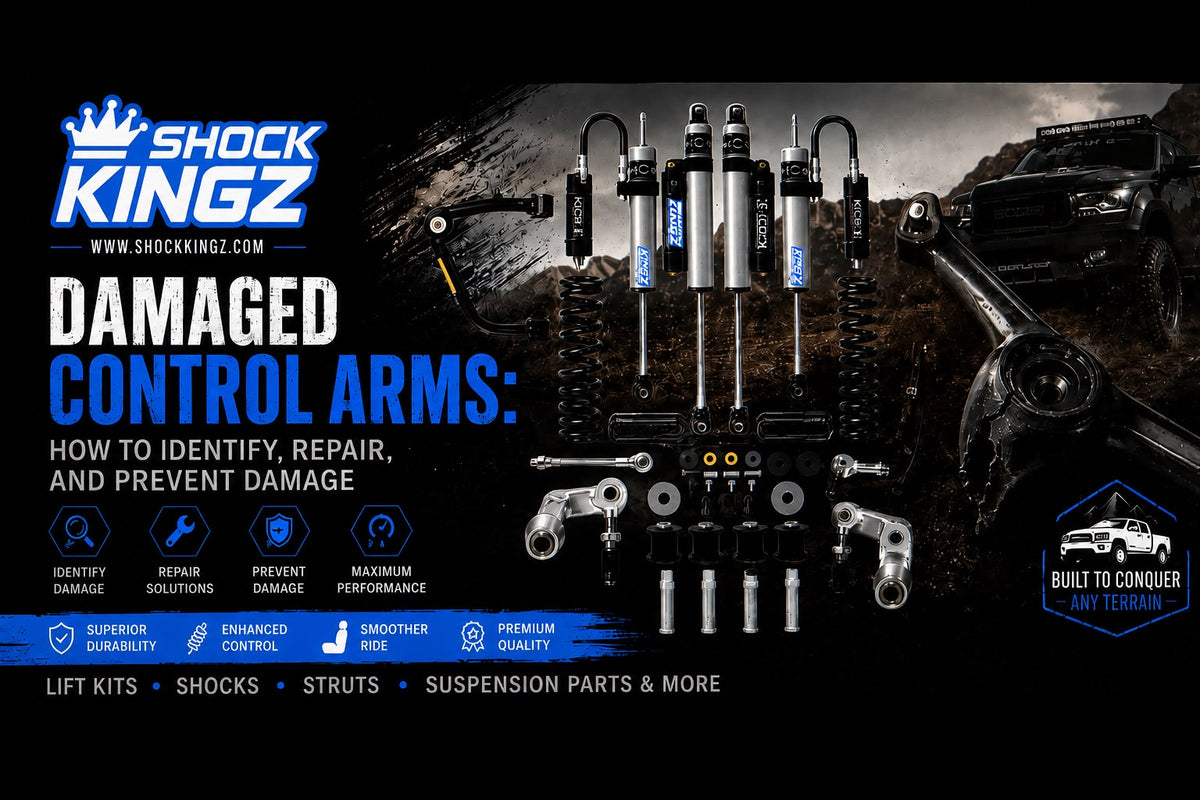
Control arms are essential components of a vehicle's suspension system. They play a critical role in ensuring that the wheels stay properly aligned and work smoothly with the rest of the car. When these parts become damaged, it can affect vehicle performance, safety, and handling. In this blog, we'll explore the causes, symptoms, and solutions for damaged control arms, and how to prevent further damage to these vital components.
What Are Control Arms and Why Are They Important?
Control arms, also known as A-arms, are suspension components that connect the frame of the vehicle to the wheels. They allow the wheels to move up and down while maintaining proper alignment with the chassis. This ensures a smooth, stable ride while also providing crucial handling and control. Damaged control arms can lead to several issues, including poor steering response, uneven tire wear, and compromised safety.
Common Causes of Damaged Control Arms
Control arms are designed to withstand a considerable amount of stress, but over time, they can become damaged due to a variety of factors.
Road Hazards and Everyday Wear
Driving on rough roads filled with potholes, curbs, or other road hazards is one of the most common culprits - hitting a large pothole or a curb at high speed can cause the metal components to bend, crack, or even break. Like any mechanical component, control arms are also susceptible to ordinary wear and tear; constant movement and stress gradually weaken the metal, and the bushings that connect the control arms to other suspension components can wear down too, leading to increased movement and damage over time.
Accidents and Improper Installation
Accidents or collisions, whether minor or severe, can have a significant impact on control arms as well. The force of a collision can bend, break, or deform these components, rendering them ineffective, and even a low-speed accident can lead to significant damage. Finally, improper maintenance or installation is another frequent cause - if the components aren't properly installed or aligned, they place undue stress on the suspension system, which leads to premature failure. Frequent off-road driving adds its own strain too; if that's a regular part of your routine, our reservoir shocks guide explains how the right setup helps ease that stress on your suspension.
Symptoms of Damaged Control Arms
If you're experiencing issues with your vehicle, it's crucial to know the symptoms of damaged control arms so you can catch the problem before it gets worse.
Signs to Watch For
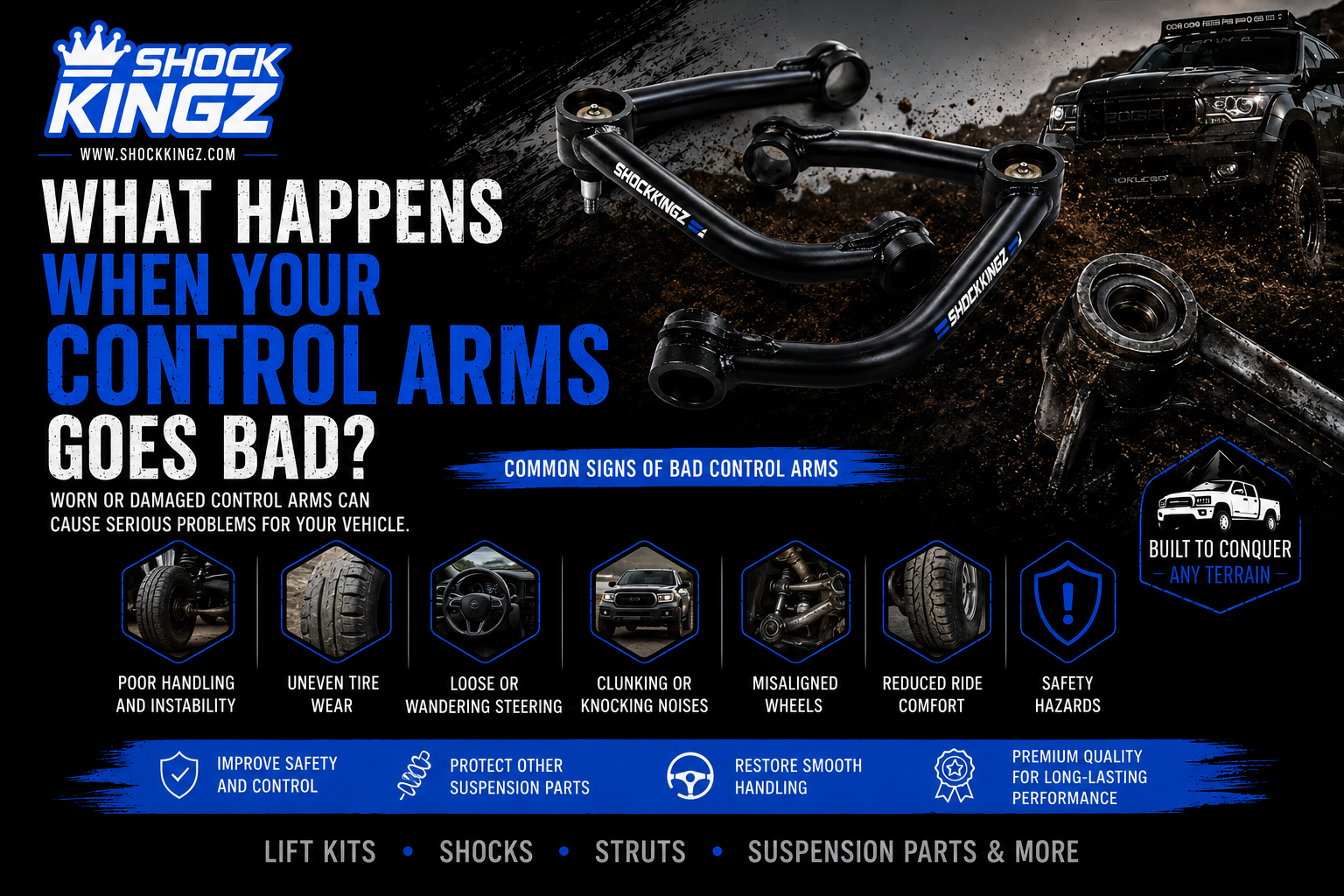
- Unusual noises - clunking, knocking, or popping sounds from the suspension area, especially when turning or driving over bumps.
- Poor handling and steering response - steering that feels loose, unresponsive, or "wanders" when driving straight.
- Uneven tire wear - wheel misalignment caused by damaged control arms often wears down the inside or outside edges of the tires faster.
- Vibration or pulling - the vehicle pulling to one side or excessive vibration, particularly at high speeds or when braking.
- Misalignment of the wheels - wheels that simply aren't aligned properly, leading to poor handling and a rougher ride overall.
- How to Repair Damaged Control Arms

Repairing a damaged control arm is crucial to restoring your vehicle's performance and safety.
Inspection and Diagnosis
The process starts with a thorough inspection - if you hear unusual noises or notice symptoms such as misalignment or poor handling, it's essential to have the suspension components inspected so a mechanic can identify any wear and tear or damage that needs attention.
Replacement Options
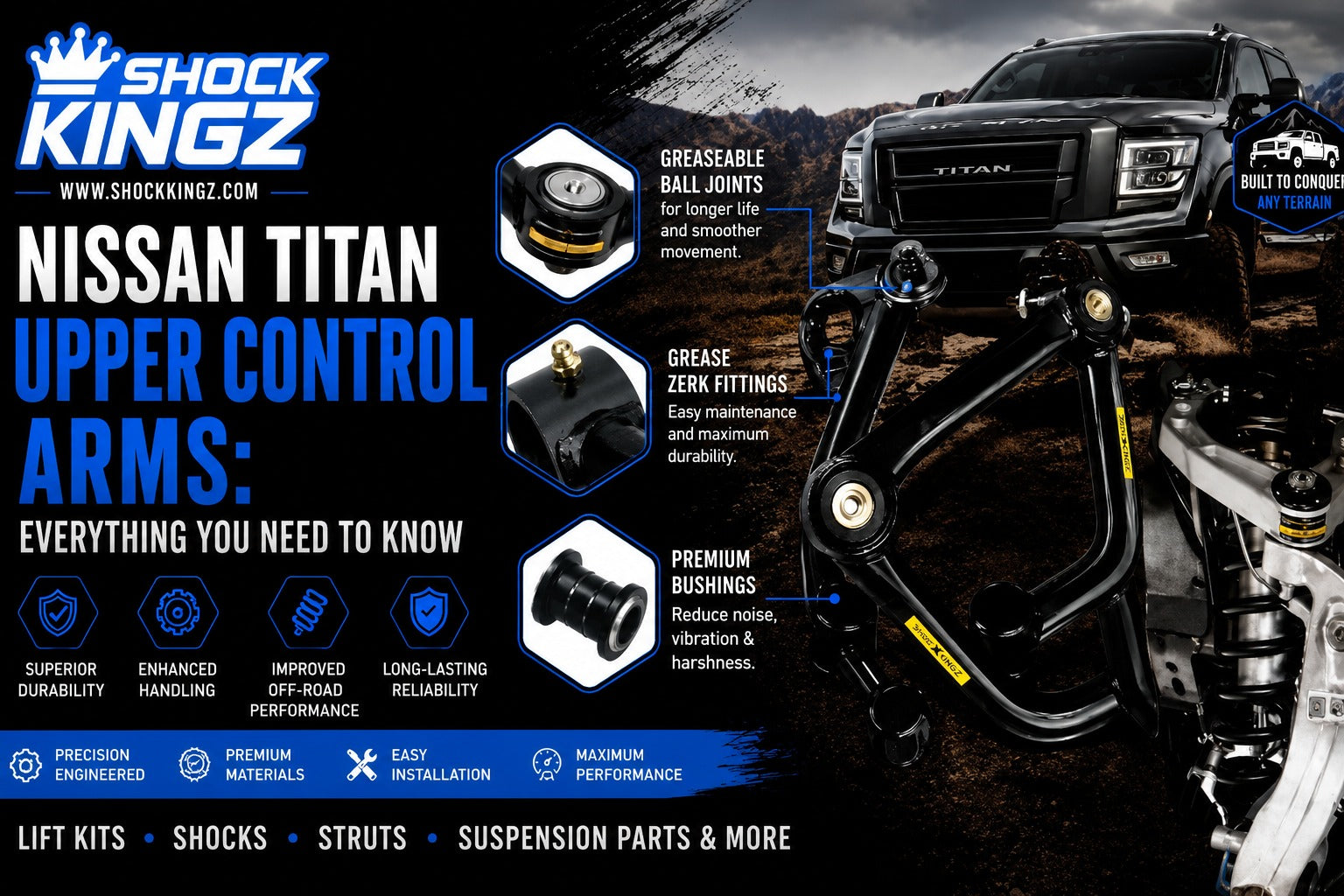
In many cases, damaged control arms need to be replaced outright. Control arms are often sold as complete assemblies that include the arm, bushings, and ball joints, so depending on the level of damage, you may only need to replace the damaged arm, or the entire assembly may need replacement.
Sometimes, though, only the bushings or ball joints are damaged, in which case a full control arm replacement isn't necessary - replacing these smaller components alone can restore functionality and improve vehicle handling. Whatever the repair, it's crucial to finish with a proper wheel alignment afterward, ensuring the wheels are correctly aligned with the suspension system and preventing further issues with handling and tire wear. Not sure which replacement parts fit your vehicle? Contact our team and we'll help you find the right components.
Preventing Damaged Control Arms
Taking steps to prevent control arm damage can save you money and extend the lifespan of your vehicle's suspension system. A few preventive measures go a long way:
Preventive Measures
Driving Habits
Avoid Rough Roads
Reduce speed over potholes, curbs, and uneven surfaces whenever possible.
Drive Carefully
Avoid sudden stops, sharp turns, and hard accelerations, which place unnecessary stress on suspension components.
Maintenance Habits
Stick to Regular Maintenance
Inspect suspension components for wear, check for fluid leaks, and get routine alignment checks from a professional mechanic.
Use Quality Replacement Parts
Parts from ShockKingz are built for durability and performance, extending the lifespan of your suspension system, and pairing new control arms with reliable shocks and struts will further improve your overall ride quality.
Frequently Asked Questions
Q1. How do I know if my control arm is damaged?
Watch for clunking or knocking noises from the suspension, loose or wandering steering, uneven tire wear, vibration at speed, or visible misalignment of the wheels. Any of these signs warrant a professional inspection.
Q2. Is it safe to drive with a damaged control arm?
No. A severely damaged control arm can fail suddenly, causing loss of vehicle control. If you suspect damage, have it inspected and repaired before driving further.
Q3. How much does it cost to replace a control arm?
Cost varies by vehicle make, model, and whether you replace just the bushings/ball joints or the full assembly. Using quality aftermarket parts can offer better long-term value than cheaper alternatives.
Q4. Do I need an alignment after replacing control arms?
Yes. A wheel alignment is essential after any control arm replacement to ensure proper handling, even tire wear, and overall suspension performance.
Q5. Can potholes really damage control arms?
Yes, hitting potholes or curbs at speed is one of the most common causes of bent, cracked, or broken control arms.





Leave a comment
This site is protected by hCaptcha and the hCaptcha Privacy Policy and Terms of Service apply.