
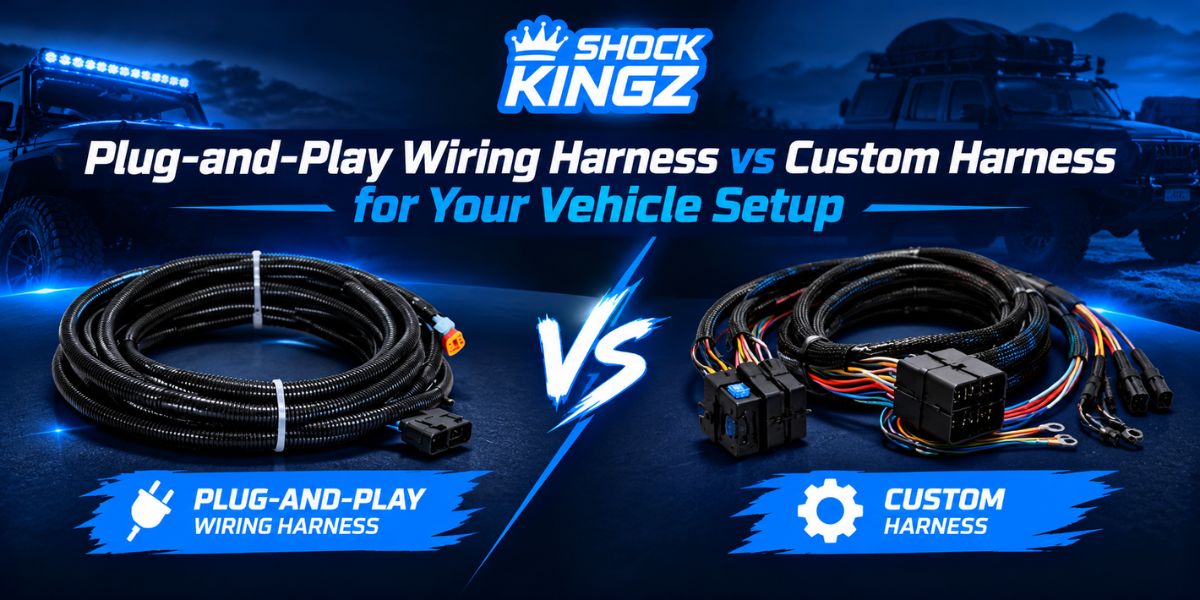
One loose pin can turn a quick weekend install into weeks of chasing electrical gremlins. That is why the wiring harness, the least glamorous part of any project, deserves a hard look before anything gets bolted down.
Most buyers eventually reach the same fork in the road: pick a ready-made plug-and-play harness, or have a custom one built. Both can work well, and both can fail badly when matched to the wrong job. This guide explains how each type is made, where each fits, and which details separate a reliable electrical install from a frustrating one.
What a Wiring Harness Actually Does
A wiring harness bundles individual wires, terminals, and connectors into one organized assembly that carries power and signals between components. Instead of loose wires running wherever they land, the harness keeps circuits grouped, protected, and easier to trace. That makes installation, troubleshooting, and later repairs far simpler.
In accessory systems such as air ride, a wiring harness typically links height sensors, relays, a compressor, and a control unit so the system can read conditions and respond correctly. Because the harness carries both current and low-voltage signals, small construction flaws often show up as odd behavior that looks like a mechanical problem.
What Is a Plug-and-Play Wiring Harness?
A plug-and-play harness arrives pre-built for a specific component or system. Wires are cut to length, terminals are crimped, connectors are fitted, and the assembly is designed to click into matching ports without cutting, stripping, or splicing.
How Pre-Terminated Harnesses Work
The manufacturer designs the harness around a known connector layout, so every pin lands where the receiving device expects it. Many include inline fuses or relays sized for the application. That predictability is the main advantage, because the electrical design work has already been done for one defined use.
Examples include harnesses made for a particular air ride controller, such as the Air Lift WirelessOne harness, or compressor harnesses with a built-in relay, such as the Firestone replacement compressor wiring harness. Each is intended for named part numbers rather than general-purpose wiring.
Where Plug-and-Play Makes the Most Sense
Plug-and-play fits best when the vehicle and component are common, the routing is straightforward, and a repeatable result matters more than customization. Typical cases include:
- Replacing a damaged or aged harness with an identical part
- Installing a complete system, such as air suspension kits, where harness and controller are designed together
- First-time installers without crimping tools or wiring diagrams
- Repairs where downtime matters more than flexibility
The tradeoff is rigidity. Lengths and connectors are fixed, so the harness adapts poorly to an unusual layout.
What Is a Custom Wiring Harness?
A custom harness is designed and assembled for a specific build instead of a catalog part number. A builder or harness shop selects the wire, connectors, protective covering, and routing, then constructs the assembly to match the vehicle’s layout.
How Custom Builds Are Designed
The process usually starts with a circuit list: every device, its current draw, and its location. From that list come the wire gauge, fuse values, connector choices, and a routing plan.
Quality builders use automotive-rated cross-linked wire (GXL or TXL types are common), terminals crimped with the correct tool, sealed connectors wherever moisture is possible, and abrasion protection such as split loom or braided sleeving. A good shop also supplies a pinout or wiring diagram so future repairs do not turn into guesswork.
Situations That Call for Custom Work
Custom makes sense when off-the-shelf options do not exist or do not fit. Engine swaps, heavily modified vehicles, race builds, unusual mounting locations, and systems that combine several accessories on one power feed often land in this group. Bespoke wiring follows the same logic as other made-to-order components, where planning matters as much as the finished piece. That point comes up in this look at custom metal parts fabrication.

Plug-and-Play vs Custom Harness: Side-by-Side Comparison
| Factor | Plug-and-Play Harness | Custom Harness |
|---|---|---|
|
01 Fit
|
Matched to a specific part or system | Built to the vehicle’s actual layout |
|
02 Installation
|
Connect, route, secure | Design, build, test, then install |
|
03 Upfront cost
|
Usually lower for common applications | Usually higher due to design and labor |
|
04 Flexibility
|
Fixed lengths and connectors | Fully adjustable to the project |
|
05 Lead time
|
Often available off the shelf | Depends on the builder’s schedule |
|
06 Documentation
|
Typically follows the product listing | Should be requested with the order |
|
07 Best for
|
Standard installs and direct replacements | Modified, multi-accessory, or unusual builds |
Key Factors That Decide the Right Choice
Fitment and Documentation
Fitment comes first. A plug-and-play harness must match the exact component generation, connector style, and pin count, because looking alike is not enough. Retailers, including ShockKingz, generally let buyers filter by year, make, and model, and the listing should state what the part connects to.
Custom harnesses avoid fitment issues but depend on accurate input. Wrong measurements or an incomplete device list produce a harness that is wrong in a more expensive way.
Wire Gauge, Fusing, and Voltage Drop
Wire gauge must suit the circuit’s current and the length of the run. Undersized wire heats up and loses voltage, which can cause weak performance or intermittent faults. Fuses belong close to the power source so the unprotected section of wire stays as short as possible.
Plug-and-play designs have usually handled this for their intended load. With custom work, the builder carries that responsibility, and it should be verified rather than assumed.
Connectors, Sealing, and Vibration
Underbody and engine-bay wiring faces vibration, heat, water, and road salt. Sealed, locking connectors and strain relief at junctions prevent the slow corrosion and fatigue behind many long-term failures. Either type of harness deserves scrutiny here, since unsealed terminals struggle regardless of the label on the box.
Standalone wiring connectors can support a harness when a clean, dedicated power source is needed. One example is the Firestone Air-Rite ignition fuse circuit tap kit, though compatibility with the specific system should be confirmed first.
Skill Level, Tools, and Time
Plug-and-play usually needs only basic hand tools. Building custom wiring from scratch calls for quality crimpers, a wire stripper, a multimeter, heat shrink, and patience. Wiring errors are not always obvious right away, and rushed work causes more repeat repairs than bad parts do. A review of common suspension installation mistakes shows how often that pattern repeats in other kinds of installs.
Budget and Long-Term Cost
Plug-and-play typically costs less up front for common applications because production is repeatable. Custom work adds design time and labor, so the starting price is usually higher. Over the long run, the gap can narrow, since a harness that fits properly and is built to last may cost less than a cheap one replaced twice. The same cost-versus-longevity tradeoff appears when weighing aftermarket vs stock suspension parts.
Mistakes to Avoid With Either Option
Several errors show up again and again:
- Splicing into a plug-and-play harness for a quick fix: This removes tested terminations and creates a weak point.
- Using non-automotive wire: Household wire is not built for heat, vibration, or fluids.
- Skipping the fuse or placing it far from the power source. Protection only works where the fault current can be interrupted early.
- Neglecting grounds: A poor ground is a frequent cause of erratic behavior and false fault readings.
- Routing near exhaust, sharp edges, or moving parts without protection: Heat and abrasion destroy insulation over time.
- Connecting expensive control modules before testing: A multimeter check on power and ground can prevent costly damage.
A Simple Way to Decide
A few questions usually settle it. Does a listed harness match the exact component and vehicle? If so, a plug-and-play option is generally the sensible choice. If the layout is unusual, the system combines several devices, or a catalog harness needs cutting to fit, a custom harness may be worth the investment. When exploring available options, ShockKingz is a useful place to start.
A hybrid approach can also work well. A plug-and-play harness can connect directly to the device, while a short custom extension with properly sealed connectors handles the longer run. This approach preserves reliable factory connections where they matter most while adding flexibility where needed.
Need Help Choosing the Right Wiring Harness?
Share the vehicle details and the system being installed with the Shockkingz team. Confirm connector types and compatibility before ordering to help avoid a mismatched harness.
Contact ShockkingzFrequently Asked Questions
Practical answers about wiring harness selection, wire sizing, installation, and custom builds.
01Is a plug-and-play wiring harness better than a custom harness?
Neither wins in every case. Plug and play suits supported systems and simple installs, while custom suits unusual vehicles, mixed components, and long routing runs.
02Can a plug-and-play wiring harness be extended or modified?
Extending is possible with matching connectors and correct wire, but cutting or splicing can reduce reliability and conflict with installation instructions. A longer replacement harness is safer.
03What wire gauge does a custom wiring harness need?
Gauge depends on the circuit's maximum current and the length of the run. Higher loads and longer runs need thicker wire, and the fuse must protect it.
04Does a custom wiring harness cost more than plug-and-play?
Not always. Materials can cost less, but tools, labor, and testing add up, and a failed first build means paying twice. Total cost matters more than price.
05How long does a wiring harness last?
Lifespan depends on routing, sealing, vibration, and heat exposure rather than harness type. A well protected harness can last for years; a pinched one fails early.










Leave a comment
This site is protected by hCaptcha and the hCaptcha Privacy Policy and Terms of Service apply.