
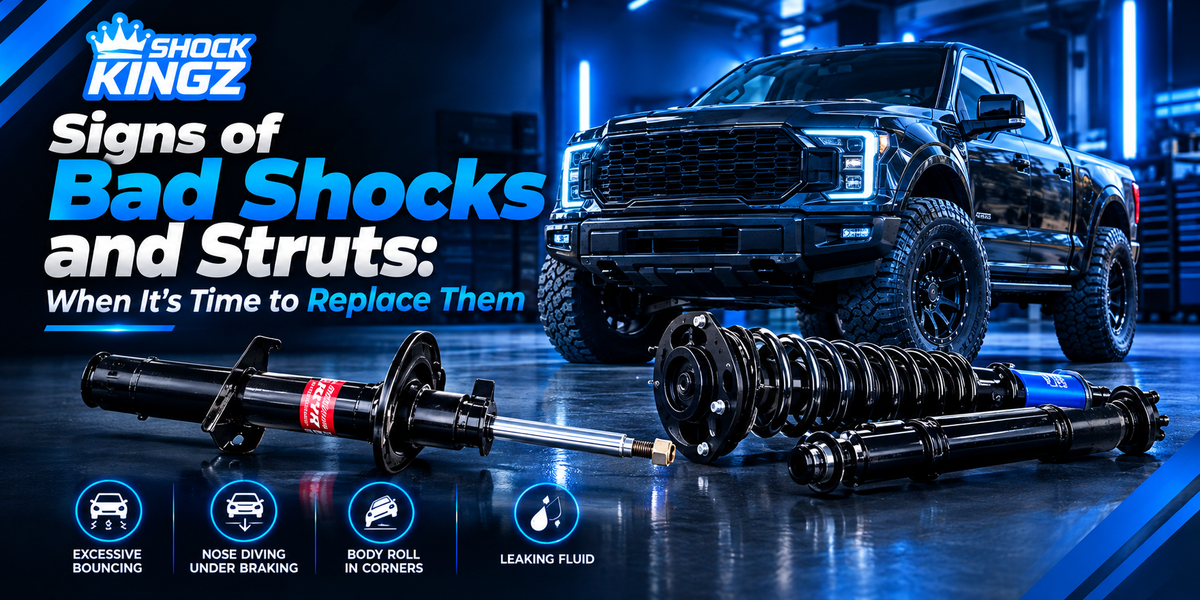
The clearest signs of worn shocks or struts are excessive bouncing after a bump, nose-diving under braking, body roll in corners, and uneven or cupped tire wear. Fluid leaking down the shock body and clunking noises over rough roads are also common red flags.
Most shocks wear out gradually over 50,000 to 100,000 miles, so the change is easy to miss until you compare your ride to how it used to feel. Here's how to spot the signs and decide what to do next.
What Do Shocks and Struts Actually Do?
Shocks and struts control how your suspension compresses and rebounds after a bump. Without them, your vehicle would rely on the springs alone, bouncing and unsettled after every dip in the road.
Struts carry more of the vehicle's structural load than shocks do, since they're built into the suspension assembly itself. That's why worn struts can affect alignment and steering feel, not just ride comfort.

Most vehicles lose damping ability internally, long before anything looks visibly broken. That's why paying attention to how the truck feels matters more than a quick glance underneath.
6 Signs Your Shocks or Struts Are Worn
1. A rougher ride over small bumps. Worn dampers can no longer smooth out road imperfections the way they used to, so every pothole and expansion joint feels more pronounced.
2. Nose-diving under braking. Weight shifts forward faster than the suspension can control, especially up front, making stops feel less composed.
3. Body roll or sway in corners. A vehicle that leans more than it should has lost some of its ability to manage weight transfer side to side.
4. Rear squat under acceleration. This shows up most on trucks that tow or haul regularly, when the back end sinks noticeably on takeoff.
5. Fluid leaking down the shock body. This is a direct sign of a failed seal, and it means the shock has already lost damping ability.
6. Lunking noises or cupped tires. Banging or rattling over bumps often points to worn shocks, bushings, or mounts. Cupped, scalloped tire wear means the tire has been bouncing against the road instead of staying planted.
Front vs. Rear: Symptoms by Position
Where you notice the symptom can point you toward which end of the truck needs attention first.
If only one end shows symptoms, it's possible to replace shocks by axle rather than all four at once. Most technicians still recommend replacing shocks in pairs, so damping stays even side to side.
The Bounce Test: A Quick At-Home Check
You don't need any tools for this one, just two minutes and a flat parking spot.
- Push down firmly on one corner of the parked vehicle, then let go.
- Watch how it settles. A healthy shock lets the corner rise and stop within a bounce or two.
- Compare corners. A worn shock keeps bouncing for several cycles. Repeat at each corner, since shocks often wear unevenly.
This test is a good first indicator, but it isn't a full diagnosis. Pair it with a visual check for leaking fluid or torn boots, and pay attention to how the truck actually drives day to day.
How Many Miles Do Shocks and Struts Last?
Most factory shocks and struts are built to last somewhere between 50,000 and 100,000 miles. The exact number depends heavily on how you drive.
Regular towing, hauling, rough roads, or off-road use wears shocks out faster than easy highway commuting. If you drive a truck hard, check for symptoms well before the 100,000-mile mark rather than waiting for an obvious failure.
Replace With Stock-Style Parts, or Upgrade?
Once you've confirmed you need new shocks, you have two general paths.
Factory-style replacement. Restores the original ride characteristics. Usually the simpler, more affordable choice if you just want the truck to feel like it did when it was new.
Upgraded shocks. Shocks and struts built for towing, off-road use, or a lifted setup can improve on the factory ride rather than just restoring it, worth considering since you're already replacing worn parts.
If you're also dealing with worn springs or sagging ride height, or you're planning to lift the truck at the same time, a shock and spring kit or a full suspension package can handle more of the suspension in one step instead of replacing shocks now and springs later.
What Happens If You Wait Too Long?
Driving on worn shocks isn't just uncomfortable, it can affect safety. Longer stopping distances, reduced stability in corners or crosswinds, and uneven tire wear all get worse the longer worn shocks stay in place.
Left unaddressed, cupped tires can shorten tire life significantly, turning a shock problem into a more expensive tire problem too. If you're noticing more than one of the symptoms above, it's worth inspecting the suspension sooner rather than later.
When to See a Professional
If the bounce test and visual inspection point to worn shocks, but you're not confident diagnosing which corner or component is the cause, a professional inspection is the safer next step.
This matters most if you're hearing clunking noises, since those can also point to worn bushings, ball joints, or mounts rather than the shock itself. Mixing those up can lead to buying the wrong part.
Think Your Shocks or Struts Need Replacing?
If you're noticing excessive bouncing, nose dive, uneven tire wear, or other suspension symptoms, check your vehicle's fitment before replacing parts.
Check Your Fitment →Frequently Asked Questions
Common questions about worn shocks, struts, replacement intervals, and suspension safety.











Leave a comment
This site is protected by hCaptcha and the hCaptcha Privacy Policy and Terms of Service apply.