
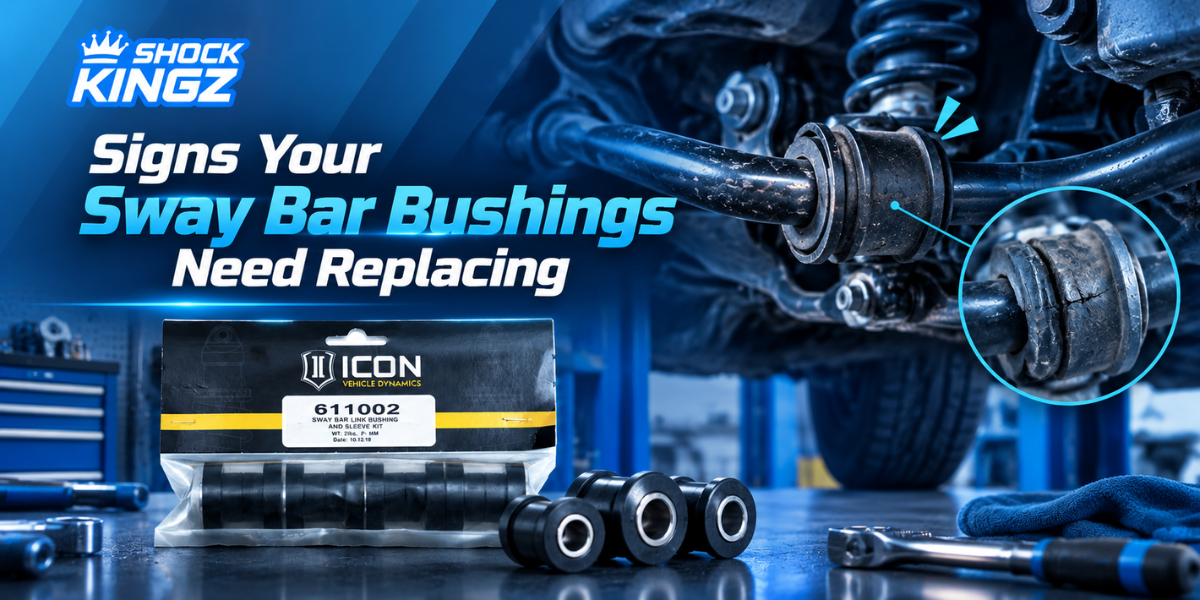
If you've noticed a dull clunk every time you cross a speed bump, or your car feels a little looser through corners than it used to, there's a good chance your sway bar bushings are wearing out. These small rubber or polyurethane sleeves mount your anti-roll bar to the frame, and when they crack, dry out, or lose their grip, the bar can't do its job properly. The good news is that the symptoms are fairly easy to recognize once you know what to listen and feel for.
Here's how to tell whether it's really the bushings, what else could be causing similar noises, and what your options are once you've confirmed the diagnosis.
What these bushings actually do and Why wear Sneaks Up on you?
The sway bar itself is a torsion spring that ties your left and right wheels together, resisting body roll when you corner. But the bar can only do that effectively if it's held firmly in place, and that's the bushing's job. There are usually two of them per bar, cushioning it against the chassis while still letting it rotate freely.

Because this rubber is constantly flexing, it breaks down gradually through heat cycles, road salt, general age, and plain old mileage. That's why bushing wear rarely shows up as a sudden failure. Instead, it creeps in as a faint noise you start tuning out, until one day it's impossible to ignore.
The Signs Worth Paying Attention To
The most common giveaway is a clunk or knock over bumps and potholes, caused by the bar shifting slightly in a bushing that's no longer gripping it tightly. If the rubber has simply dried out rather than cracked, you might hear more of a squeak instead, especially during slow, tight turns like parking lot maneuvers, a noise that's easy to mistake for a steering issue.
Beyond noise, pay attention to how the car feels. Worn bushings let the bar move before it starts resisting roll, so cornering can start to feel sloppier or less planted, even if nothing else in the suspension has changed. And if you're comfortable getting under the vehicle, you can grab the bar near the mount and try rocking it by hand, noticeable play, or rubber that's visibly split or torn, is about as clear a sign as you'll get.
One thing worth knowing: sway bar bushings and sway bar end links wear differently and can sound similar, which trips up a lot of owners trying to self-diagnose. As a rough rule of thumb, bushing wear tends to show up as a squeak or dull knock on rough roads and tight turns, while worn end links usually produce a sharper clunk over bigger bumps and potholes. It's not a perfect test, but it's a useful starting point before you start replacing parts.
It's tempting to hear a clunk and immediately order new bushings, but that's not always the right first move. Sometimes the real issue is a bent or rusted bracket that's been wearing the bushing unevenly replacing the rubber without addressing that just sets you up for a repeat. Other times, people reach for a stiffer or softer bushing without thinking about how that changes noise and ride feel, or overtighten the mounting brackets during install, which can compress the rubber and cause it to crack early. And if you've recently changed your ride height with a lift or lowering kit, it's worth checking the whole sway bar setup rather than assuming the bushings are the only thing affected, altered geometry can accelerate wear across the board.
Bushings Only, or Time for a Bigger Fix?
In most cases, if the bar itself is straight and free of rust at the mounting points, replacing worn bushings on their own is enough. But there are a couple of situations where it's worth looking at more than just the rubber. If your brackets are bent, cracked, or corroded, new bushings won't seat properly no matter how good they are. That's a good reason to take a look at available sway bar brackets alongside the bushing replacement. And if you've changed ride height, factory brackets may no longer hold the bar at the correct angle, which is often when owners start considering a full sway bar kit rather than a simple bushing swap.
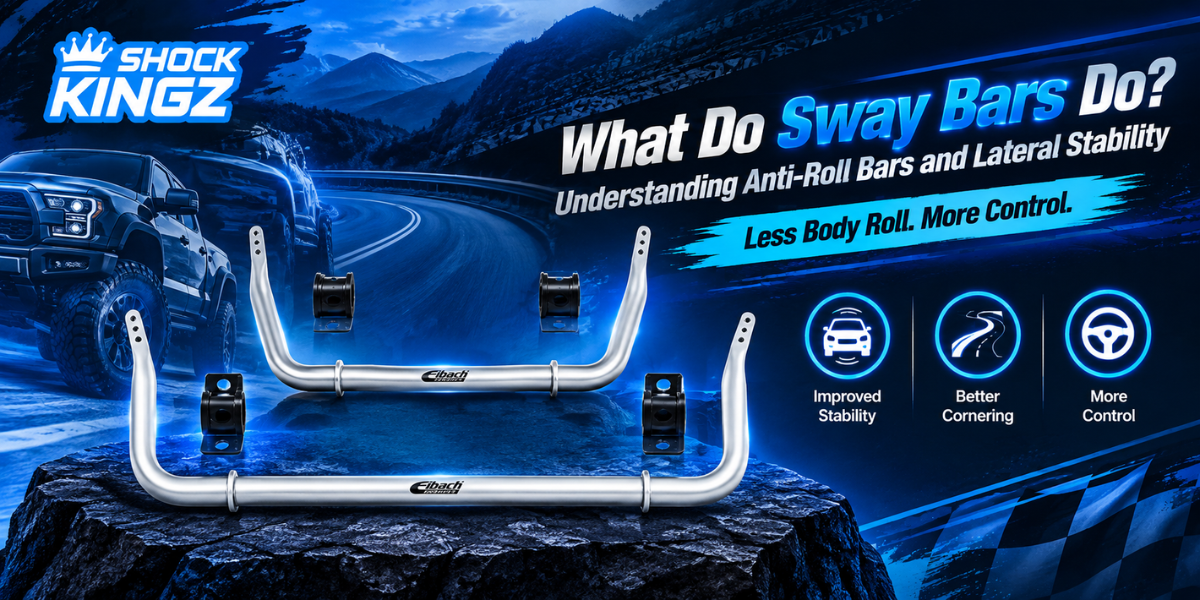
If you want the bigger picture on how the anti-roll bar fits into your suspension as a whole, our earlier post on what sway bars do and how they support lateral stability covers the mechanics in more depth. And if you've gone through the checks above and you're still not sure what you're dealing with, it's worth having the suspension looked at in person, or reaching out to Shockkingz directly with your vehicle details before ordering parts especially if a ride-height change or handling upgrade is part of the plan.
Before you go, here's a quick rundown to work through on your own vehicle:
- Note where the noise is coming from front, rear, one side, or both
- Note when it happens bumps, turns, or both
- Check the bushings visually for cracking, splitting, or separation
- Grab the bar near the bushing and check for play by hand
- Inspect the brackets for rust, bending, or loose bolts
- Compare what you're hearing against typical end link symptoms before buying parts
Improve Your Sway Bar Setup
Find sway bar brackets and related suspension components to help maintain a properly supported and well-matched suspension setup.
Explore Sway Bar Brackets →Frequently Asked Questions
1. How long do sway bar bushings typically last?
There's no universal mileage figure, wear depends heavily on driving conditions, climate, and rubber quality. Owners in areas with road salt, extreme heat, or rough roads often see wear sooner than those with milder conditions and smoother pavement.
2. Can I drive with worn sway bar bushings?
Generally yes, in the short term, since it's more of a comfort and handling issue than a structural failure. That said, delaying replacement can accelerate wear on brackets and end links, so it's worth addressing once symptoms show up.
3. Will new bushings fix all my suspension noise?
Not necessarily. Several components can cause similar clunking or squeaking, including end links, strut mounts, and control arm bushings. A proper inspection helps you avoid replacing the wrong part first.
4. Do polyurethane bushings last longer than rubber ones?
Polyurethane generally resists cracking and dry rot better than rubber, but it can also transmit more noise and vibration into the cabin. The right choice depends on how much you prioritize ride comfort versus longevity.
5. Does changing sway bar bushings affect alignment?
No, bushing replacement doesn't affect wheel alignment on its own, since it doesn't change suspension geometry angles. That said, if brackets were bent or ride height has changed, it's still worth having alignment checked separately.
6. Can worn bushings damage other suspension parts?
Over time, yes. Excess play at the bushing can put uneven stress on brackets and end links, which can accelerate their wear too. Catching bushing issues early can help prevent that from turning into a bigger repair.










Leave a comment
This site is protected by hCaptcha and the hCaptcha Privacy Policy and Terms of Service apply.