
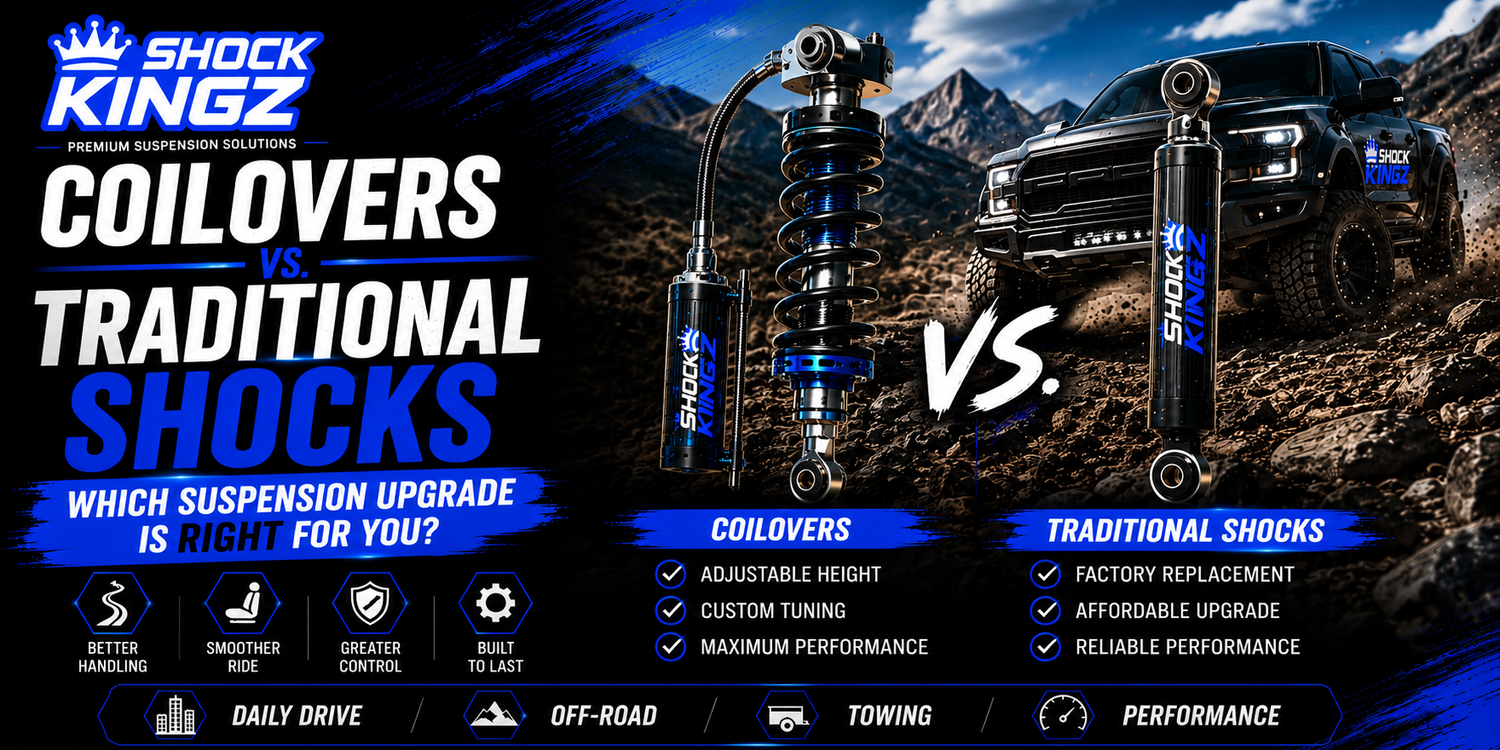
The Real Difference Between Coilovers and Traditional Shocks
Most drivers upgrading their suspension hit the same fork in the road: coilovers or traditional shocks? Both absorb road impacts and improve ride quality, but they are built for very different goals. Choosing the wrong one means spending money on performance you will not use - or missing out on capabilities your vehicle actually needs.
At ShockKingz, we help drivers cut through the confusion every day. This guide breaks down exactly how coilovers and traditional shocks differ, what each one does best, and how to pick the right setup for your specific driving style and vehicle.
What Are Coilovers?
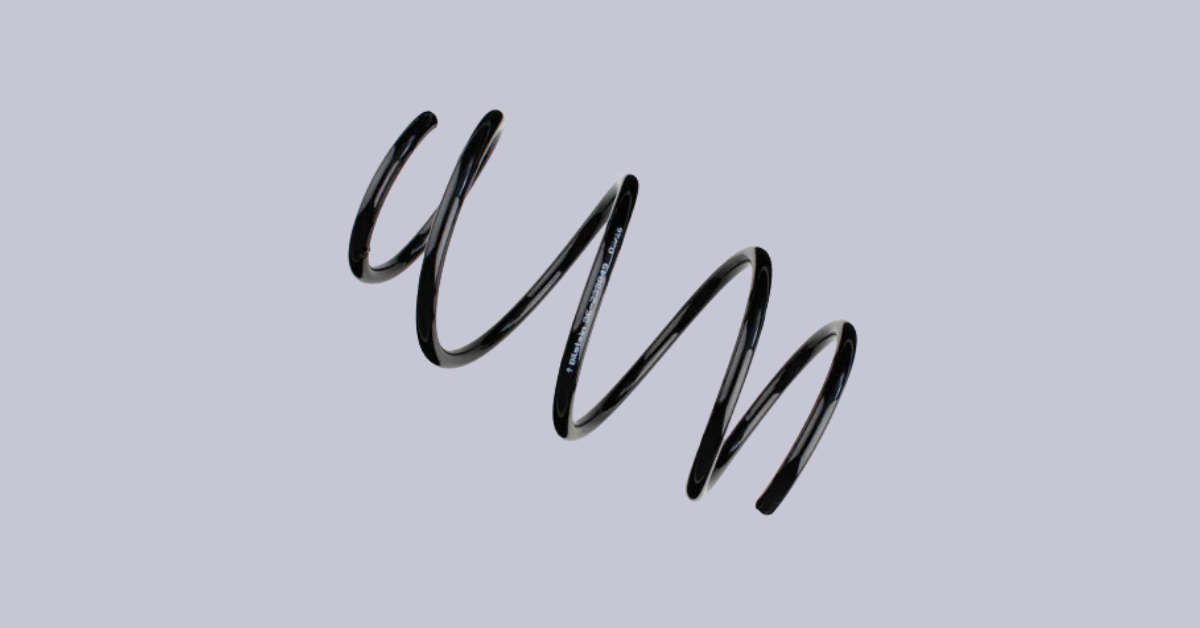
A coilover combines a shock absorber and a coil spring into a single integrated unit. Instead of sourcing a shock and spring separately and hoping they work well together, a coilover is engineered as one matched system from the start.
The biggest advantage coilovers offer is adjustability. Most quality coilovers let you change ride height by threading the lower mount up or down the shock body. Many also offer damping adjustment, letting you tune how soft or firm the suspension feels without swapping any parts.
Key features coilovers offer:
- Ride height adjustment without needing separate lift or lowering springs
- Damping adjustment on most performance models
- Matched spring and shock rates for consistent handling at all four corners
- Compact, integrated design that keeps suspension geometry cleaner
Coilovers are popular with performance drivers, autocross enthusiasts, and anyone running a lowered or track-oriented setup. Browse the full Coilovers collection at ShockKingz to see fitment-specific options for your vehicle.
What Are Traditional Shocks and Struts?
Traditional shocks work alongside your vehicle's existing coil springs to dampen suspension movement. The shock controls how fast the spring compresses and rebounds, preventing your vehicle from bouncing continuously after hitting a bump.
A strut is slightly different - it combines the shock with a structural component that supports the vehicle's weight and connects to the steering knuckle. Many front suspension setups use struts rather than standalone shocks. If you are unsure which your vehicle uses, our Suspension Kit Upgrade Guide walks through the differences in detail.
What traditional shocks do well:
- Direct OEM replacement with no geometry changes required
- Comfortable, predictable ride quality tuned for daily driving
- Lower upfront cost compared to coilovers
- Simple installation, often a straightforward swap
Traditional shocks are the right call when your goal is restoring ride quality to factory spec or making a modest performance improvement without changing your vehicle's setup.
Head to Head Comparison

|
Feature |
Coilovers |
Traditional Shocks |
|
Ride height adjustment |
Yes, fully adjustable |
No, fixed at factory height |
|
Damping adjustment |
Yes, on most models |
No |
|
Ride quality |
Firmer, performance-tuned |
Softer, comfort-focused |
|
Best use case |
Sport, track, lowered builds |
Daily driving, OEM replacement |
|
Installation complexity |
Moderate to high |
Low to moderate |
|
Cost |
Mid to high |
Budget to mid |
|
Longevity |
Very high with maintenance |
50,000 to 75,000 miles typical |
|
Off-road capability |
Strong with right spec |
Limited on performance models |
Which One Should You Choose?
Choose Coilovers If...
You want to lower your vehicle without compromising handling. Cutting springs or running lowering springs on stock shocks creates a mismatch between spring rate and damping. A proper coilover is built for the ride height you set, so the geometry and damping work correctly together at all times.
You drive on a track or push your car hard on weekends. Coilovers reduce body roll, sharpen steering response, and give you the ability to tune stiffness based on the surface you are driving on. That kind of adjustability is not possible with traditional shocks.
You are building a performance-oriented off-road rig. Off-road coilovers with longer travel give you serious capability on rough terrain that standard shocks simply cannot match. Pair them with upgraded Control Arms to maintain proper geometry on a lifted setup.
Choose Traditional Shocks If...
You want a straightforward OEM-quality replacement. If your factory shocks are worn out and your goal is restoring the original ride feel, a quality Shocks and Struts replacement is all you need. No alignment changes, no spring swaps, no complicated setup.
Ride comfort is your top priority. Traditional shocks are tuned for compliance - they absorb bumps smoothly and quietly. For long highway commutes or city driving on rough pavement, a comfort-tuned shock often beats a stiff coilover.
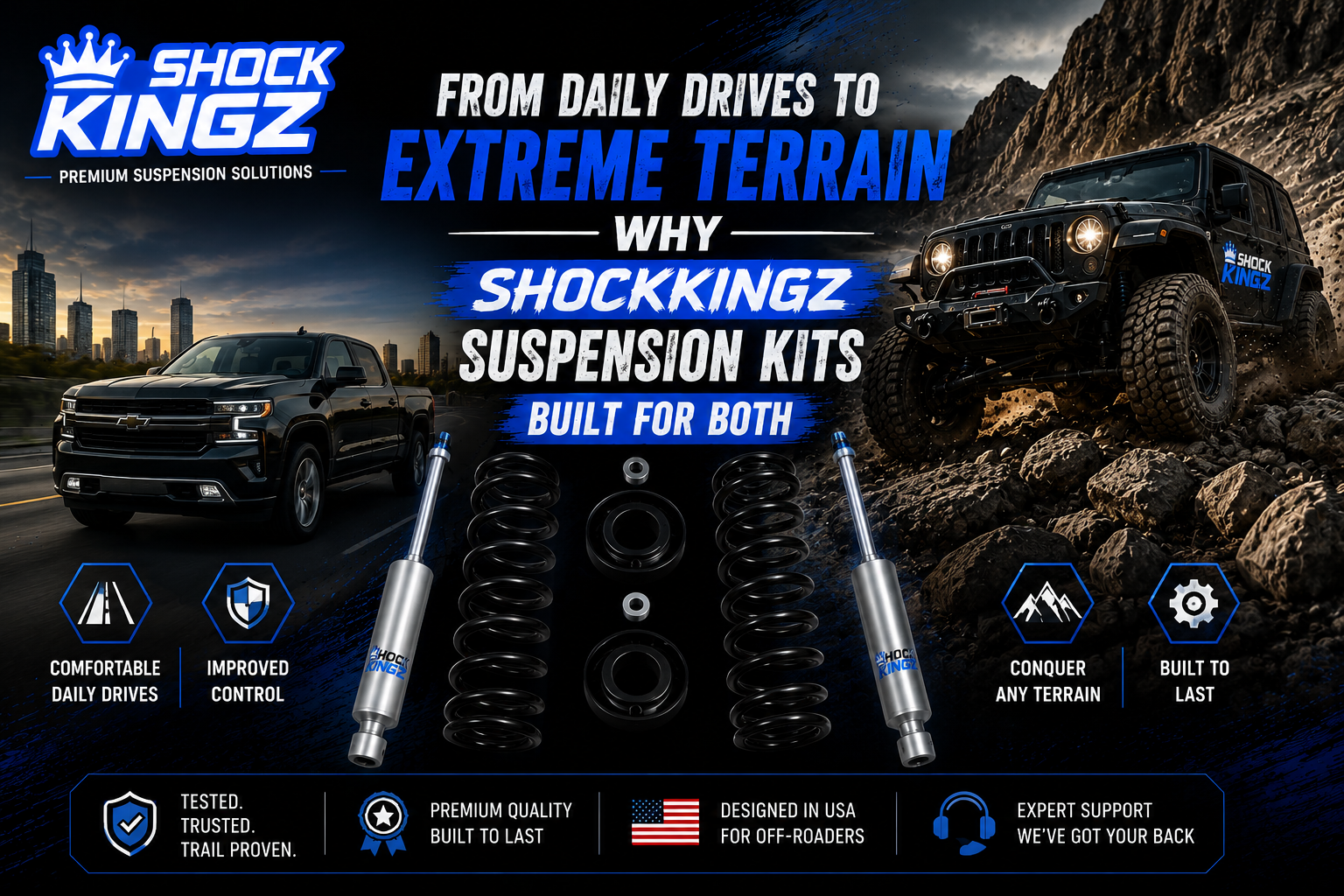
You drive a truck or SUV with regular towing or hauling needs. Trucks and SUVs under load need shocks tuned for that weight. A heavy-duty shock and spring combination handles payload far better than most coilovers designed for lighter vehicles. Check our Shock and Spring Kits for complete truck-ready setups.
Shop Suspension Upgrades at ShockKingz
Whether you are ready to go full coilover or looking for a clean OEM replacement, ShockKingz has the right setup for your vehicle. Every product in our catalog is filtered by year, make, and model so you always get the correct fit on the first order.
Browse our full Suspension Packages for complete system upgrades - everything matched and ready to install in one order.
Frequently Asked Questions
1. Are coilovers better than shocks for daily driving?
It depends on the coilover. A quality street-oriented coilover set at a comfortable damping level can absolutely work as a daily driver. But if you want maximum comfort without thinking about tuning, a well-matched shock and strut setup is simpler and often more comfortable.
2. Do coilovers require an alignment after installation?
Yes, almost always. Since coilovers change ride height and can affect camber and caster angles, an alignment check after installation is strongly recommended. Skipping it leads to uneven tire wear and compromised handling.
3. Can I put coilovers on a stock vehicle?
Yes. Coilovers are available for most modern vehicles and can be installed without other modifications. However, if you plan to lower the vehicle significantly, inspecting brake lines, control arm angles, and wheel clearance beforehand is a smart move.
4. How long do coilovers last compared to traditional shocks?
A quality coilover setup that is properly maintained can last 80,000 to 100,000 miles or more. Traditional shocks typically need replacement between 50,000 and 75,000 miles depending on driving conditions. Off-road and heavy-towing use shortens the lifespan of both.
5. What if I want off-road capability but also daily drive the vehicle?
A shock and spring kit built for light to moderate off-road use is usually the best balance. It gives you added ground clearance and durability without the firmness of a dedicated performance coilover.
6. How do I know which option fits my vehicle?
Use the vehicle selector on the ShockKingz homepage and filter by your year, make, and model. Every listing shows compatible fitments so there is no guesswork involved.





Leave a comment
This site is protected by hCaptcha and the hCaptcha Privacy Policy and Terms of Service apply.