
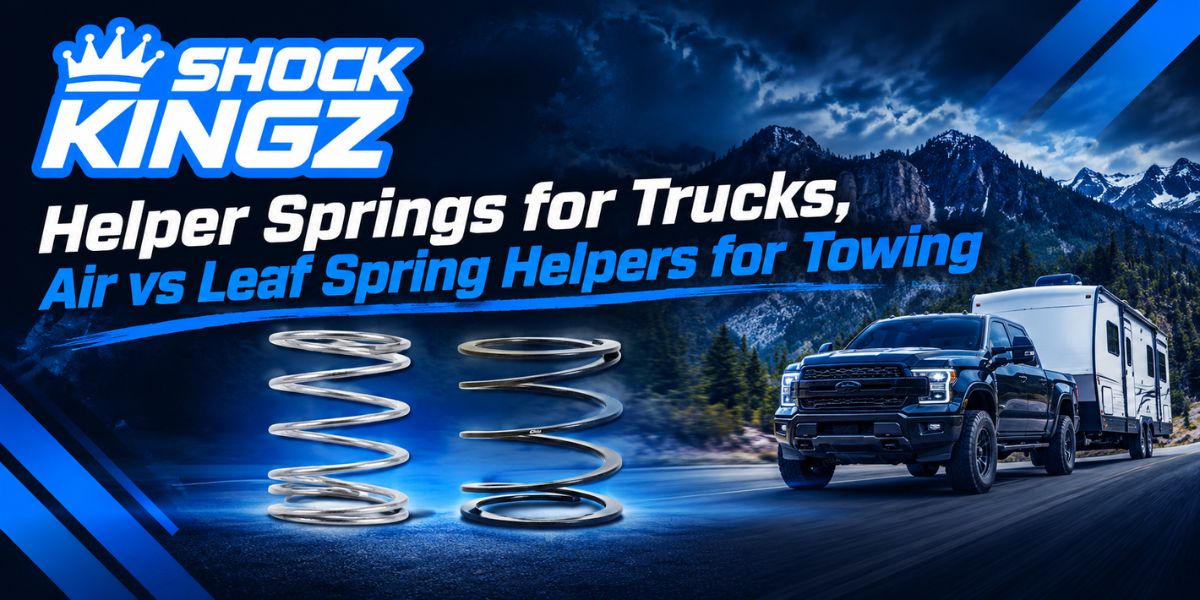
The trailer is hooked up, the hitch is latched, and the rear bumper has already dropped two inches. Headlights point at the treetops and the steering feels light. That tail-down, nose-up stance is usually the moment a truck owner starts asking whether helper springs can fix it.
Helper springs are secondary springs added to a truck's factory rear suspension. They share the load, limit sag, and steady the ride under weight. The term also appears in coilover setups, where it describes a different part, but this guide covers load-assist helpers only. The two most common styles, air and leaf, behave very differently on the road, so the comparison below focuses on what each one does well and where it falls short.
What Helper Springs Can and Cannot Do
A helper spring supports weight that the factory spring struggles to carry comfortably. The result is a more level stance, less bottoming out over bumps, and steadier handling with a trailer on the hitch. Headlight aim and steering feel usually improve once the rear stops squatting.
What helper springs cannot do is raise a truck's legal ratings. Gross vehicle weight, payload, and towing capacity come from the manufacturer's frame, axle, brake, and tire design. A helper spring improves how a truck carries a load, not how much load it is rated to carry. Shocks play a different role too, since they control motion rather than support weight, a split explained in the guide to shocks for towing.
Signs a Truck Needs Extra Rear Support
Several clues show up before any part is bought. The rear squats noticeably when a trailer is hitched, and the front end rises enough to wash out headlight aim. Steering feels vague at highway speed because weight has shifted off the front axle. The suspension bottoms out over moderate bumps, or the bump stops show fresh scuffs. In a bed-load situation, the rear fender-to-tire gap shrinks well past what it does with a light load. Any of these signs can also point to worn springs or shocks, so inspecting the existing parts first avoids paying for a helper that hides a bigger problem.
How Air Helper Springs Work
Construction and Adjustability
An air helper is a rubber bellows that sits between the frame and the axle, or inside the coil spring on trucks with coil-sprung rear ends. Air pressure sets how much support it provides. Adding pressure lifts the rear and stiffens the ride, while releasing pressure softens it. Kits such as the Air Lift 1000 install inside a coil spring, while bellows-style designs such as the LoadLifter 5000 for the Tacoma suit leaf-sprung trucks. A wide selection of air helper spring kits exists, so fitment by year, make, and axle layout matters more than brand.
Strengths for Towing
The biggest advantage is adjustability. A truck that tows a heavy camper on weekends and runs empty all week can carry high pressure for the trip and low pressure afterward. That keeps the unloaded ride comfortable while still leveling the truck when the trailer is attached. Pressure can also be tuned to different trailers rather than settling for one fixed setting.
Trade-Offs to Weigh
Air systems add parts that can fail. Fittings loosen, lines chafe, and bellows can puncture or crack with age. Manufacturers specify a minimum pressure to keep the bag from folding and rubbing, and a maximum pressure that should never be exceeded. Pressure needs regular checks, especially before a long trip, and lines should be routed away from exhaust heat. Replacement bellows and an air spring sleeve are available when a bag wears out, though a truck can be stranded in the meantime if a leak goes unnoticed.

How Leaf Spring Helpers Work
Add-a-Leaf, Helper Leaves, and Overload Springs
Leaf-sprung trucks have a few mechanical options. An add-a-leaf kit slides an extra leaf into the existing pack, which stiffens the spring and raises the rear slightly, as with the ICON add-a-leaf kit for the Tacoma. Helper or overload leaves work differently. They stay idle until the main pack deflects, then engage to carry extra weight. Browsing the leaf springs category shows how many variations exist across different truck platforms.
Strengths of a Mechanical Setup
Leaf helpers have no air lines, valves, or pressure to monitor. Nothing leaks, and nothing needs adjusting before a trip. A well-chosen leaf helper simply works every time the truck is loaded, which suits fleet trucks, work trucks, and owners who prefer a set-and-forget approach.
Trade-Offs to Weigh
The spring rate is fixed. An add-a-leaf stays stiff whether the bed is empty or full, so the unloaded ride gets firmer. Installation requires supporting the axle and loosening U-bolts, and raising the rear can change driveline angles on some trucks. Coil-sprung rear ends cannot use leaf helpers at all.
Where Bump Stops Fit In
Bump stops are not helper springs, but they work alongside them. A progressive bump stop cushions the final inch of travel and prevents harsh metal contact when a loaded truck hits a dip. They add protection rather than load capacity.
Air vs Leaf Spring Helpers Side by Side
| Feature | Air Helper Springs | Leaf Spring Helpers |
|---|---|---|
| Adjustability | Pressure changes support on demand | Fixed rate once installed |
| Unloaded Ride | Soft at low pressure | Firmer, especially add-a-leaf |
| Maintenance | Check pressure, fittings, and lines | Little beyond routine inspection |
| Failure Mode | Leaks and punctures | Wear, noise, or cracked leaves |
| Fits Coil Rear Ends | Yes, in-coil kits | No |
| Best Use | Changing loads and varied trailers | Steady heavy loads and simple upkeep |
Which Helper Spring Fits Which Towing Setup
Frequent Heavy Towing
Trucks that pull heavy trailers every week benefit from either style, and the decision comes down to upkeep. Owners who accept periodic pressure checks gain adjustability. Owners who want zero maintenance lean toward leaf helpers or a heavier leaf pack.
Occasional Camper or Trailer Use
Air helpers fit this pattern well because they stay soft during daily driving and firm up only when needed. A leaf add-on would keep the rear stiff for months when no trailer is attached.
Mixed Daily Driving and Hauling
Trucks that switch between commuting and carrying loads usually favor air helpers, since the ride changes with the load. Anyone who rarely sees an empty bed may prefer the simplicity of a leaf option.
Pairing Helper Springs With the Rest of the Setup
Helper springs address rear sag, but towing involves more than the rear axle. A weight-distribution hitch moves some tongue weight onto the front axle and trailer axles, which helper springs do not do. Conventional trailers commonly carry roughly ten to fifteen percent of their weight on the hitch, so a loaded trailer can press down on the rear axle far more than expected. Tires also need the correct load rating and inflation, and worn shocks will let a helper-equipped truck bounce even when the height looks right.
If the entire rear suspension is tired, replacing worn parts together can make more sense than adding one component to an old setup. Matched shock and spring kits address both at once. Full air ride systems with compressors and controllers are a separate category, covered in the air ride suspension kit guide.
Installation Realities
Air helpers generally bolt on without major disassembly, but the work still involves routing lines, choosing a fill valve location that is easy to reach, and leak testing every connection with soapy water. Leaf helpers take more mechanical effort, since the axle must be supported and U-bolts removed or replaced. Torque specs matter in both cases. After any install, a short test drive with a loaded bed or trailer confirms that nothing rubs, hits, or changes the way the truck tracks.
Buying and Installation Checklist
- Measure ride height at the fender lip with the truck empty, then loaded and hitched, to see how much sag actually needs correcting.
- Confirm fitment by year, make, cab, and axle configuration.
- Stay inside the truck's published payload and towing ratings.
- Check minimum and maximum pressure limits before filling any air kit.
- Plan on professional installation if axle support and torque specs feel unfamiliar.
Owners comparing options can browse dealers such as ShockKingz once the sag measurement and trailer weights are known.
Conclusion
Air helper springs reward owners who tow different loads and are willing to monitor pressure, while leaf spring helpers reward owners who want steady support with almost no upkeep. Neither style raises a truck's ratings, and neither replaces proper tongue weight, a weight-distribution hitch, or healthy shocks. Measuring the sag, matching it to the trailer, and choosing the style that fits the real routine leads to a safer, more level tow that stays within what the truck was built to handle. ShockKingz is a great place to explore suspension solutions for your setup.
Frequently Asked Questions
Expert answers about helper springs, towing support, ride comfort, and suspension upgrades.











Leave a comment
This site is protected by hCaptcha and the hCaptcha Privacy Policy and Terms of Service apply.