
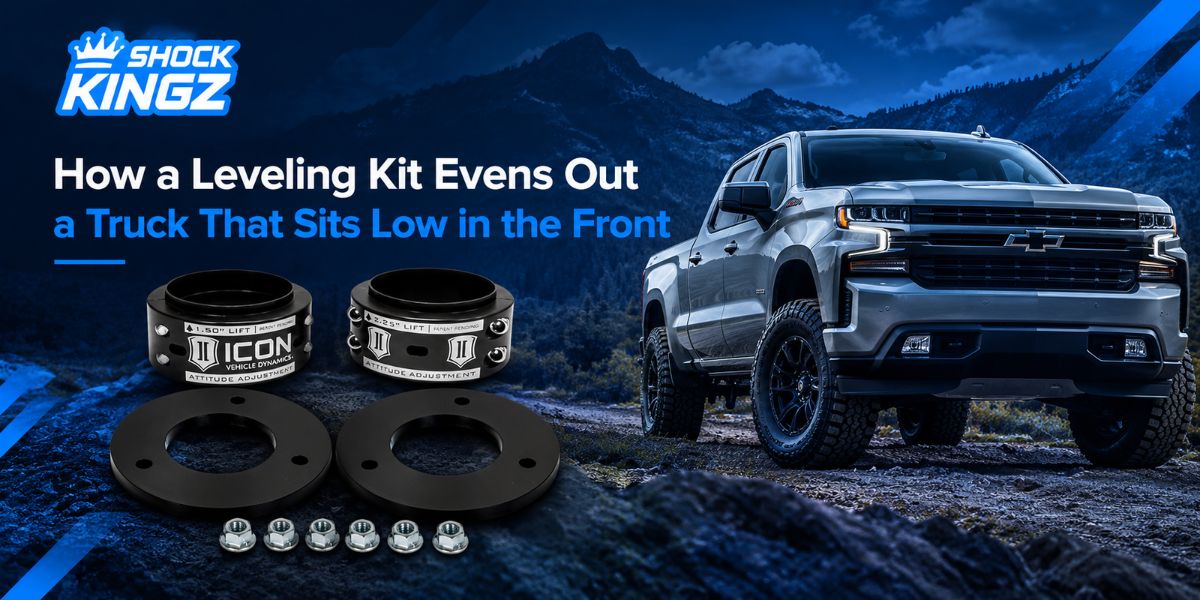
Pull up beside almost any new pickup and study the fender gaps. The front usually sits an inch or two lower than the rear, even with an empty bed. That small tilt is called factory rake, and a leveling kit is the most common way owners correct it. It is a simple front-end upgrade that raises the nose, balances the stance, and opens up room for bigger tires. Fixing it is affordable and clearly visible.
Still, plenty of drivers are unsure what these kits actually contain, how they change the suspension, or whether the result is worth the money. This guide answers those questions in plain language, from how the parts work to what to check before installing one. You will also find fitment tips, common mistakes to avoid, and answers to the questions owners ask most. For drivers browsing ShockKingz, knowing the basics first makes choosing parts far easier.
What Is a Leveling Kit?
A leveling kit is a set of parts that raises the front of a truck or SUV so the vehicle sits flat from bumper to bumper. Most kits add roughly half an inch to about two and a half inches up front, depending on the vehicle and the design. The rear stays where it is, which is the main difference between leveling and a full lift.
Why Trucks Leave the Factory Sitting Nose Down
Manufacturers build rake into pickups on purpose. When a driver loads the bed or hooks up a trailer, the rear suspension compresses and the truck settles into a level position. The trade-off is that an empty truck looks nose low, and the front end carries less ground clearance than owners expect.
How Does a Leveling Kit Work?
Every kit does the same basic job: it changes where the front suspension sits at rest. The method depends on the suspension design, and the right choice often comes down to how much height is wanted and how the truck is used. Trucks with independent front suspension, which covers most modern pickups and SUVs, accept several different styles of kit.
Spacers and Strut Extensions
The simplest option is a spacer that sits on top of the strut or between the spring and its mount. It pushes the spring or strut higher, which lifts that corner of the truck. Spacers are affordable and quick to fit, but the factory shock stays in place, so its length and damping still matter.
Leveling Springs
Some owners swap the original coil for a taller spring. A front leveling kit built around springs, such as the Eibach hybrid front leveling springs for the Ford Maverick, raises the vehicle by changing the spring itself. This keeps the ride tied to a matched part instead of a stacked spacer.
Torsion Bar Adjustment
Many older half-ton trucks use torsion bars instead of coil springs. Their kits usually rely on new keys or adjusters that twist the bar and raise the ride height. Fitting shocks built for adjustable ride height is another route, and the guide on ride height adjustable shocks explains where that approach works and where it does not.

Benefits of Installing a Leveling Kit
Owners usually choose a leveling kit for a mix of looks and function.
- Better stance: The truck sits level instead of leaning forward.
- More clearance: Raising the front gives larger tires room to turn and flex.
- Balanced load: A level truck spreads weight more evenly between the axles.
- Lower cost: Leveling typically costs far less than a complete lift.
Appearance is the loudest reason, but the practical gains matter too. Anyone planning bigger wheels will find that a few extra inches up front often decides whether the tires rub.
Is a Leveling Kit Worth It?
For most truck owners, yes, provided the goal is realistic. A leveling kit makes sense for someone who wants a flat stance, a little extra front clearance, or space for slightly larger tires without paying for a full lift. It is a weaker fit for drivers chasing serious off-road articulation or very large tires, because a small front-only change cannot solve those needs alone. Daily commuters, weekend towers, and light trail users tend to be the happiest buyers, since they get a visible improvement without rebuilding the entire suspension.
Leveling Kit vs Lift Kit
The two terms get mixed up constantly. A leveling kit corrects the gap between front and rear. A lift kit raises the whole vehicle, usually with new springs, shocks, and arms at both ends. A detailed breakdown of leveling kit vs lift kit options helps drivers decide whether a modest front-end change is enough or whether a full build makes more sense.
What to Check Before You Install
Changing ride height also changes suspension angles, so a little planning goes a long way.
- Measure first: Record front and rear fender heights so the result can be judged honestly.
- Respect the limits: Raising the front too far can stress ball joints and CV axles.
- Plan an alignment: New angles affect tire wear and steering, so book one after installation.
- Match the shocks: A taller front may leave stock shocks near the end of their travel.
Alignment settings matter more than most owners expect, and the explainer on suspension geometry shows why caster, camber, and toe move after any height change.
Common Leveling Kit Mistakes
Most problems come from rushing the decision. Buying a kit that does not match the exact year and drive type is the first one. Another is going for the biggest number on the box, which pushes axle angles and ball joints harder than the factory design expected. Skipping the rear check also catches people out, since a heavily loaded bed can bring the squat right back. Taking the time to confirm fitment keeps the project simple and the truck predictable.
How to Choose the Right Leveling Kit
Start with the vehicle. Year, make, model, and drive type decide which designs will fit. Next, set a realistic target height and a tire size to go with it. Drivers who tow or carry heavy loads should look for load-rated options. Those who want matched components rather than a single add-on can compare shock and spring kits or the complete suspension packages. The broader suspension kit buying guide walks through the same decision in more detail.
Final Thoughts
A leveling kit is one of the simplest ways to fix a nose-down stance, clear room for bigger tires, and give a truck a more balanced look. The best results come from measuring first, choosing parts that fit the vehicle, and finishing with an alignment. With a wide range of fitment-specific options, ShockKingz makes it easy to find a setup that matches the truck, the tires, and the way it is driven.
Ready to level your truck?
Shop Leveling Kits →
Frequently Asked Questions
Expert answers about leveling kits, lift height, ride quality, installation, and suspension alignment.
A leveling kit raises the front of a truck or SUV so it sits level with the rear, removing the factory rake found on many pickups.
Most front leveling kits add roughly half an inch to two and a half inches of height, though the exact gain depends on the vehicle and kit design.
It can change ride feel slightly because the front sits higher. Well-matched parts and a proper alignment usually help maintain predictable handling and everyday comfort.
Many owners install leveling kits themselves using suitable tools and properly rated vehicle supports. Working around loaded coil springs can be dangerous, so professional installation is recommended if you are unsure.
Yes. Raising the front can change caster, camber, and toe. An alignment after installation helps prevent uneven tire wear and keeps steering predictable.











Leave a comment
This site is protected by hCaptcha and the hCaptcha Privacy Policy and Terms of Service apply.