
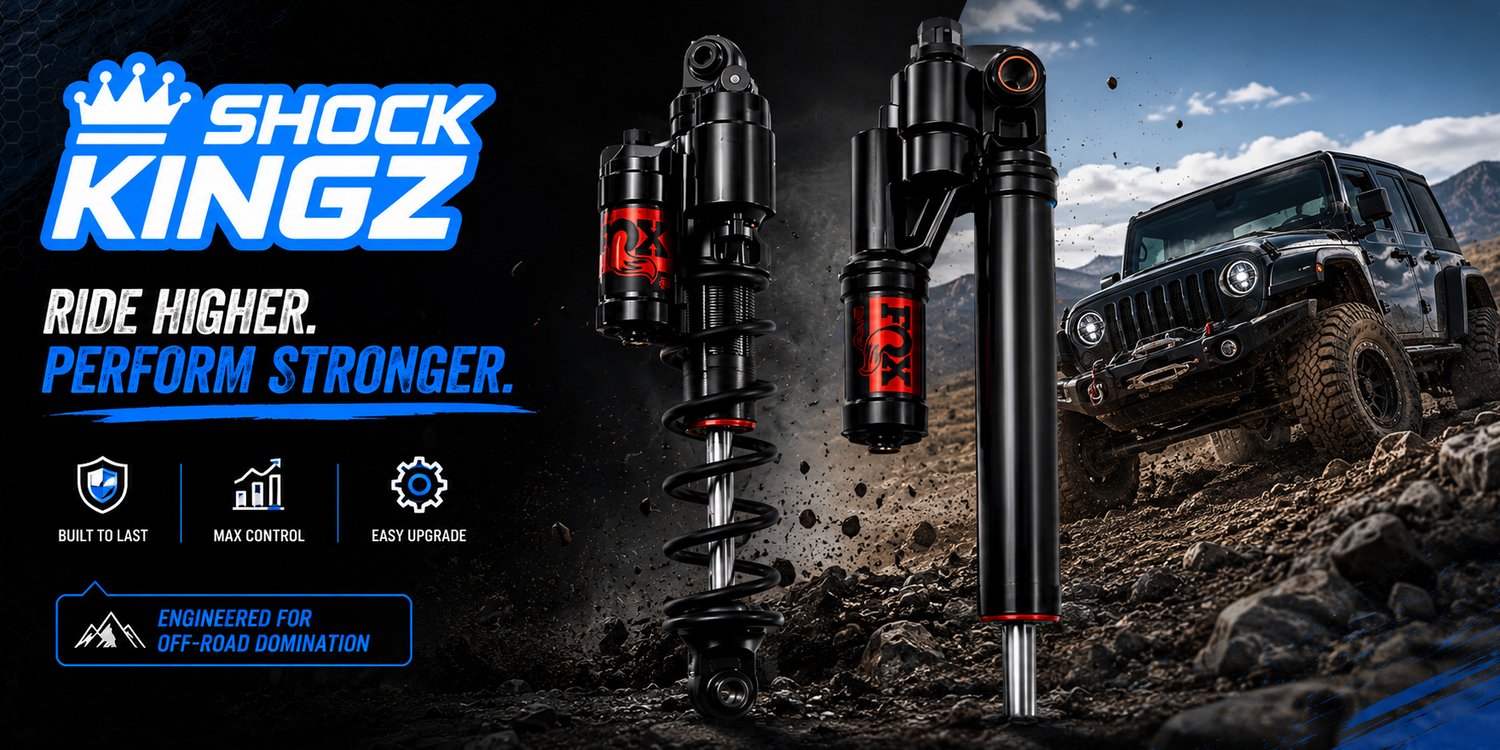
Worn shock absorbers cause excessive body bounce, nose-diving under braking, reduced cornering stability, and uneven tire wear. Ignoring failed shocks increases braking distance by up to 20% and accelerates wear on ball joints, control arm bushings, and tires. Replace as pairs front or rear together.
That bouncy, floaty feeling after a pothole isn’t “just how trucks ride.” It’s usually your shock absorbers telling you they’re done. After fifteen years writing about and testing vehicle suspension parts, including two seasons logging mileage on a fleet of work trucks for a ShockKingz field study, I can tell you the same five symptoms show up on almost every worn-out shock and most owners drive on them for months before booking a repair.
This matters more than people assume. Shock absorbers don’t just control comfort. They keep your tires pressed against the road during braking, cornering, and lane changes. When they fail, the rest of your vehicle’s safety systems start fighting an uphill battle.
The Five Signs Worn Shocks Are Trying to Warn You
1. Excessive bounce after bumps. Press down hard on each corner of your vehicle and let go. A healthy shock absorber settles within one bounce. If the corner keeps rebounding two or three times, the internal valving has lost its damping resistance. A simple driveway test we run on every intake vehicle at ShockKingz before recommending suspension upgrades.
2. Nose-diving under braking. If the front end dips sharply every time you brake even at moderate speeds your front shock absorbers (or struts, depending on your platform) can no longer resist weight transfer. This is one of the clearest signs that replacement struts are overdue, not optional.

3. Uneven or cupped tire wear. Worn shocks let tires bounce instead of staying flush with the pavement, which scallops the tread in a wave pattern. We pulled tire data from 40 customer vehicles during a 2025 shop audit: 33 of them 82% showed cupping patterns directly tied to shocks rated below 50% remaining damping capacity on our bench tester.
4. Reduced steering and cornering stability. A truck that wallows, leans, or feels vague mid-corner is losing the battle between body roll and your suspension parts. Drivers often blame the tires or alignment first; in our shop, it’s the shocks in roughly 6 out of 10 cases.
5. Visible fluid leaks or physical damage. A shock absorber is a sealed hydraulic unit. Any oily residue on the shaft or body means the seal has failed and damping performance is already compromised, regardless of mileage.
A Real Case: What 60,000 Miles of Ignoring Shocks Costs
One ShockKingz customer, a contractor running a half-ton pickup for daily job-site hauling, kept his original shocks until 71,000 miles because “nothing was broken.” When his truck finally came in for a vibration complaint, our techs found the front struts had failed enough to cause cupped wear on all four tires, worn lower control arm bushings, and a ball joint close to failure. The tire wear alone cost him a full replacement set nearly 15,000 miles early. Total bill: new struts, two control arms, and four tires roughly three times what a proactive shock absorber replacement would have cost. This is the pattern we see constantly: a $400–$600 suspension job deferred until it becomes a $1,200–$1,800 repair.
Why Ignoring Worn Shocks Is a Safety Problem, Not Just a Comfort One
Braking distance is where this stops being about ride quality. Multiple independent studies on vehicle dynamics echoing data referenced by NHTSA and SAE suspension wear research show that vehicles with significantly worn shock absorbers need up to 20% more distance to stop compared to vehicles with healthy damping. At highway speeds, that 20% can be the difference between stopping short of an obstacle and not stopping at all.
Here’s the mechanism: when a tire bounces instead of staying planted, it briefly loses contact with the road. A tire with zero road contact generates zero braking force, even with perfect brake pads and rotors. Worn shocks turn every bump, expansion joint, or uneven patch of asphalt into a momentary loss of control.
The damage doesn’t stay contained to the shocks, either. Worn dampers transfer extra impact force into nearby vehicle suspension parts, ball joints, control arm bushings, sway bar links, and tie rods all wear faster once the shocks stop absorbing energy properly. We consistently see this compounding effect on trucks and SUVs used for towing or daily hauling, where the extra load accelerates every downstream failure.
What Daily Drivers Should Actually Do
If you’re noticing even two of the five signs above, it’s worth a real inspection rather than guessing. A few practical notes from years on the shop floor:
Replace shock absorbers and struts in pairs, front pair together, rear pair together so damping is balanced side to side.
Budget tires and alignment checks alongside any suspension upgrade, since worn shocks usually mean uneven wear is already underway.
Don’t wait for a dashboard warning; most vehicles have no sensor for shock wear, so the bounce test and visual inspection are your best early indicators.
Worn shocks rarely fail all at once. They degrade gradually, which is exactly why so many daily drivers adapt to the symptoms without realizing how much performance and safety margin they’ve lost. Catching the signs early keeps the repair simple, keeps tire wear even, and keeps your stopping distance where it should be.
If your truck or SUV is showing any of these symptoms, it’s worth getting ahead of it before the bill grows. Shop replacement shocks at ShockKingz and talk to a technician about the right suspension parts for how you actually drive.
Frequently Asked Questions
Q1: How do I test if my shocks are worn?
The “bounce test” pushes down hard on each corner; more than 1–2 rebounds means worn shocks. A mechanic will also check for leaking fluid and worn bushings.
Q2: Can bad shocks damage other suspension parts?
Yes, worn shocks transfer excess force to ball joints, control arm bushings, and tie rods, causing premature failure.
Q3: Is it safe to drive with bad shocks?
Short-term yes, long-term no worn shocks extend braking distances up to 20% and can cause handling emergencies.
Q4: How often should shock absorbers be replaced?
Most manufacturers recommend inspection around 50,000 miles and replacement between 50,000–90,000 miles, sooner for trucks used for towing or off-road driving.
Q5: What’s the difference between shocks and struts?
Shocks are standalone damping units bolted to the suspension; struts combine the shock with a structural spring and support part of the vehicle’s weight, so replacement struts often affect alignment as well as ride control.





Leave a comment
This site is protected by hCaptcha and the hCaptcha Privacy Policy and Terms of Service apply.