
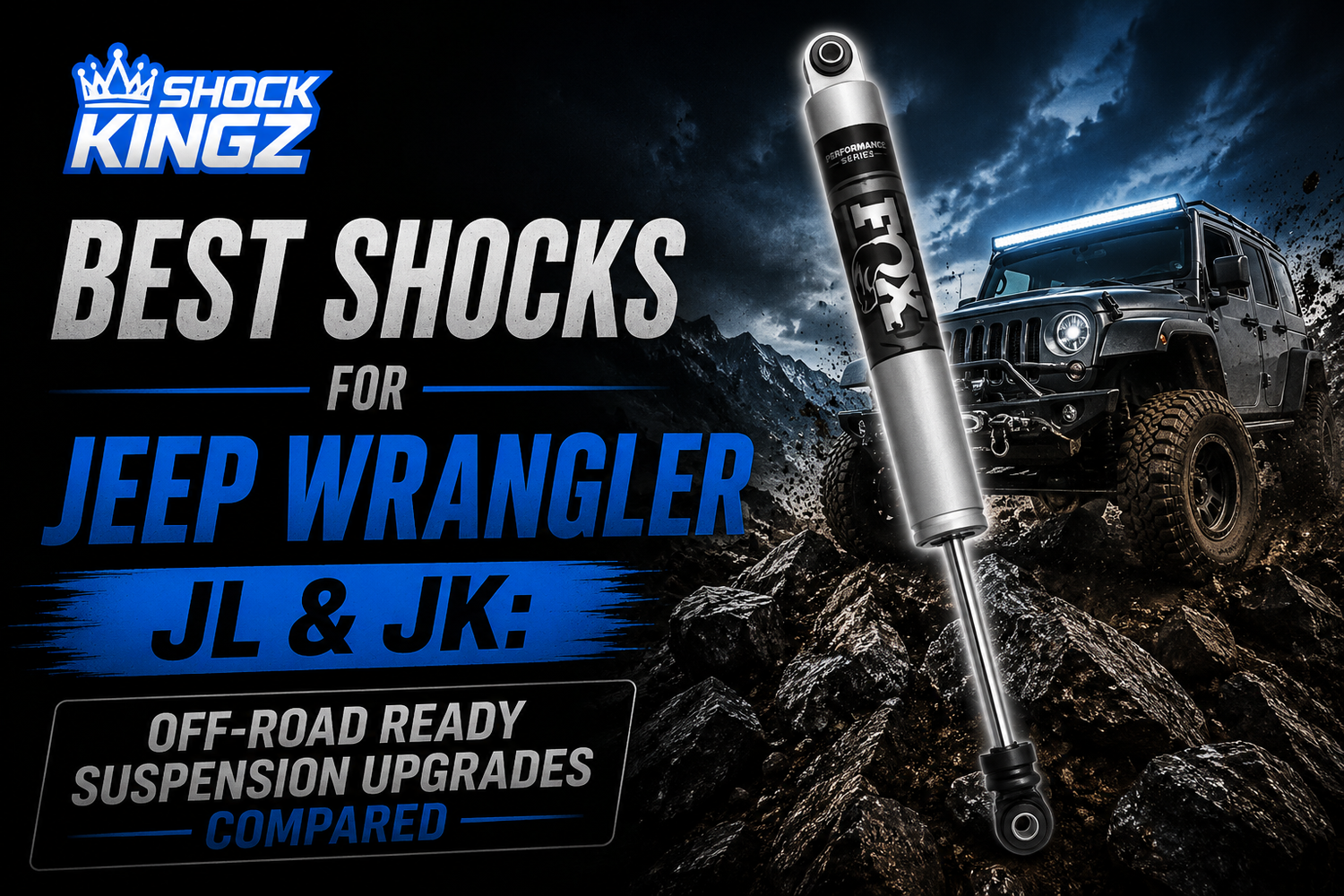
A stock Jeep Wrangler JL or JK rides on shocks tuned for a specific ride height and a specific kind of driving: pavement, mild trails, and not much else. The moment you add a lift or step up to 33s or larger, those factory shocks are working outside the range they were built for, and it shows up fast - wallowing over whoops, harsh rebound on rocks, or shocks that top out and clunk on full droop. Suspension upgrades aren't optional once a Wrangler is lifted; they're what keeps the rest of the build usable.
For the Jeep Wrangler JL and JK, the best shock depends on your lift and terrain. Monotube OEM-style shocks with remote reservoirs handle 2 to 3.5-inch lifts well, delivering a balanced ride on trail and street. Performance shocks with external reservoirs and multi-stage valving handle aggressive rock crawling and repeated trail runs better than a standard twin-tube design. Budget-friendly adjustable shocks with multi-position tuning offer a versatile middle ground for dual-purpose builds that split time between commuting and weekend trails.
Why Factory Shocks Fail After a Lift
The core issue is travel. Factory JL and JK shocks are valved and sized for the suspension's stock arc of motion. Add 2 to 3.5 inches of lift and that arc changes - the shock has to compress and extend further than the factory unit was built for. Run factory shocks on a lifted Jeep long enough and they'll top out repeatedly on articulation, which stretches the shaft seal, accelerates internal wear, and eventually causes a leak. We've seen this on customer JLs within a single off-road season: a 3-inch lift on factory shocks led to visible oil weeping at the shaft within about four months of regular trail use, well before any comparable aftermarket unit would show wear.
Off-road suspension built around the correct shock length for your lift height solves this directly. A shock sized for a 2 to 3.5-inch lift is valved and dimensioned so it doesn't top out at full droop, which is the single biggest factor separating a Jeep that rides well after a lift from one that doesn't.
Monotube Reservoir Shocks: Balanced Daily and Trail Performance
Monotube designs with a piggyback or remote reservoir separate the oil and gas chambers, which reduces heat-related fade during extended trail runs - a real issue on long rock-crawling sessions where the shock is working continuously. This style of shock absorber tends to strike a middle ground: firm enough to control body motion on technical terrain, compliant enough not to beat up occupants on the highway drive home. For JL and JK owners running a moderate lift in the 2 to 3.5-inch range and splitting time between pavement and trail, this is usually the shock category that shows up most often in build threads and shop recommendations alike.

Fox 2.0 Performance Series: Built for Repeated Hard Use
Fox's 2.0 Performance Series shocks use a larger-diameter body and external reservoir to manage heat and maintain consistent damping even during long, aggressive trail runs - the kind of driving where a smaller shock starts to fade after twenty minutes of continuous articulation. Wrangler owners running larger tires and tackling technical rock crawling regularly point to this consistency as the deciding factor, since a shock that fades mid-trail changes how the vehicle handles exactly when precise control matters most. It's a heavier-duty option among suspension parts, and the tradeoff is a firmer ride quality that some daily drivers notice on smooth pavement.
Rancho RS9000XL: Adjustable and Budget-Conscious
The Rancho RS9000XL takes a different approach, offering 9-position manual adjustability so the driver can dial damping firmness up for towing or trail work and back down for a smoother daily ride. It's a genuinely useful feature for a dual-purpose Wrangler that alternates between commuting and weekend trips, and it's priced well below premium reservoir-equipped options. It won't match the fade resistance of a larger external-reservoir shock on a long, punishing rock crawl, but for moderate trail use and mixed driving, the adjustability makes it a practical, serviceable choice - a point echoed consistently across JL and JK owner forums when this shock comes up.
Matching the Shock to Your Lift and Driving Style
The right call comes down to two questions: how much lift, and how the Jeep actually gets driven. A 2-inch leveling kit with mostly street use doesn't need the same shock as a 3.5-inch lift running 35s on weekend rock crawling trips. Buying based on lift height alone and ignoring how hard the vehicle gets driven is the most common mistake we see - a shock that's perfect for a mild commuter build will fade quickly under sustained trail abuse, and an aggressive reservoir shock on a mostly-street Jeep just adds cost and ride harshness without a real benefit. Matching shock length to lift height first, then choosing the damping style that fits how many hours a month the Jeep actually spends off-road, is what makes a suspension upgrade pay off rather than just adding a part to the build sheet.
Call to Action
Shop Jeep Wrangler Shocks at Shockkingz
FAQs
Q1. What shocks are best for a Jeep Wrangler JL with a 3.5-inch lift?
Fox 2.0 Performance shocks or a quality monotube reservoir shock are the two best fits - both deliver the correct extended travel for a 3.5-inch lift without feeling harsh on the street.
Q2. Do I need new shocks when I lift my Jeep?
Yes. Factory shocks are too short for lifted applications, and running them on a 3-inch or larger lift causes the shock to top out repeatedly, which damages the internal seals and creates handling issues over time.
Q3. Are Rancho shocks good for Jeep rock crawling?
Rancho RS9000XL adjustable shocks are a solid budget pick for trail Jeeps. They're not as refined as Fox or a premium reservoir-equipped shock, but they're serviceable and genuinely adjustable for most off-road use.
Q4. What size lift requires a dedicated off-road shock instead of factory shocks?
Most suspension techs consider 2 inches of lift the point where factory shocks start running out of usable travel. Past that, a shock built for the extended range is needed to avoid topping out on droop.
Q5. How do I choose between a comfort-focused shock and a rock-crawling shock for a Wrangler?
Match the shock to how the Jeep is actually driven, not just the lift height. A monotube reservoir shock suits mixed street-and-trail use, while a larger external-reservoir performance shock is better for sustained, aggressive rock crawling.



Leave a comment
This site is protected by hCaptcha and the hCaptcha Privacy Policy and Terms of Service apply.