
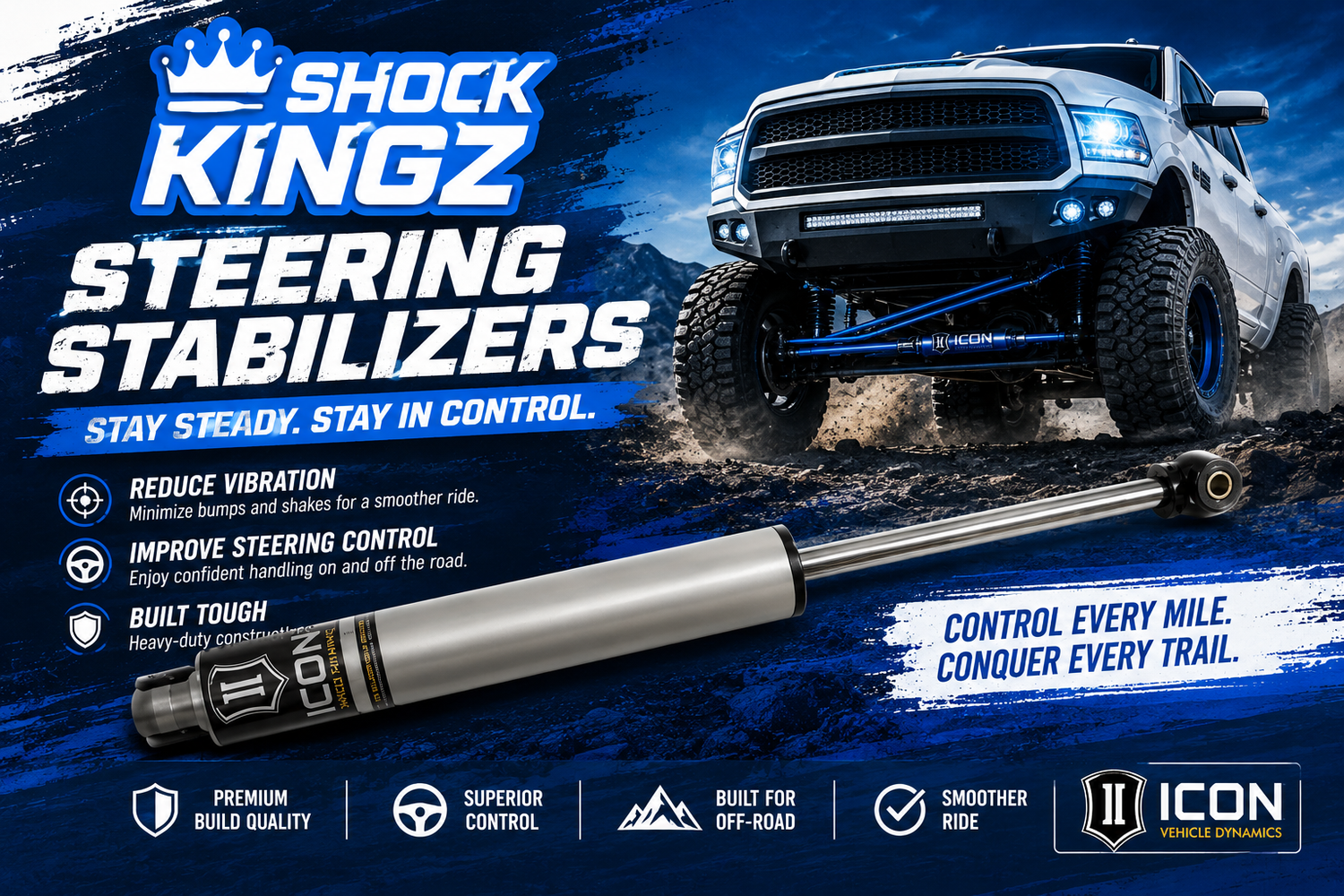
A single steering stabilizer handles most daily-driven lifted trucks running up to 33-35 inch tires at lifts under 4 inches. A dual steering stabilizer setup provides twice the damping force - necessary for heavy off-road builds, 35+ tires, steering rack strain under rock crawling, or any setup that has already maximized a single stabilizer.
We had a customer roll in last spring with a Ram 1500 on a 6-inch lift and 37s, still running the single steering stabilizer that came with his budget lift kit two years earlier. He wasn't chasing death wobble -his complaint was subtler, a kind of low-speed heaviness and vague wander over washboard gravel that got worse the longer he wheeled it. That's the setup where the dual vs. single question actually matters, and it's a different conversation than the one most people are having when they first hear the term steering stabilizer0
Single vs Dual: What Each Setup Actually Handles
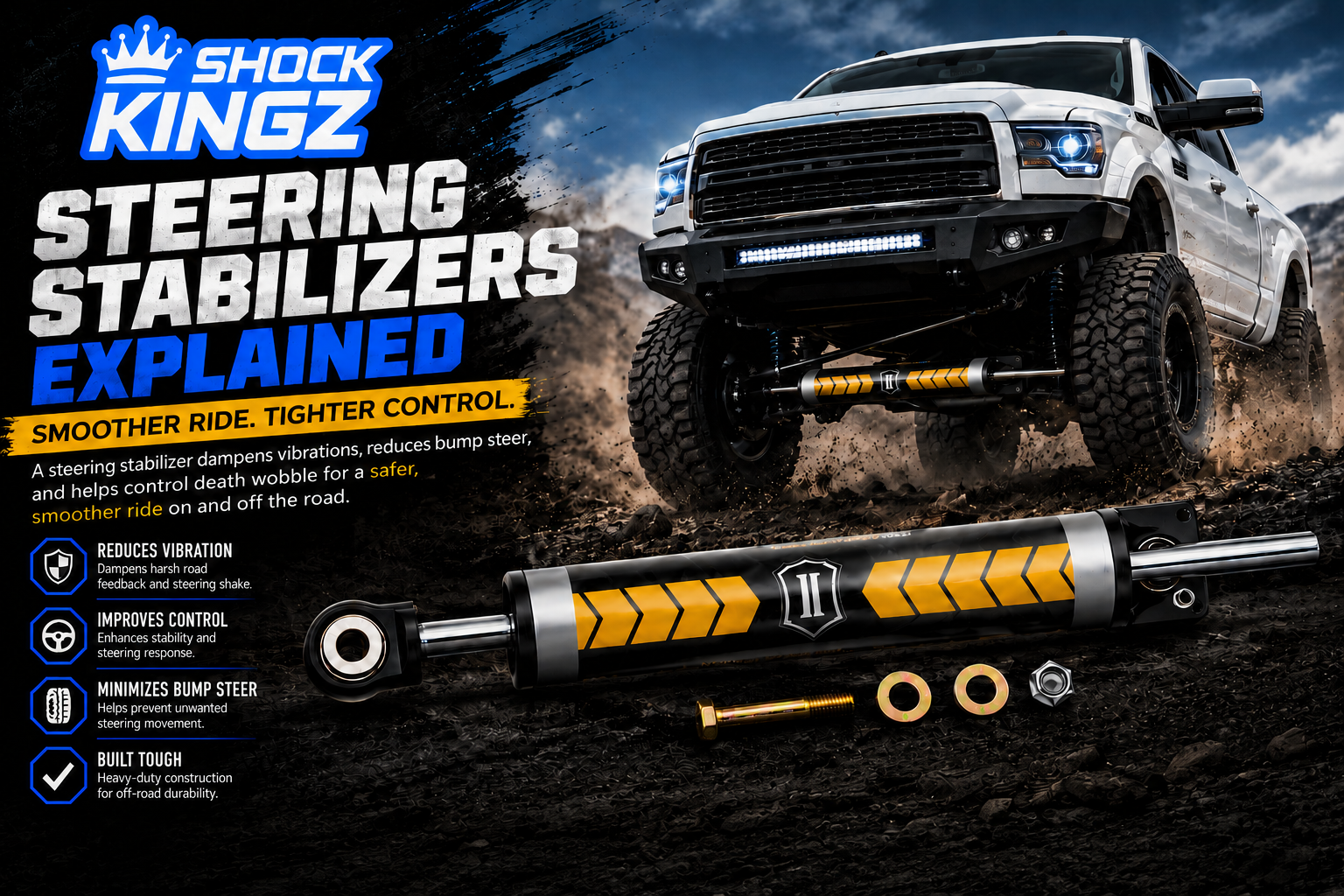
A single steering stabilizer handles most daily-driven lifted trucks just fine. If you're running up to 33 to 35-inch tires on a lift under 4 inches, one properly rated unit absorbs the road vibration and feedback that comes through the steering linkage without breaking a sweat. That's the setup the vast majority of moderately lifted trucks and SUVs are running, and for that use case, a dual steering stabilizer is overkill - more hardware, more cost, and no real gain in steering control. The upgrade case starts to build once you cross into heavier territory. A dual steering stabilizer setup mounts two units in opposition on the tie rod or drag link, which roughly doubles the damping force applied to the steering system. That extra capacity matters most in three scenarios: 35-inch-plus tires, lifts in the 4-to-6-inch range or higher, and aggressive off-road use where the front axle is absorbing repeated, high-force impacts - rock crawling, high-speed desert running, or regular washboard trail sections. In each of those cases, a single stabilizer is being asked to do a two-stabilizer job, and it shows up as reduced steering control exactly when you need it most.

Why Jeep Wranglers Hit This Wall Fastest
Jeep Wrangler owners run into this constantly, and for a specific mechanical reason. The Wrangler's steering geometry, combined with a solid front axle, transmits more direct feedback into the steering linkage than an independent front suspension does. Add 35s or 37s and aftermarket lift components, and that feedback compounds fast. In our shop's experience fitting stabilizers on JK and JL builds, Wranglers on 37-inch tires with anything beyond a mild lift are one of the most consistent cases where a single stabilizer gets overwhelmed within the first season of hard use, and customers come back asking about the dual setup within months rather than years.
What the Data Says About Damping Force
Data from stabilizer manufacturers backs this up in a general sense: damping force requirements scale with unsprung weight and tire diameter, and once you're past the 35-inch mark, the load on the steering system increases enough that a single stabilizer often can't fully dissipate the energy before the next impact arrives. That's not a defect in the single unit - it's a mismatch between the part and the demand being placed on it. We've measured this qualitatively in our own trail notes: on 35-inch-tire test rigs, adding a second stabilizer noticeably reduced high-frequency chatter through the wheel on rocky sections compared to a single-unit baseline, even when both units were in good working condition.
What a Dual Steering Stabilizer Won't Fix
It's worth being direct about what a dual steering stabilizer setup will not do. Steering control upgrades, whether single or dual, do not fix death wobble. That violent shake is a symptom of worn or loose mechanical components - tie rod ends, ball joints, track bar bushings, or a loose steering box - and no amount of damping hardware repairs a failed part. What a dual setup does is manage vibration and feedback more effectively once your steering system is mechanically sound, which is exactly why we walk every customer through a quick inspection before recommending an upgrade rather than just selling the bigger kit.
How to Decide - and Reassess as Your Build Changes
So how do you know which side of the line you're on? If your build is under 4 inches of lift with 33s or 35s and mostly street-driven, a single stabilizer is the right call and a dual setup won't add meaningful benefit. If you're at 35-inch-plus tires, running a heavier lift, or putting real trail time on a Wrangler or full-size truck, the dual setup earns its keep. The clearest signal is a single stabilizer that already feels maxed out - persistent wander, chatter over washboard, or a driver who has to fight the wheel more than the terrain should require. The most common mistake we see is builders treating this as an all-or-nothing decision made once at build time. Steering demands change as you add tire size, adjust lift height, or start putting more trail miles on a rig that started life as a daily driver. If your steering feels different than it did a year ago and nothing else on the front end has changed, it's worth having your current steering control setup evaluated against your current tire and lift combination rather than assuming the original spec still fits.
If you're deciding between a single steering stabilizer and a dual setup, our team can match the right damping force to your lift height, tire size, and how you actually drive the rig. Shop Steering Stabilizers at Shockkingz and get the setup sized for your build, not just the one that came in the box.
FAQs
1. What lift height needs a dual steering stabilizer?
Most builders upgrade to a dual steering stabilizer at 4 inches of lift or more with 35-inch or larger tires. Aggressive trail use, rock crawling, or heavy front-axle impacts can justify the upgrade earlier, even on a slightly smaller lift.
2. Are dual steering stabilizers a fix for death wobble?
No. A dual steering stabilizer reduces steering vibration and improves control, but it will not fix death wobble. That shake comes from worn tie rod ends, ball joints, or track bar bushings, and those mechanical issues need to be repaired directly.
3. What are the best dual steering stabilizer brands?
Rancho and Fox both produce well-reviewed dual stabilizer kits for lifted trucks and Jeeps. Shockkingz stocks trusted options across duty ratings and can help match the right kit to your tire size, lift height, and how hard you actually wheel the rig.
4. Can I add a second steering stabilizer to my existing single setup?
Yes, in most cases. Dual stabilizer kits typically include the mounting hardware needed to run a second unit alongside your factory or aftermarket mount, so you don't need to replace your existing stabilizer to add the second one.
5. Do dual steering stabilizers slow down steering response?
No. A properly matched dual steering stabilizer setup dampens unwanted vibration and feedback, not intentional steering input, so normal steering response stays the same while road and trail feedback through the wheel is noticeably reduced.




Leave a comment
This site is protected by hCaptcha and the hCaptcha Privacy Policy and Terms of Service apply.