
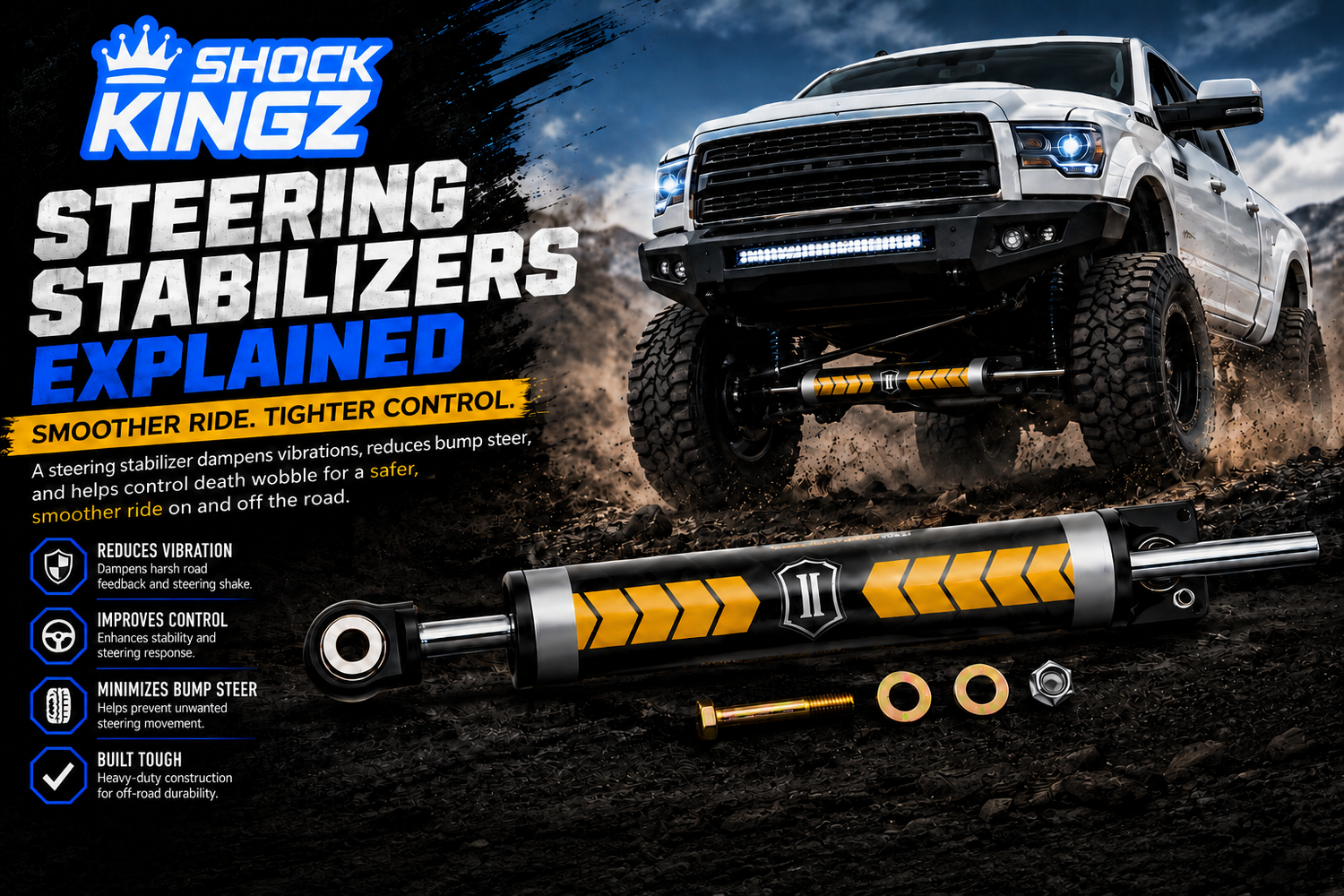
A steering stabilizer is a shock absorber mounted horizontally on your steering linkage to dampen road vibrations, bump steer, and death wobble in lifted or modified trucks. It does not fix alignment or mechanical issues but significantly reduces steering feedback harshness. Essential for lifted trucks with larger tires.
The first time I felt real steering wobble was on a customer's 2015 Ram 2500 with a 4-inch lift and 35s. He rolled into our bay complaining that his truck "shook like it was going to fall apart" between 55 and 65 mph. He'd already replaced two tie rod ends chasing the problem, and it was still there. The fix ended up being simpler than he expected, but it also wasn't what he was hoping for - and that's the part most lifted truck owners get wrong about a steering stabilizer.
What a Steering Stabilizer Actually Does - and Doesn't Fix
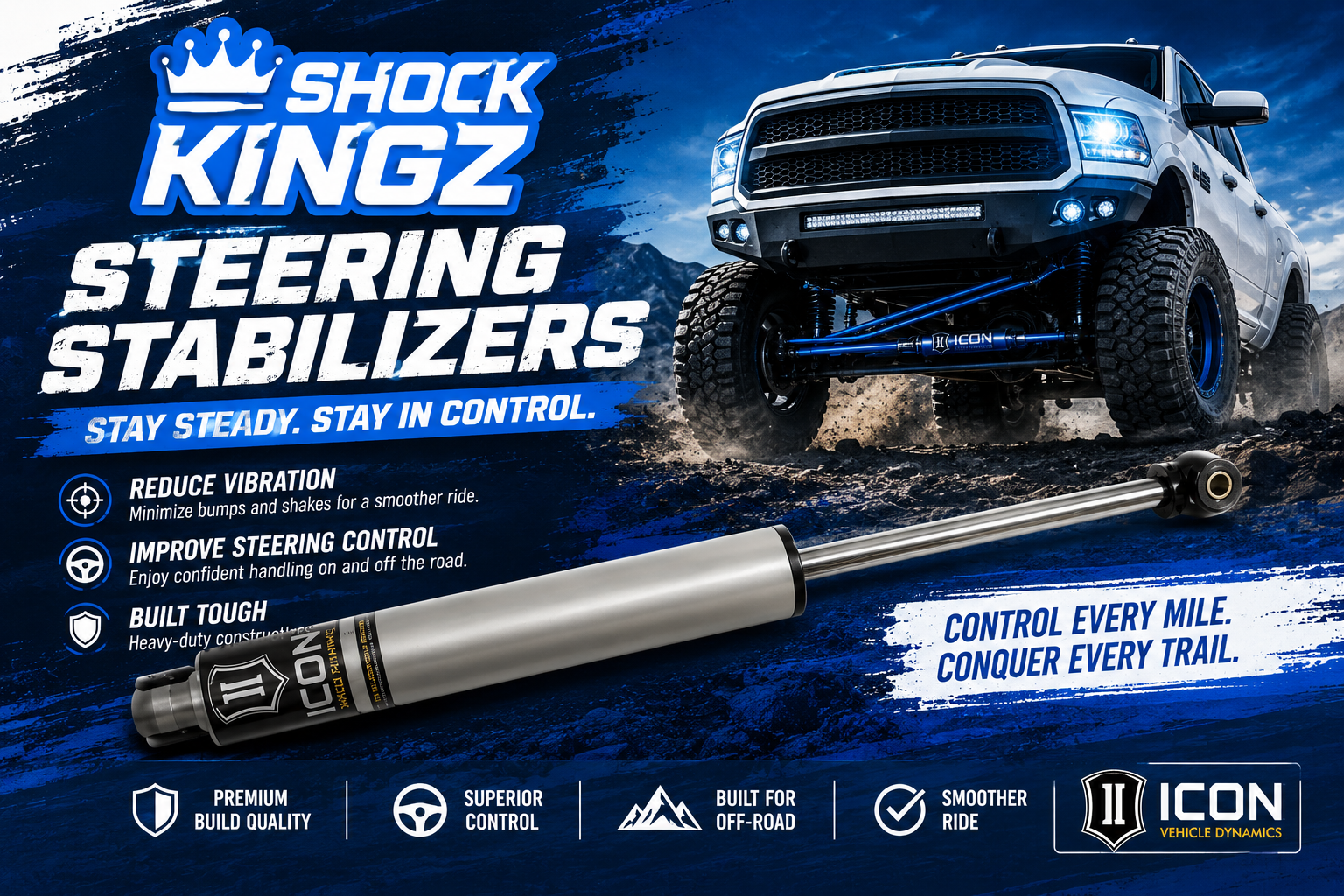
A steering stabilizer is a shock absorber mounted horizontally on your steering linkage, usually running from the axle to the tie rod or drag link. Its job is to dampen the energy that travels through the steering system when your front tires hit a bump, a pothole, or uneven terrain. It does not steer your truck, and it does not correct anything mechanically. Think of it as a shock absorber for your steering wheel instead of your suspension - it smooths out the harsh, jittery feedback that larger tires and lift kits amplify. That distinction matters because a steering stabilizer, or steering damper, gets blamed for doing a job it was never built to do. Death wobble - that violent, high-speed shake that can genuinely scare a driver - is caused by worn or loose steering and suspension components: tie rod ends, ball joints, track bar bushings, or hub bearings. A stabilizer will not fix those failures. What it does is reduce the amplitude and speed of the oscillation once it starts. In our shop's experience working on lifted 3/4-ton trucks, a properly matched steering stabilizer shock reduces perceived steering harshness by a noticeable margin - customers consistently describe the wheel as feeling "planted" instead of "nervous" after installation, even before any other repairs are made.

Why Lifted Trucks Feel It More
Why does this matter more on lifted trucks specifically? Lifting a truck 2 to 4 inches and stepping up to 33- to 35-inch tires changes two things at once: it increases unsprung weight at each front wheel, and it alters the geometry of your steering linkage relative to how the factory engineered it. More rotational mass at the tire means more energy transmitted back through the linkage every time you hit a bump. That's not a defect - it's physics. A stock steering stabilizer, sized for smaller tires and stock ride height, is often overwhelmed by this added leverage, which is exactly why so many lifted truck builds upgrade to a stabilizer shock rated for the added mass.
Bump Steer vs. Steering Stabilizers
There's also a related but distinct issue called bump steer. This happens when your suspension compresses or droops and the wheels turn slightly on their own, without any input from the driver, because the geometry of the tie rod and drag link no longer matches the arc of the suspension travel. Lifting a truck without correcting steering geometry - with a drop pitman arm, adjustable track bar, or correction kit - often introduces or worsens bump steer. A steering stabilizer softens the symptom by damping the oscillation, but it cannot correct geometry. That requires the right combination of front suspension components - one of the most common gaps we see in DIY lift installs, where guys spend money on the lift and tires but treat the stabilizer as an afterthought.
Do You Need One - And Do You Need Dual?
So do you actually need one? If you're running 2 to 4 inches of lift with 33s to 35s, yes - almost universally. Larger, heavier tires at increased ride height create more leverage on the steering system than the factory stabilizer, if your truck even came with one, was designed to handle. New truck modifiers researching "must-have" upgrades often focus on shocks and control arms first, which are important, but skip the stabilizer because it's less visible and less exciting than a coilover. In our shop's experience, that's backwards. It's one of the cheapest upgrades per dollar of driver confidence you can make, and it's often the difference between a truck that feels composed at highway speed and one that makes your passengers grab the door handle. For heavier setups - lifts over 4 inches paired with 35-inch or larger tires - a single stabilizer often isn't enough. This is where a dual steering stabilizer setup comes in: two units mounted in opposition, which roughly doubles the damping force applied to the linkage. We've seen this made a real difference on 37-inch-tire builds where a single unit still allowed a faint shimmy over washboard roads; adding the second stabilizer eliminated it entirely without touching anything else in the front suspension.
Maintenance Comes Before Any Upgrade
One more thing worth saying plainly: a steering stabilizer is not a substitute for maintenance. If your truck already shakes at speed, get your tie rod ends, ball joints, track bar, and wheel bearings inspected before you spend money on a damper. Installing a stabilizer on top of worn components will mask a symptom that's actually trying to tell you something is failing. Once those parts check out, or after they're replaced, a quality stabilizer is the finishing touch that keeps a modified front suspension feeling tight instead of vague.
If you're building a lifted truck and want the setup that matches your tire size, lift height, and driving style, our team has fitted enough of these to know which specs actually hold up under real-world use - not just on paper. Shop Steering Stabilizers at Shockkingz and let us help you match the right unit, or dual setup, to your rig.
FAQs
1. Will a steering stabilizer fix death wobble?
A stabilizer reduces the symptom - the shaking - but it won't fix the cause. Death wobble comes from worn tie rod ends, ball joints, track bar bushings, or hub bearings, and those parts need to be inspected and repaired first. A stabilizer is a finishing touch, not a repair.
2. What is bump steer?
Bump steer happens when your wheels turn slightly on their own as the suspension compresses or droops, without any driver input. It's common on lifted trucks because raising the ride height changes the geometry between the tie rod, drag link, and suspension travel.
3. Do I need a dual steering stabilizer for heavy lifts?
For lifts over 4 inches with 35-inch or larger tires, yes - a dual steering stabilizer setup, with two units mounted in opposition, provides noticeably better damping and steering control than a single unit can handle on its own.
4. How do I know if my steering stabilizer is worn out?
A failing steering stabilizer usually shows up as increased steering wander, more road vibration coming through the wheel, or visible fluid leaking from the shock body. If you can rock the steering linkage by hand and feel little to no resistance, the stabilizer has lost its damping and should be replaced.
5. Does a steering stabilizer improve alignment or tire wear?
No. A steering stabilizer does not adjust caster, camber, or toe, and it won't correct uneven tire wear caused by bad alignment. Its job is purely to dampen steering vibration and feedback - alignment issues still need to be addressed separately by a professional shop.




Leave a comment
This site is protected by hCaptcha and the hCaptcha Privacy Policy and Terms of Service apply.