
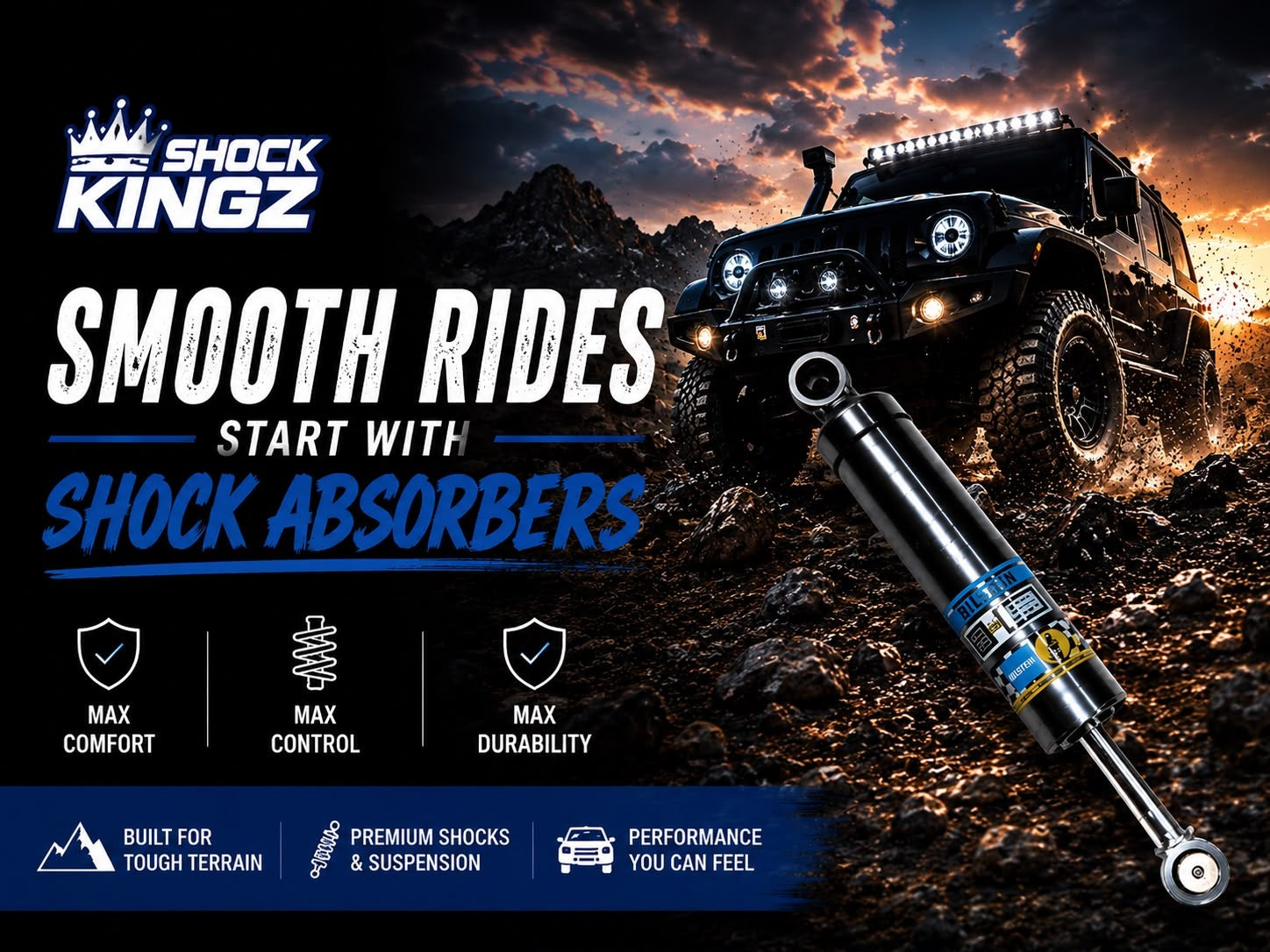
Every drive feels different depending on what's holding your vehicle together underneath - and that's exactly where shock absorbers come in. At Shockkingz, we've seen firsthand how the right set of shocks can transform a rough, unpredictable ride into something stable, controlled, and comfortable. In this guide, we'll walk through how shock absorbers work, the technology that makes them reliable, and how to pick the right set for your driving style.
What Actually Happens Inside a Shock Absorber
A shock absorber's job sounds simple - control the up-and-down movement of your suspension - but the engineering behind it is anything but basic. Inside every Shockkingz unit, hydraulic fluid and pressurized gas work together to resist sudden movement, converting kinetic energy from bumps and dips into heat that dissipates safely. Without this controlled resistance, your tires would lose contact with the road far more often, hurting both comfort and safety. Browse the full lineup in our Shocks & Struts category to see the range built for different vehicles.
Monotube vs Twin-Tube: Why Construction Matters
Not all shock absorbers are built the same way, and the internal design has a big impact on performance:
- Monotube shocks use a single chamber with a dividing piston, allowing for faster heat dissipation and more consistent damping under stress
- Twin-tube shocks are more budget-friendly but tend to lose performance faster under heavy use or extreme heat
- Monotube designs generally respond quicker to sudden road inputs, which matters most on rough or unpredictable surfaces
- The larger piston size in monotube units allows for finer damping control across different speeds
How a Quality Shock Absorber Changes the Way You Drive
It's easy to underestimate just how much your shocks influence everyday driving until you experience the difference a good set makes.
Reduced Body Roll on Turns
Worn or low-quality shocks let your vehicle lean excessively during cornering, which not only feels unsettling but can reduce tire contact with the road. Shocks are engineered to control that lean, keeping your vehicle flatter and more predictable through curves.
Better Braking Confidence
When you brake hard, weight shifts forward - and weak shocks let your vehicle dive excessively, increasing stopping distance and reducing control. A properly functioning shock absorber resists this nose-dive, helping your braking stay consistent.
Less Fatigue on Long Drives
Constant small vibrations from the road add up over a long drive, even if you don't notice them moment to moment. Shocks that absorb these vibrations efficiently mean less physical fatigue by the time you reach your destination - something daily commuters and road-trippers both benefit from.
Protection for Other Suspension Components
Shocks don't just affect comfort - they also protect the rest of your suspension. When dampers wear out, other components like bushings, control arms, and even tires take on extra stress and wear out faster than they should. Browse our Control Arms collection if you're noticing uneven wear on these components too.
Matching Shocks to How You Actually Drive
There's no single "best" shock absorber - the right choice depends entirely on your vehicle and how you use it.
If you mostly drive in the city or commute daily: Look for shocks designed for OE-level comfort that restore your vehicle's original ride, feel without a harsh edge.
If you enjoy spirited or performance driving: Choose shocks built for firmer damping and quicker response, which improve handling at the cost of some ride softness.
If you regularly head off-road: Prioritize shocks with extended travel and rugged construction designed to absorb large impacts from rocks, ruts, and uneven trails.
If you tow or haul heavy loads: Look for load-adjustable shocks that maintain consistent damping even when your vehicle is carrying extra weight.
For a complete setup rather than a single component swap, check out our Suspension Packages for matched combinations.
Common Mistakes When Replacing Shock Absorbers
Even a great set of shocks won't perform well if installed or chosen incorrectly. Watch out for these common pitfalls:
- Replacing only one shock instead of the full pair (front or rear) - this creates uneven handling
- Skipping an alignment check after installation, which can cause uneven tire wear
- Ignoring your vehicle's load rating when choosing shock stiffness
- Mixing incompatible suspension components, which can affect ride height and handling balance
In Summary
A smoother ride isn't just about comfort - it's about safety, control, and protecting the rest of your vehicle's suspension system. Shockkingz shock absorbers are engineered to deliver consistent performance whether you're commuting, towing, or tackling rough terrain, making them a smart upgrade for almost any driver.

Ready for a Smoother, Safer Ride?
Stop letting worn shocks affect your safety and comfort. Browse our full Shocks & Struts collection at Shockkingz and find the right fit for your vehicle. Want the full picture on your suspension system? Check out our Complete Guide to Shocks and Struts for a deeper breakdown of replacement timing and how top brands compare.
Frequently Asked Questions
How do I know if my shock absorbers need replacing?
Common signs include excessive bouncing, nose-diving when braking, uneven tire wear, body roll during turns, and visible fluid leaks on the shock body.
What's the difference between monotube and twin-tube shocks?
Monotube shocks use a single chamber with a dividing piston for faster heat dissipation and more consistent damping, while twin-tube shocks are generally more affordable but lose performance faster under heavy use.
Do I need to replace shocks in pairs?
Yes. Replacing only one shock can cause uneven handling and damping between the two sides, so it's best to replace them as a front or rear pair.
Can the right shocks really improve braking performance?
Yes. Shocks that control nose-dive during hard braking help maintain consistent tire contact with the road, which can shorten stopping distances.
How often should I check or replace my shock absorbers?
Most manufacturers recommend inspecting shocks every 12,000–15,000 miles, though heavy off-road or towing use may require more frequent checks.





Leave a comment
This site is protected by hCaptcha and the hCaptcha Privacy Policy and Terms of Service apply.