
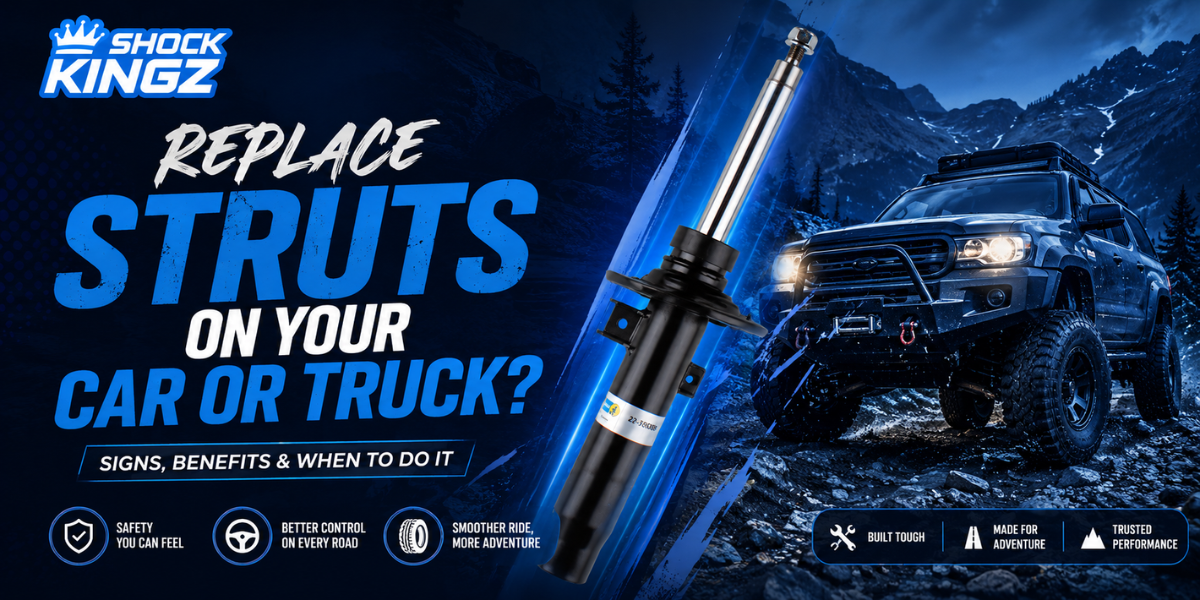
Most vehicles need replacement struts somewhere between 50,000 and 100,000 miles, though the exact number depends heavily on how and where the vehicle is driven. That range isn't a soft guideline pulled from thin air; it's the window where most manufacturers and independent technicians see measurable damping loss, even on vehicles that haven't shown obvious symptoms yet.
The width of that range, 50,000 miles on one end and double that on the other, is the part drivers usually find confusing. A commuter car driven gently on smooth highways can stretch toward the upper end of that window. A truck that tows regularly or a vehicle that spends time on gravel and washboard roads can wear out well before the 50,000-mile mark. Mileage alone is a starting point, not a verdict.
What Determines How Long Struts Last?
Strut lifespan comes down to how much work the internal damping mechanism does over time and how harsh that work is. Every strut converts the kinetic energy of spring compression into heat through hydraulic fluid moving across a valved piston. The more frequently and forcefully that happens, whether from potholes, hard braking, or constant load shifts, the faster the seals and fluid degrade.
This is why two identical vehicles can have wildly different strut lifespans. A sedan driven mostly on smooth interstate miles asks relatively little of its dampers. The same model used for a daily gravel-road commute or regular towing duty asks for constant, aggressive compression and rebound cycling, which accelerates wear on seals and internal valving well before the odometer suggests it's time. If you're already noticing bouncing, nose diving, or uneven tire wear, it's worth reviewing our guide on signs your shock absorbers are worn out to confirm what you're seeing.

Driving Conditions That Shorten Strut Life
City driving, off-road use, and towing each stress a suspension systems differently, and it's worth understanding how:
1. City and highway driving: frequent stop-and-go braking and pothole impacts cause repeated compression cycles, but on mostly paved roads the wear is gradual.
2. Off-road or unpaved driving: washboard surfaces, rocks, and ruts create constant high-frequency jolts that most street-tuned struts weren't designed to absorb indefinitely.
3. Towing and hauling: added weight shifts more load onto the rear suspension, forcing shocks and struts to control spring movement under a heavier, less forgiving load with every bump.
Vehicles that regularly combine two or more of these conditions, a truck that tows and sees gravel roads, for example, are the ones most likely to need attention well before the 100,000-mile mark. It's a cumulative effect rather than any single trip causing damage.
Climate and Road Salt Exposure
Mileage and driving style aren't the only variables. Climate plays a bigger role than most drivers expect, particularly in regions that use road salt or other de-icing chemicals through the winter. Salt and moisture accelerate corrosion on the strut body and piston rod, and once corrosion pits the rod's surface, it can compromise the seal that keeps hydraulic fluid contained. A strut that's mechanically sound but corroded can fail well ahead of a comparable strut operated in a dry climate.
Humidity and extreme temperature swings have a similar, if slower, effect. Repeated freeze-thaw cycles stress rubber bushings and seals, which is part of why strut replacement patterns tend to differ noticeably between coastal, snowbelt, and arid regions even among vehicles with similar mileage.
What Manufacturers Actually Recommend
Most vehicle manufacturers don't publish a fixed mileage interval for strut replacement the way they do for oil changes, largely because the variables above make a single number unreliable across different owners' driving patterns. Instead, most owner's manuals recommend having the front and rear suspension inspected around every 25,000 to 30,000 miles as part of routine maintenance, with replacement decided by condition rather than mileage alone.
That inspection-based approach matters because struts fail gradually. A technician checking for fluid leaks, bushing wear, and inconsistent rebound resistance during a routine visit will often catch a failing strut long before a driver notices reduced control on the road. Treating that 25,000 to 30,000-mile inspection window as seriously as an oil change is one of the more overlooked pieces of preventive maintenance.
Car vs. Truck: Different Suspension Demands
The math changes meaningfully between vehicle classes. Passenger car shocks and struts are generally tuned for ride comfort and lighter loads, so wear tends to track closely with mileage and road quality. Truck suspension systems are engineered for higher load capacity, but that also means the components work harder by default, especially when a truck routinely carries cargo or tows a trailer near its rated capacity.
In practice, this means car shocks and struts often make it comfortably into the 80,000 to 100,000-mile range under normal use, while truck shocks and struts on vehicles used for regular towing or job-site duty may need attention closer to the 50,000 to 60,000-mile mark. Neither number is a hard rule; they're reference points that shift based on the load and terrain factors already covered.
Setting realistic expectations means treating mileage as one input among several rather than the only one. A vehicle driven gently in a dry climate can outlast the general range, while one that tows, sees rough roads, or lives through harsh winters may need suspension serviced earlier. Regular inspection is what closes that gap between the general guideline and your vehicle's actual condition, and it's a more reliable predictor of when replacement is genuinely due than mileage alone.
Call to Action
Ready to compare options for your vehicle? Shockkingz offers a full range of replacement struts for cars and trucks, including options built for towing and heavy-duty use.
Frequently Asked Questions
Q1. How often should struts be replaced?
Most struts need replacement between 50,000 and 100,000 miles, with the exact interval depending on driving conditions, climate, and whether the vehicle tows or carries heavy loads regularly. A routine inspection every 25,000 to 30,000 miles is the most reliable way to catch wear before mileage alone would suggest it.
Q2. Do struts wear out faster in cold or snowy climates?
Yes. Road salt and de-icing chemicals accelerate corrosion on the strut body and piston rod, which can compromise seals and shorten lifespan compared to the same vehicle driven in a dry climate.
Q3. Does towing shorten strut lifespan?
Towing and hauling heavy loads place extra strain on the rear suspension, forcing the struts to control spring movement under greater weight with every bump. Vehicles that tow regularly often need replacement sooner than the general mileage range suggests.
Q4. Do trucks need strut replacement more often than cars?
Often, yes. Truck suspension systems are built for higher load capacity but work harder by default, especially with regular towing or job-site use, which can bring replacement closer to the 50,000 to 60,000-mile range compared to 80,000 to 100,000 miles for a lightly used car.
Q5. Can I replace just one strut instead of both on an axle?
Most technicians recommend replacing struts in pairs on the same axle. Replacing only one leaves mismatched damping side to side, which can affect handling balance even if the new strut itself is functioning correctly.









Leave a comment
This site is protected by hCaptcha and the hCaptcha Privacy Policy and Terms of Service apply.