
Before choosing a shock and spring assembly kit, evaluate five things: exact vehicle fitment, load rating and spring rate, corrosion coating on the components, warranty terms, and whether a pre-assembled kit or individual parts better suits your budget and installation setup. Getting any one of these wrong, especially fitment or spring rate, can leave you with a kit that bolts on but doesn't ride or handle the way the vehicle was designed to.
For a first-time buyer, the sheer number of options on the market makes this harder than it should be. Two kits can look nearly identical in a product listing while differing meaningfully in the coating on the piston rod or the exact spring rate used, and those differences show up later as noise, uneven wear, or a ride that never quite feels right. Working through each criterion before buying avoids that outcome.
Fitment and Vehicle Compatibility
Fitment is the single most important factor, and it's also the one buyers most often assume is settled by simply searching their year, make, and model. In reality, ride height, spring rate, and mount configuration frequently vary between trims and engine options on the same model year, so a listing that matches your vehicle broadly may not match your exact configuration.
Before ordering, confirm the kit is designed specifically for your trim and drivetrain, not just the general model. Reputable listings note this explicitly, and if a product page doesn't specify trim-level fitment, that's a signal to verify with the seller before buying rather than assuming compatibility.
Load Rating and Spring Rate
A shock and spring assembly kit's spring rate determines how the vehicle rides and how much load it can carry while maintaining proper ride height. Kits built to match the original equipment spring rate preserve the factory ride height, handling balance, and load capacity the vehicle was engineered around. A kit with a noticeably different spring rate can change ride height, alter handling characteristics, or struggle under the vehicle's normal load, even if it technically bolts into place.

This matters even more for vehicles that regularly carry extra weight, since a mismatched spring rate under load can cause excessive sag or a stiffer, less controlled ride than intended. If your vehicle routinely carries cargo or passengers near its rated capacity, look specifically for a kit rated for that use rather than a standard-duty option.
Corrosion Coating and Materials
Corrosion resistance is easy to overlook when comparing kits by price, but it has a direct effect on how long the components last, particularly in regions with road salt, humidity, or coastal air exposure. Look for hard-chromium-plated piston rods, which resist pitting and wear better than uncoated rods, along with springs that use an electrostatic or electrophoretic coating for corrosion resistance.
Seal material matters too. Durable elastomer seals hold up better over time than lower-grade rubber, and a seal that degrades early is one of the most common causes of a shock or strut developing a fluid leak well before its expected service life is up. None of this is usually visible in a product photo, so it's worth checking the manufacturer's spec sheet rather than judging a kit on appearance alone.
Warranty Coverage
Warranty length is a reasonable proxy for how confident a manufacturer is in its own components. Typical coverage on shock and spring assembly kits ranges from one to three years against defects in materials and workmanship, though some manufacturers offer considerably longer terms on select product lines. Warranties generally exclude damage from improper installation or use on a vehicle with pre-existing suspension damage, so it's worth reading the specific terms rather than assuming full coverage in every scenario.
A longer warranty isn't automatically a sign of a better kit, but a notably short one paired with an unusually low price is worth treating as a flag to look more closely at the build quality before buying.
Comparing Quick Strut Kits to Individual Parts
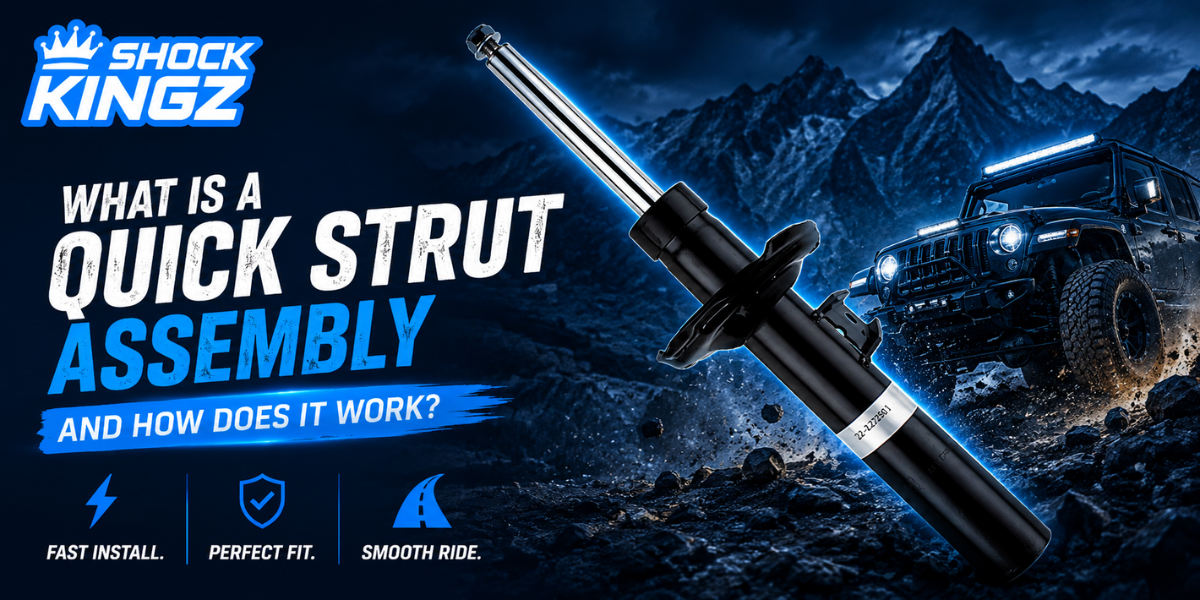
A pre-assembled shock and spring assembly kit, often sold as a quick strut assembly or complete strut and spring kit, combines the strut, coil spring, mount, and hardware into a single unit that eliminates the need for a spring compressor during installation. A coil spring and shock replacement kit built this way typically costs more than sourcing individual parts, but it saves installation time and removes a real safety risk from the process, since compressing a spring incorrectly can cause serious injury.
For buyers comparing pre-assembled kits against individual components, the decision usually comes down to whether the time and safety benefit is worth the price difference, and whether you already have the tools and experience to handle spring compression safely. Many first-time buyers find that the added cost of a complete kit is worthwhile precisely because it removes that variable from the job.
Working through fitment, load rating, materials, and warranty before comparing prices puts you in a much stronger position to choose a kit that performs the way it's supposed to rather than one that simply looked like the best deal in a search results page. The aftermarket suspension kits that hold up best over time are almost always the ones matched carefully to the vehicle and its actual use, not the ones chosen on price alone.
Call to Action
Ready to compare kits for your vehicle? Shockkingz carries a range of shock and spring assembly kits and aftermarket suspension kits to help you find the right fit.
Frequently Asked Questions
Q1. What should I look for in a shock and spring assembly kit?
Evaluate exact vehicle fitment, load rating and spring rate, corrosion coating on the components, and warranty terms. Fitment and spring rate matter most, since a mismatch can affect ride height and handling even if the kit physically bolts on.
Q2. Does spring rate really make a difference in a replacement kit?
Yes. A kit matched to the original equipment spring rate preserves factory ride height and handling balance, while a mismatched spring rate can change ride height, alter handling, or cause sagging under normal load.
Q3. Why does corrosion coating matter when choosing a kit?
Corrosion resistance affects how long the components last, especially in regions with road salt or coastal humidity. Hard-chromium-plated piston rods and electrostatically coated springs resist pitting and wear better than uncoated parts.
Q4. How long is a typical warranty on a shock and spring assembly kit?
Most warranties cover one to three years against defects in materials and workmanship, though some manufacturers offer longer terms on select product lines. Coverage generally excludes damage from improper installation.
Q5. Is a pre-assembled kit worth the extra cost over individual parts?
It depends on your tools and experience. A pre-assembled kit costs more but eliminates the need for a spring compressor and reduces installation time, which many first-time buyers find worthwhile for the safety and convenience alone.




Leave a comment
This site is protected by hCaptcha and the hCaptcha Privacy Policy and Terms of Service apply.