
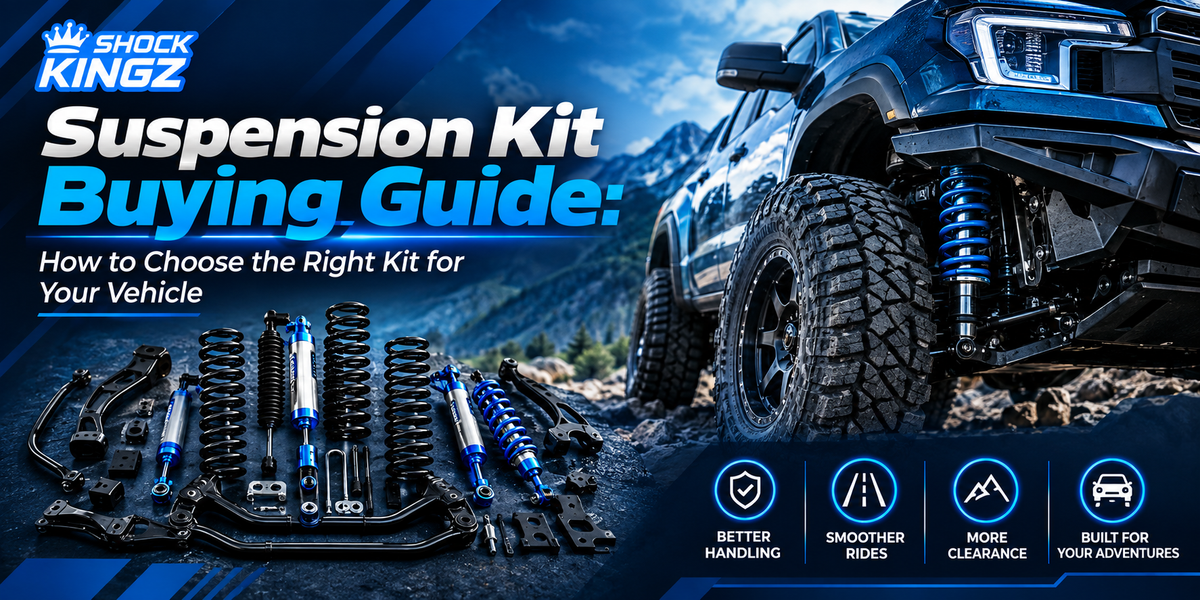
A suspension kit is a matched set of shocks or struts, springs, and supporting hardware built for a specific vehicle. To choose the right one, confirm fitment first (year, make, model, submodel, and drive type). Then match the kit to how you use the vehicle: daily driving, towing, off-roading, or performance. Finally, decide how much lift or ride change you want. The suspension kit collection at ShockKingz is a good place to start, and the sections below will help you narrow it down.
What Is a Suspension Kit?
A suspension kit bundles the parts that control how your vehicle rides, handles, and sits. Instead of sourcing shocks, springs, and hardware separately, you buy a set chosen to work together for your truck, SUV, Jeep, or car.

Kits range from simple shock and spring sets to a full suspension system with coilovers and control arms. The right level depends on your goals and budget, not on buying the biggest package available.
What Does a Suspension Kit Include?
Contents vary by vehicle and kit level. ShockKingz describes its Suspension Packages as combinations of shocks, springs, and matching components for specific makes and models. That typically means shocks or struts, coil springs, and mounting hardware, and some packages add alignment components or brackets.
The main benefit is compatibility. Parts are selected to work together, which reduces the risk of mismatched components hurting ride quality or wearing nearby parts. Always read the listing to see what is actually in the box.
| Kit Type | What It Generally Includes | Best For | Keep in Mind |
|---|---|---|---|
| Shock and Spring Kit | Matched shocks and springs | Mild upgrades, restoring ride quality | Control arms and other parts may not be included |
| Complete Suspension System | Shocks or coilovers, springs, and often extra hardware or arms | Larger changes, off-road use, towing setups | Contents vary by stage; installation is more involved |
| Coilover Kit | Shock and spring combined, often height-adjustable | Ride-height tuning, performance driving | Needs proper setup and alignment |
| Lift Kit | Parts that raise ride height, from leveling to full lifts | Bigger tires, added clearance | Handling and alignment change with height |
| Shocks Only | Dampers without springs | Improving control at stock height | Does not change ride height |
Stage names such as "Stage 1" or "Stage 2" are set by each brand, so compare what is included rather than the label. If you are weighing matched sets against separate parts, browse the shock and spring kits collection to see how the pairings are listed.
Lift Kit vs. Leveling Kit: What's the Difference?
These terms get mixed up. A leveling kit raises the front of the vehicle to match the factory rear height. A lift kit is broader: it can mean a body lift that raises the body using spacer blocks, or a full suspension lift that raises the entire vehicle.
If you only want a small front-end change and a bit more tire room, a leveling setup may be enough. If you want real clearance and travel for off-roading, a full suspension lift is the more complete route. Suspension lift kits explained walks through each type in more detail.
How Do You Choose a Suspension Kit for Your Driving?
Start with your main use, because it drives every other decision.
- Daily driving: Look for kits that improve control without a big height change.
- Towing or hauling: Confirm the kit suits your load. Check the listing rather than assuming.
- Off-road: Consider longer-travel shocks, added ground clearance, and tire fitment.
- Performance: Prioritize damping control and adjustability.
A truck that spends most days on pavement has different needs than a Jeep on trails. Be honest about your split between the two. Many owners of a truck or SUV land somewhere in the middle, which usually points toward a moderate kit rather than an extreme one.
How Much Lift Do You Need?
More lift is not automatically better. Larger tires and added clearance are common reasons to lift, but a taller vehicle also has a higher center of gravity, which can increase body roll. Our article on how lift performance affects handling and ride comfort covers this trade-off.
Lifted vehicles also need parts designed for the new height so geometry stays correct. Choose the smallest lift that meets your tire and clearance goals, then confirm that the kit lists support for that height.
Shocks, Struts, Springs, or Coilovers: Which Should You Pick?
Shocks and struts control how quickly the suspension compresses and rebounds. Springs support the vehicle's weight and set ride height. Coilovers combine a shock and spring in one adjustable unit.
If your ride height is fine but the vehicle feels floaty or worn, quality shocks and struts may be enough. If you want to change stance or add lift, you will likely need springs or coilovers matched to the dampers. Whichever route you take, a matched suspension system usually beats mixing parts from different sources.
Why Does Fitment Matter So Much?
Suspension parts are vehicle-specific. A kit for one trim or drivetrain may not suit another, even within the same model year. Use the year, make, model, submodel, and drive selector on the site, then read the product notes for engine, trim, or weight considerations.
If anything is unclear, ask before ordering. Comparing a kit's listed lift range and included parts against your goals saves returns and rework.
What Should You Know Before Installing?
Bigger kits mean more work. Plan for proper torque specs, a post-install alignment, and the right tools. Our list of essential suspension tools for DIY installers is a useful checklist. If you are not comfortable working with springs or coilovers, a professional shop is the safer choice.
Real Vehicle Examples
Two listings show how kits differ by application:
- Toyota Tacoma Hybrid: The Eibach 24-26 Toyota Tacoma Hybrid 4WD Stage 2 PRO-TRUCK Lift Kit is listed for a specific generation and drivetrain. Check the product page for contents and fitment.
- RAM 1500: A 2019+ RAM 1500 2-3in Stage 1 system with tubular upper control arms appears in the coilovers collection. It shows how some kits include control arms, which matters for alignment at height.
Neither is right for every owner. Treat them as examples of what to compare.
Common Suspension Kit Mistakes
Buying by lift height alone. Height matters, but component quality, fitment, and included parts matter just as much.
Skipping the fitment check. Trim, engine, and drivetrain can change which kit applies.
Ignoring the alignment. A new ride height often needs one.
Assuming every kit includes everything. Read the parts list before you order.
Suspension Kit Buying Checklist
- Confirm year, make, model, submodel, and drive type
- Define your main use and your target lift or ride change
- Review exactly what is included and what is not
- Check tire size and clearance needs
- Plan for alignment and installation
- Ask questions before you order
Ready to Find Your Suspension Kit?
Browse vehicle-specific suspension kits or get help finding the right fit for your ride.
Browse Suspension Kits →










Leave a comment
This site is protected by hCaptcha and the hCaptcha Privacy Policy and Terms of Service apply.