
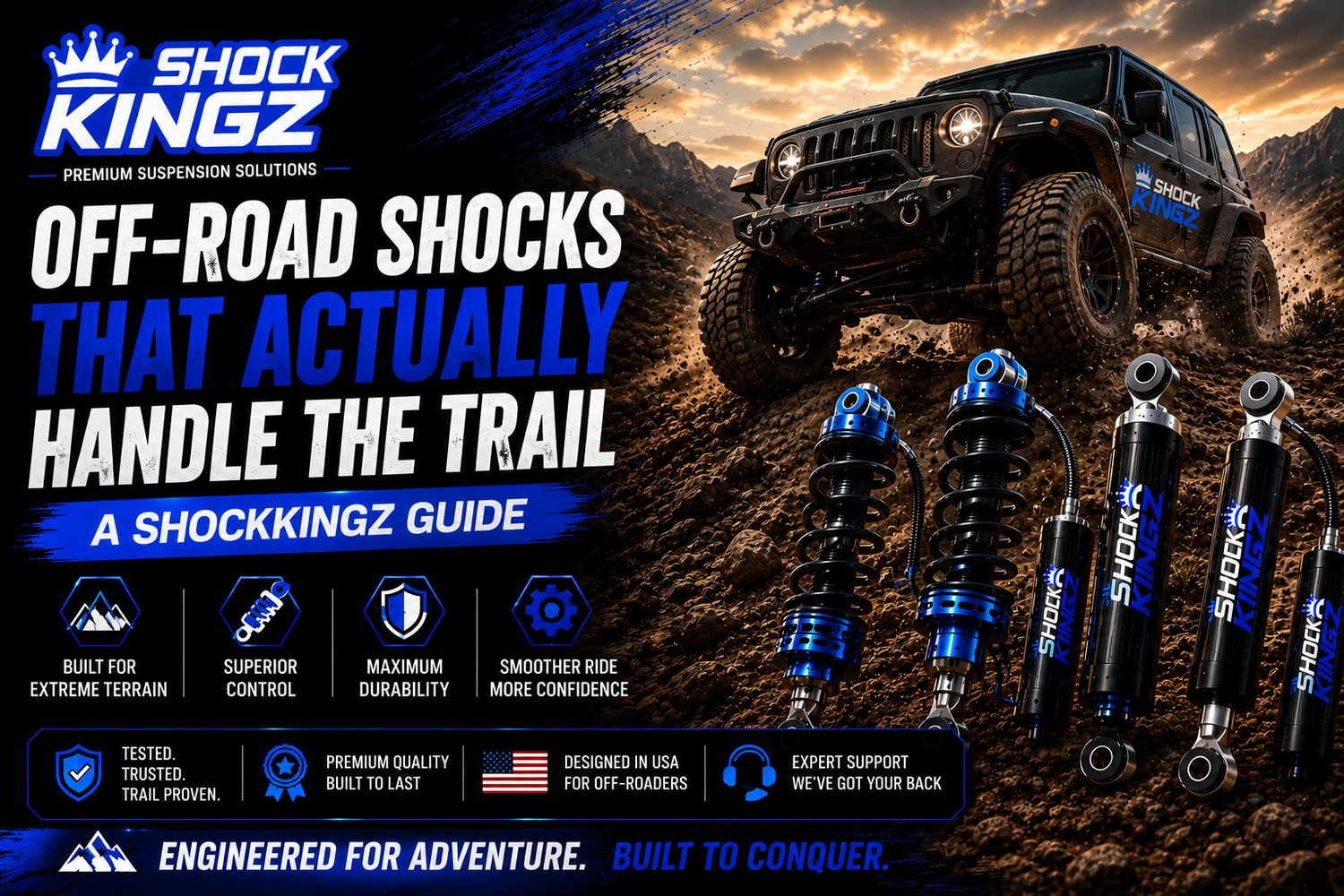
There's a version of this story that plays out constantly on trails everywhere. Driver puts their truck through years of rough terrain, assumes the suspension is "probably fine," and then one bad day on a rocky descent reminds them that shocks don't fail all at once - they fade. Slowly, quietly, until the vehicle that used to feel planted starts feeling like it's guessing.
ShockKingz carries suspension setups for all of it - from weekend dirt roads to serious overland builds - and the goal of this guide is simple: help you figure out what your rig actually needs before you find out the hard way.

Why the Trail Breaks Standard Shocks
A shock absorber tuned for highway driving is doing one job - managing smooth, consistent inputs at moderate speed. Take it off pavement and the job changes completely. Rocky descents, deep ruts, washboard sections - each of these generates rapid, repeated compressions that build heat inside the shock fluid fast.
When that fluid gets too hot, damping quality drops. The shock goes softer, the vehicle feels less controlled, and the back half of a hard trail almost always feels worse than the first. This is shock fade, and it's the single biggest limitation of a standard shock on serious off-road terrain.
Dedicated off-road shocks are built differently - larger bodies, more fluid volume, and damping characteristics that hold up through sustained abuse instead of slowly giving out.
Reading the Signs Before a Shock Fails Completely
Suspension wear is gradual enough that most people adjust to it without noticing. By the time it's obvious, the shocks have been underperforming for a while. A few things worth paying attention to:
- Vehicle bouncing more than twice after hitting a bump
- Rear squatting under load or when towing
- Front end dipping sharply under braking
- Steering that feels vague or disconnected on rough surfaces
- Body lean that seems more pronounced than it used to be
- Oil weeping or visible staining around the shock body
Any two of these together is worth acting on - worn shocks don't just affect ride quality, they wear out tires faster and put extra stress on every other component connected to the suspension.
Which Type of Off-Road Shock Fits Your Build?
The right choice depends on what you're running and how hard you're pushing it. Here's a practical breakdown:
| Shock Type | Ideal Use Case | Main Benefit | Shop at ShockKingz |
|---|---|---|---|
| Standard Monotube | Light trails, daily use | Reliable damping, low maintenance | Shocks & Struts |
| Reservoir Shock | Hard off-road, overland rigs | Heat resistance, extended travel | Shock & Spring Kits |
| Coilover | Performance builds, dual-use rigs | Adjustable height and spring rate | Coilovers |
| Shocks + Control Arms | Lifted trucks | Corrects geometry after a lift | Control Arms |
The Reservoir Question: Worth It or Not?
Reservoir shocks are the most common upgrade question for off-road builds, and the answer is genuinely use-case dependent.
If you're doing occasional fire roads or mild trails, a standard quality monotube holds up well. The extra cost of a reservoir setup won't change your experience in a meaningful way.
But if you're running hard terrain for full days - multiple trail passes, loaded overlanding, repeated technical sections - the physics shift. A reservoir canister gives the shock fluid somewhere to go as it heats up, which keeps damping consistent well past the point where a standard shock would start to fade. Not marketing. Just more fluid volume doing more work.
Building Around Your Specific Rig
Weekend trails and light off-road: A well-matched monotube shock is all you need. Prioritize correct fitment for your vehicle's weight and any cargo load you typically carry.
Overlanding and heavy use: Go for a complete Shock & Spring Kit - matched components tuned together are a better starting point than mixing individual parts. The spring rate and shock valving are calibrated to work as a system.
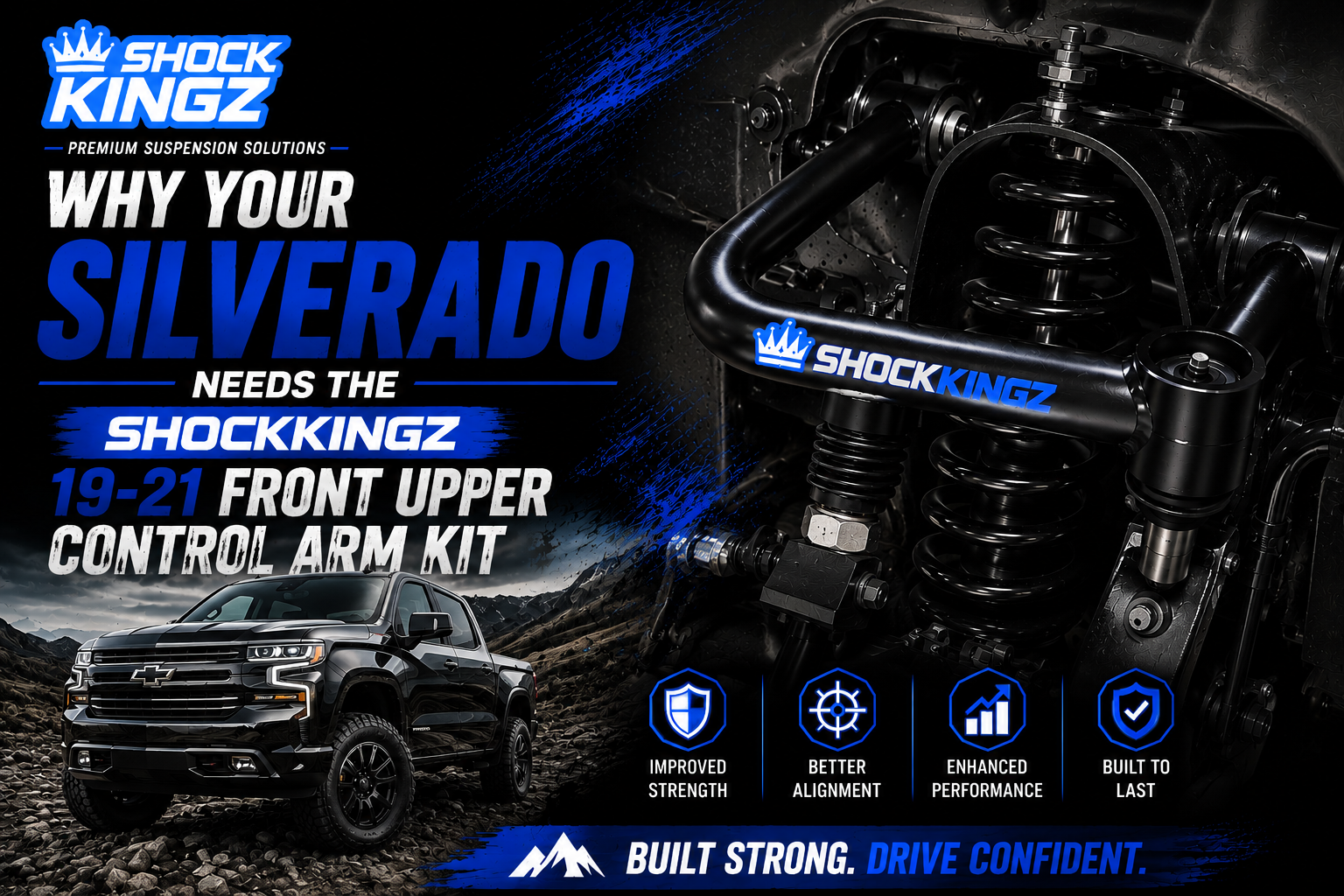
Lifted trucks: A lift changes suspension geometry, which means the shocks no longer sit at the angle they were designed for. Pairing new shocks with upgraded control arms isn't optional at that point - it's what brings caster and alignment back into spec.
Performance and adjustability: Coilovers let you set ride height and spring rate independently, which matters on builds that need to perform on and off pavement without compromising either.
Not sure which direction makes sense for your build? Our shock absorber comparison guide walks through the differences in detail.
Before and After Install - What to Actually Do
Installation is DIY-friendly for most builds, but torque specs and alignment settings matter more on lifted vehicles. A few things that apply regardless of who does the work:
- Get an alignment check after any ride height change or control arm swap
- Re-torque suspension hardware at 200 to 300 miles post-install
- Check for weeping seals at every oil change - early detection saves money
- After any hard trail session, inspect mounting points for debris and physical damage
Frequently Asked Questions
Final Thoughts
Ready to Upgrade Your Off-Road Setup?
Shop shocks, spring kits, coilovers, and control arms — all matched to your exact vehicle.
Shop Shocks & Struts Browse All Products




Leave a comment
This site is protected by hCaptcha and the hCaptcha Privacy Policy and Terms of Service apply.