
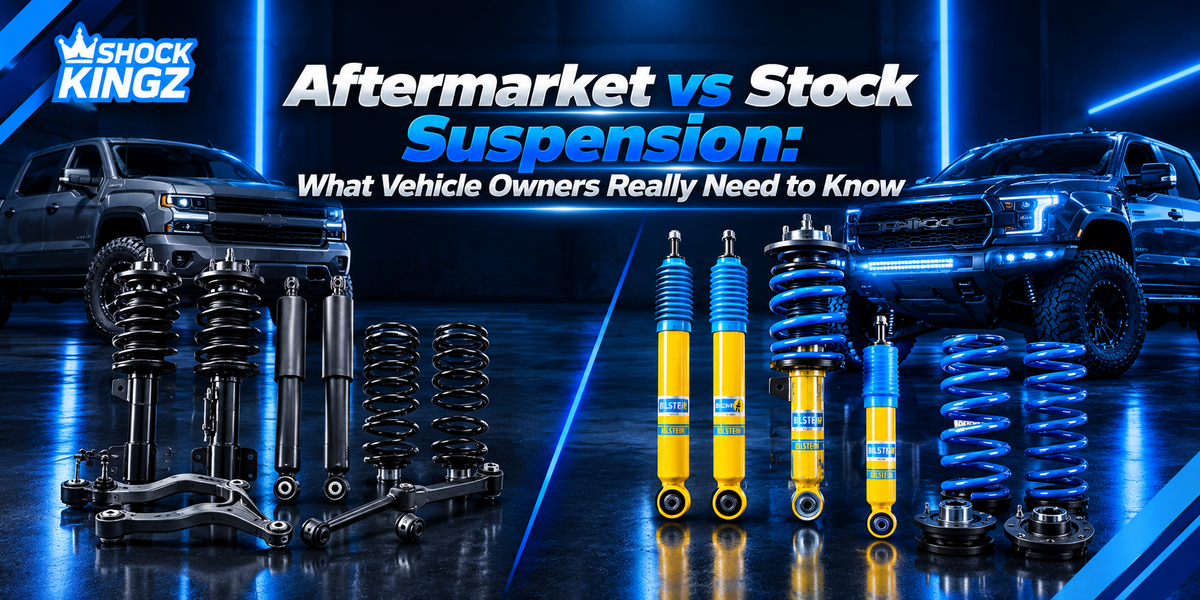
Stock suspension is a compromise: quiet, comfortable, and affordable for the widest range of drivers. Aftermarket suspension is built around a specific goal, such as sharper control, heavier loads, a different ride height, or off-road use. For first-time buyers, the real difference isn't "good versus bad." It's general-purpose versus purpose-built.
Many vehicle owners can stay stock if the ride still feels right. If yours feels floaty, bouncy, or out of its depth, suspension upgrades may be worth a closer look.
What Does Stock Suspension Actually Do?
Factory suspension has to suit every buyer who might drive off the lot, from commuters to occasional haulers. Engineers balance comfort, noise, cost, durability, and handling, so the result does many things acceptably.
That's sensible design, but it has limits. Factory parts aren't designed around a lifted truck, regular towing, or larger tires. They also wear with mileage, so a vehicle can slowly become bouncy without you noticing. If that sounds familiar, our guide to the signs of bad shocks and struts explains what to check.
What Changes With Aftermarket Suspension?
Aftermarket doesn't automatically mean stiffer or lifted. It means parts designed for a defined purpose. Many suspension components can be changed individually or as a matched set.

Shocks and Struts
These control how quickly your suspension compresses and rebounds. Design matters. According to Bilstein, a twin-tube shock is a tube within a tube, while a monotube uses a single tube with a larger working piston and gas pressure to help prevent cavitation in the valving. Neither is right for everything; the best choice depends on your vehicle and how you drive. You can browse shocks and struts by vehicle.
Springs and Coilovers
Springs support the vehicle's weight. Coilovers combine the spring and damper into one assembly, and some let you adjust ride height or damping. That flexibility suits performance suspension builds, but it adds cost and complexity.
Control Arms and Supporting Parts
When ride height changes, alignment geometry can change too. Control arms and related parts can help restore it on modified vehicles. A stock-height vehicle that only needs fresh shocks usually doesn't need them.
Not sure where to start? Explore the full suspension collection and use the year, make, and model selector to see parts listed for your vehicle.
Why Fitment Matters More Than Brand
Aftermarket suspension is rarely one-size-fits-all. The same model year can use different parts depending on trim, drivetrain, or generation, which is why Shockkingz lets you search by year, make, model, submodel, and drive type. A part made for one version of a vehicle may not suit another, so match every listing to your exact vehicle. If something is unclear, ask before you order rather than after.
Should Vehicle Owners Upgrade or Stay Stock?
Staying stock makes sense if:
- The ride and handling feel fine
- You drive at factory height without heavy loads
- Quiet comfort is your priority
Upgrading is worth considering if:
- You've added a lift, leveling kit, or larger tires
- You tow or haul regularly
- You want firmer, more controlled handling for spirited driving or trails
Better handling doesn't have to mean a punishing ride, either, since some options stay close to factory comfort. Bouncing, nose-diving, and body roll can also mean worn parts rather than a design limit. In that case, fresh replacements may solve the problem. Our breakdown of shocks and struts replacement cost helps you budget either way.
Truck Suspension: Where the Gap Is Widest
Trucks tow, haul, wear bigger tires, and often get leveled or lifted, so stock limits tend to show up here first. Understanding what each part does helps you avoid overbuying. Larger lifts often involve more than shocks, and geometry changes can call for other parts, so check what each listing includes.
A shock-only upgrade reuses your factory springs, while a coilover replaces the spring and shock together. Our Bilstein 5100 vs. 6112 comparison explains that difference for popular trucks. A standard replacement shock also doesn't lift a truck; only height-adjustable designs can, as covered in our guide to ride height adjustable shocks.
Building or fixing a truck? Compare vehicle-specific truck suspension packages and read each listing's specifications before you order.
Common Mistakes First-Time Buyers Make
- Buying by brand or looks instead of goal. Decide what you want to improve first.
- Skipping fitment checks. Trim, drivetrain, and generation can change which part fits.
- Mismatching front and rear. An unbalanced setup can feel odd.
- Ignoring worn supporting parts. Tired bushings and mounts can undermine new shocks.
- Expecting one part to do everything. Shocks control movement; springs set height and load capacity.
- Forgetting alignment. Ask about it after any ride-height change.
Quick Checklist Before You Buy
- Write down your goal: comfort, load, height, handling, or off-road.
- Confirm year, make, model, submodel, and drivetrain.
- Decide whether you're replacing worn parts or changing the setup.
- Check whether supporting parts are needed.
- Budget for installation and alignment.
- Read the listing's specifications and fitment notes.
Frequently Asked Questions
Common questions about off-road suspension, shocks, upgrades, maintenance, and everyday drivability.











Leave a comment
This site is protected by hCaptcha and the hCaptcha Privacy Policy and Terms of Service apply.