
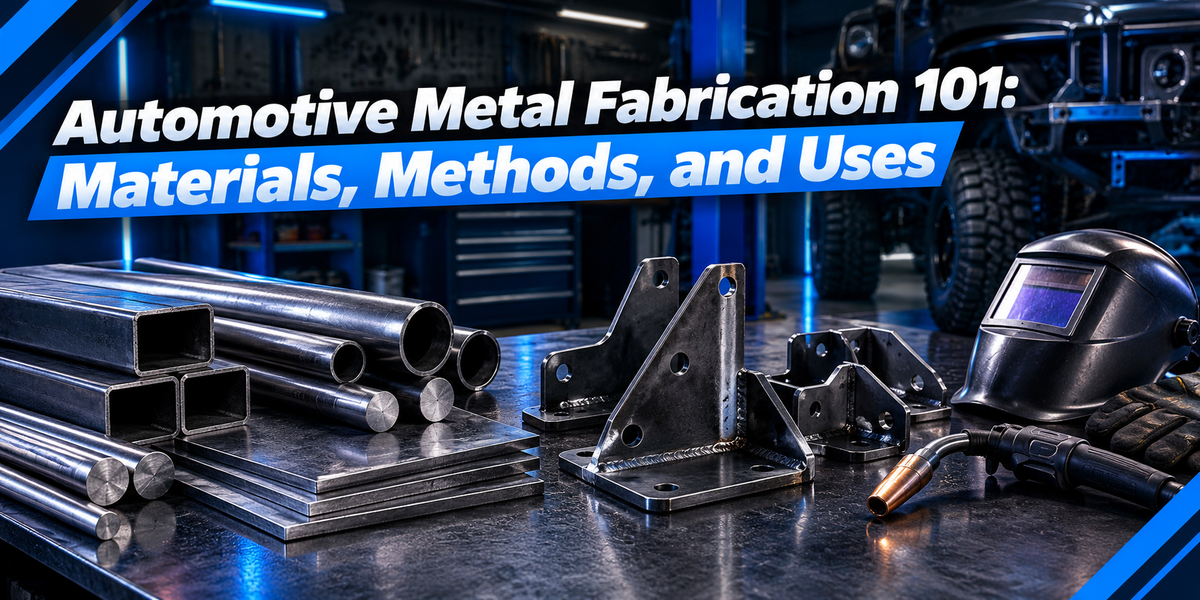
Automotive metal fabrication is the work of cutting, shaping, joining, and finishing metal into vehicle parts. On a suspension, that mostly means mounts, brackets, link ends, and clamps. Three decisions matter most: what the part is made of (mild steel, 4130 chromoly, or aluminum), how it attaches (welded or bolted), and what job it has to do. If you're new to this, buying a few ready-made pieces first is a good way to see what "right" looks like.
The jargon trips up a lot of beginners, so this guide sticks to plain language. By the end, you should be able to read a part listing and know what you're looking at.
What Is Automotive Metal Fabrication?
Fabrication just means making a part from raw tube, bar, or sheet instead of grabbing a finished, mass-produced one. A bracket for a shock reservoir counts. So does a tube clamp, or the threaded end of an adjustable link.
You've got three routes. Do it yourself, hire one of the metal parts fabricators who run custom shops, or buy ready-made fabrication parts and bolt or weld them in. None of these is wrong. The right pick depends on your tools, your welding ability, and how unusual your build is.
Which Materials Are Used in Automotive Metal Fabrication?
Most suspension work involves one of three metals.
What's the difference between DOM, ERW, and 4130?
People mix these up all the time because they sound like they belong on the same list. They don't. DOM (drawn over mandrel) and ERW (electric resistance welded) describe how a tube was manufactured, and both are usually mild carbon steel. 4130 is the metal itself: an alloy steel with chromium and molybdenum in it.
So choosing between DOM and chromoly is a material decision. Choosing between DOM and ERW is a manufacturing one. If you're building something safety-related, like a roll cage, check your club or sanctioning body's rules before you buy a tube. They vary.
How Do Fabricators Shape and Join Metal?
Cutting and forming
Everything starts as a tube, bar, or sheet. Shops cut with saws, plasma, or lasers, then bend, notch, or machine the pieces. Sheet brackets are often laser cut and formed, while clamps may be machined from solid stock. Cleaner cuts make fit-up easier later.
Welded or bolt-on?
A weld is permanent, which suits structure. Bolt-on parts can come off again, which is handy for anything you'll need to service or move.
If you're welding chromoly, Lincoln Electric's TIG guidance is worth a read. It says 4130 tubing up to .120" wall is straightforward to TIG weld, the tube should be at room temperature or warmer, and clean material gives better results. Even so, practice on scrap before you touch a part you'll depend on.
Finishing
Bare steel rusts. That's why most parts get paint, powder coat, or plating. Some ready-made parts arrive plated already, so check the listing.
Where Does Fabrication Show Up on a Suspension?
- Accessory mounts: brackets and clamps that hold shock reservoirs and lines in place.
- Link ends: threaded bungs welded into tube so a rod end can thread in.
- Tube joints: clamps and tabs for assemblies that are welded or meant to come apart.
- Clearance fixes: small mounts that solve packaging problems on a modified vehicle.
Moving a pivot point or mounting location can change how the suspension behaves, so plan before you cut. Our article on shocks, stabilizers, and adjustable control arms shows how those parts work together.
Should You Buy Fabrication Parts or Build From Scratch?
Buy when the job is routine, like holding a line in place or finishing a tube end. Build when the geometry is unusual or nothing on the shelf fits. A good ready-made part also shows you how a proper one is made.
Buying doesn't mean skipping the homework, though. You still need to match size, thread direction, and joining method to your build.
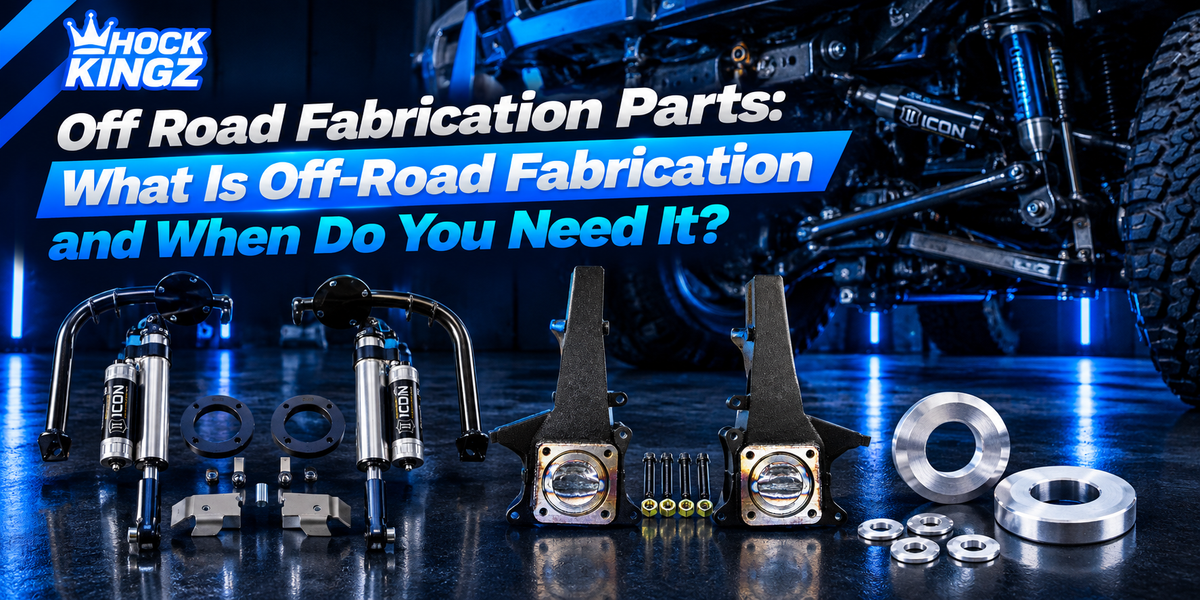
Off Road Fabrication Parts: What to Check Before You Buy
Trail builds are hard on mounts and links, so small details count. Open the fabrication collection and check these three things first:
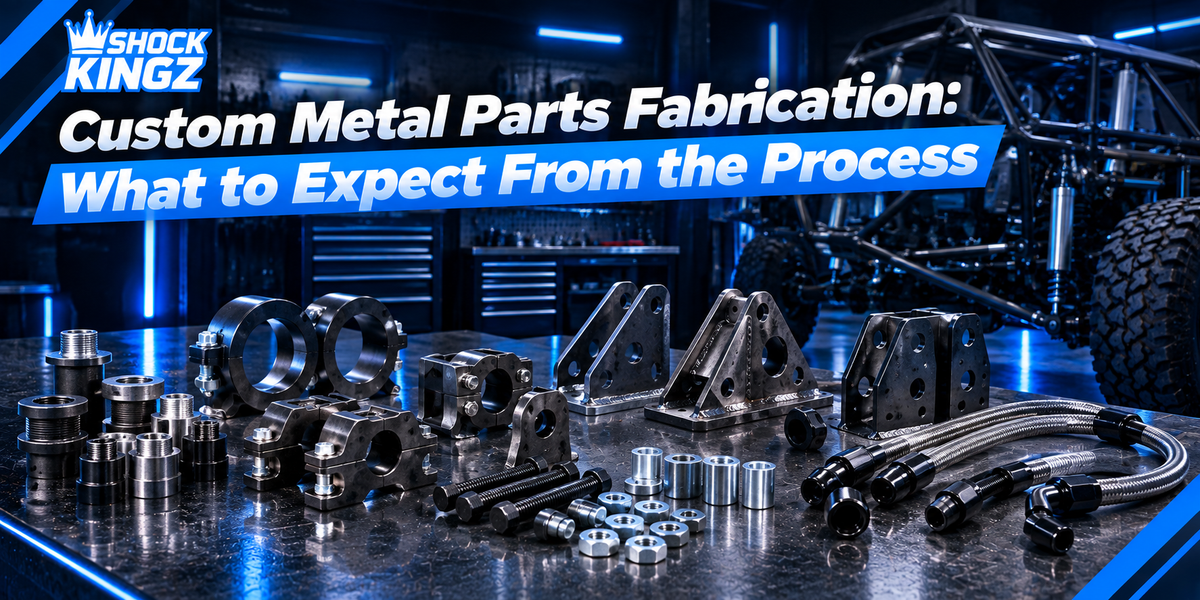
- Mounting type. Camburg sells its clamp mounts as weld-on and bolt-on versions. The Camburg Weld-On Large Single Clamp 4130 Mount needs welding. The Camburg Bolt-on Large Double Clamp 4130 Mount doesn't, and Camburg describes it as matte nickel plated for corrosion resistance. According to Camburg, these mounts came from its KINETIK race trucks and are cut and formed from 0.073" 4130 chromoly sheet.
- Tube size. The Camburg 3/4in x .065in 4130 Billet Tube Clamp fits a specific tube. Camburg says its smaller sizes use an overlapping flat joint, and the larger ones use an interlocking stepped joint.
- Thread direction. Bungs come in right-hand and left-hand versions, like the 7/8in RHT and 7/8in LHT stepped bungs. Match the thread to your rod end.
Not Sure Which Part Suits Your Build?
Compare sizes and mounting types in the fabrication collection to narrow down suitable options for your project before you order.
Compare Fabrication Parts →Mistakes Beginners Make
- Treating DOM as an alloy. It's a process.
- Ordering the wrong size. Tube diameter and wall thickness both have to match the clamp or bung.
- Using a mount for a job it wasn't listed for.
- Welding over dirty metal.
- Forgetting that moved mounting points can change geometry and alignment.
Before You Order
Run through this short list:
- Material and wall thickness confirmed
- Weld-on or bolt-on decided
- Thread size and direction matched
- Finish or coating planned
- Someone lined up to weld or install
Fabrication is usually one piece of a bigger suspension project. If you're also picking shocks, springs, or a full kit, our suspension kit buying guide explains how to confirm fitment first.
Frequently Asked Questions
Practical answers about chromoly, mild steel, fabrication mounts, fitment, and suspension geometry.









Leave a comment
This site is protected by hCaptcha and the hCaptcha Privacy Policy and Terms of Service apply.