
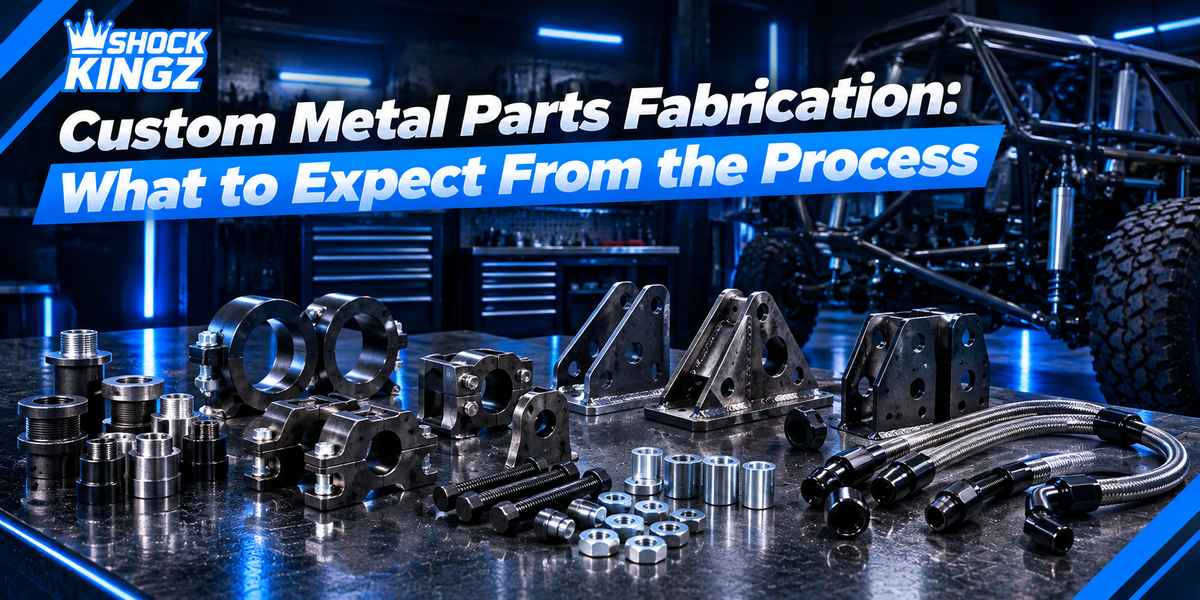
Custom metal parts fabrication turns a measured need into a finished part in six stages: scoping, material selection, cutting and fit-up, welding, finishing, and test-fitting on the vehicle. Most of the time goes into planning and fit-up, not welding. For experienced builders, the key decisions are material, tolerances, and whether a custom piece is needed at all or a ready-made component will do.
Below, we walk through each stage, compare custom work with off-the-shelf fabrication parts, and flag the mistakes that cost the most time on suspension and chassis projects.
What Does Custom Metal Parts Fabrication Involve?
Custom fabrication covers any part made for one specific build rather than pulled from a catalog: a link, a bracket, a reservoir mount, a crossmember tab. In automotive metal fabrication, the work follows the same stages whether you do it in your own garage or hand it to a shop.
Skipping a stage rarely saves time. It usually pushes the problem to the end of the project, where it costs more to fix.
What to Expect, Stage by Stage
1. Scoping and measurement
Good fabrication starts with measurements, not metal. Record mounting points, clearance at full compression and full droop, and the loads the part will see. Build a mock-up from cardboard or inexpensive tube before cutting anything costly.
If the part affects suspension geometry, check how it changes arm angles and travel first. Our guide to adjustable control arms and alignment geometry explains why that matters.
2. Material selection
Mild steel is easy to cut, weld, and repair. 4130 chromoly offers more strength for its weight but demands cleaner prep and more careful welding. Aluminum saves weight but needs different joining methods and design allowances.
Choose based on load, environment, and who will weld it, not on what sounds premium. Whichever you choose, record the grade and wall thickness so replacements and repairs match.
3. Cutting, forming, and fit-up
Accurate cuts and clean joints decide weld quality. Tack the pieces together on a fixture or on the vehicle, check geometry, and re-tack if you adjust. Heat distorts metal, so leave final welds until you've confirmed fit.
4. Welding and joining
For chromoly tube, Lincoln Electric's TIG guidance is a useful manufacturer reference. It says 4130 tubing up to .120" wall is straightforward to TIG weld, the tubing should be at room temperature (about 70°F) or warmer, and clean material gives better results. ER70S-2 filler is an acceptable alternative to ER80S-D2, with slightly lower weld strength. Thin-wall tubing normally doesn't need stress relief.
Thicker sections and heat-treated parts follow different rules, so ask your welder or designer before assuming.
5. Finishing and inspection
Inspect welds for porosity, undercut, and cracks. Deburr edges, then coat the part with powder coat, paint, or plating, depending on exposure. Bare steel rusts, chromoly included. Mask threads and bores before coating.
6. Test fit and installation
Install the part and cycle the suspension through full travel. Check clearance to tires, brake lines, and hoses. Torque fasteners to spec and recheck after the first drive. If the part changes geometry, plan an alignment.
Custom Fabrication or Ready-Made Fabrication Parts?
Not every piece needs to be built from scratch. This table shows where each approach fits.
Many builds use both: custom main structure, ready-made components for the repeatable details.
Which Metal Fabrication Parts Does Shockkingz Carry?
The fabrication collection includes brackets, tube clamps, bungs, hose assemblies, fittings, and hardware from brands such as Camburg, King Shocks, and Firestone. Three examples show how to read a listing:
- Weld-on mounts: The Camburg Weld-on Large Double Clamp 4130 Mount is CNC laser cut and formed from 0.073" 4130 chromoly sheet. Camburg lists it for mounting shock reservoirs, power steering reservoirs, exhaust tubing, fuel pumps and filters, and coolant lines. It requires welding; a bolt-on version is sold separately.
- Removable tube clamps: The Camburg 1.625in x .095in 4130 Billet Tube Clamp is machined from 4130 chromoly and aimed at tubes and structures that need to come off easily. Sizes are specific, so measure your tube first.
- Threaded bungs: The Camburg 5/8in RHT 4130 stepped thread bung is one of several bungs in the collection. Match thread size and direction to your rod end before ordering.
Ready to Compare Sizes?
Browse the full range of fabrication parts and check each listing's material, size, and mounting type against your build before choosing the right option.
Browse Fabrication Parts →Common Mistakes to Avoid
These are the errors most likely to cost experienced builders time:
- Skipping the mock-up. Cardboard is cheaper than 4130.
- Mismatching tube size and wall thickness. Clamps and bungs are sized to specific diameters and walls.
- Welding cold or dirty material. Clean and warm the metal first.
- Ignoring geometry. A bracket that shifts a pivot point changes how the suspension behaves.
- Skipping the finish. Bare steel and weld areas corrode.
- Assuming fitment. Confirm clearances on your vehicle, not a similar one.
Pre-Project Checklist
Run through this list before you cut or order anything:
- Mounting points and travel clearance measured
- Mock-up built and test-fitted
- Material and wall thickness chosen for the load
- Welding procedure confirmed with your welder
- Finish and thread masking planned
- Fasteners and hardware sourced
- Alignment scheduled if geometry changes
Fabrication often supports a bigger suspension project. If you're also choosing dampers or springs, our suspension kit buying guide covers fitment and matching. The control arms collection is the place to look when geometry needs correcting.
Frequently Asked Questions
Practical answers about custom metal fabrication, welding, material selection, fitment, and installation.










Leave a comment
This site is protected by hCaptcha and the hCaptcha Privacy Policy and Terms of Service apply.