
The difference between lowering springs and coilovers is adjustability. Lowering springs replace your factory springs, usually cost less, and give a fixed drop with a ride close to stock. Coilovers replace the spring and damper as one unit, so you can set ride height and, on many models, damping. When comparing lowering springs vs coilovers, choose springs for a modest street drop on a budget and coilovers for tunable height, firmer control, or regular track use.
Both options lower your center of gravity, but they get there differently, and the difference shows up in ride quality, total cost, and upkeep. This guide compares them so you can match the setup to how you actually drive.
What is the difference between lowering springs and coilovers?
Lowering springs are shorter, usually stiffer coil springs that replace the factory springs. Your existing shocks or struts stay in place. The amount of drop is set by the spring's length and rate, so changing it later means changing springs.
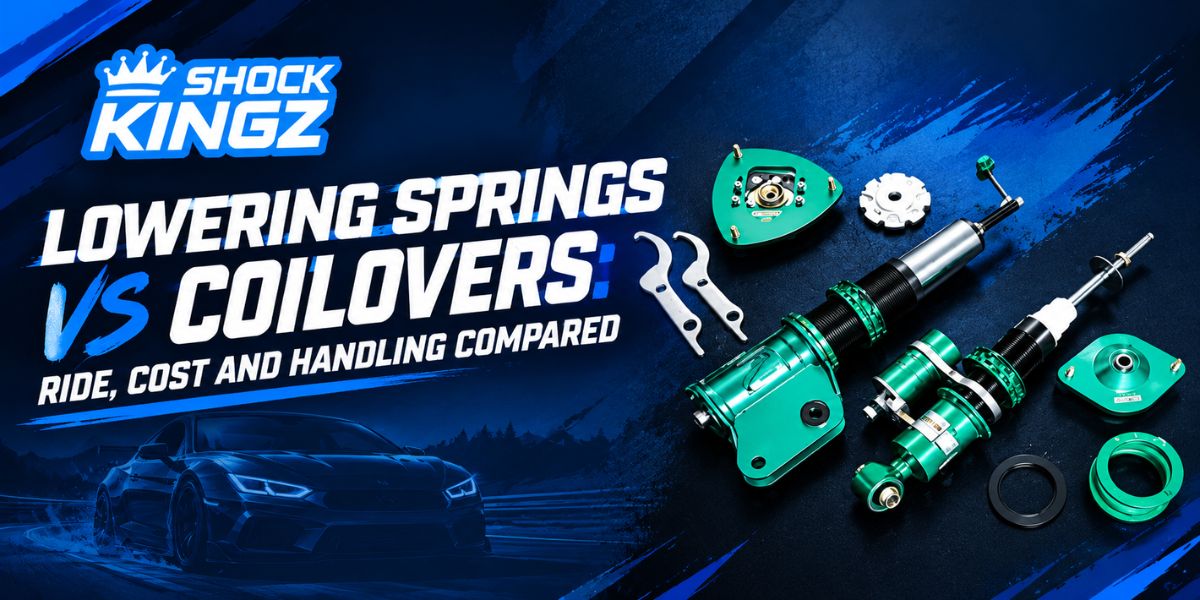
Coilovers combine a coil spring and a damper in one assembly. Most have threaded collars that let you raise or lower the car within a set range. Many also offer damping adjustment, though not every coilover has it. Our guide to adjustable vs. fixed coilovers explains what to look for.
| Factor | Lowering Springs | Coilovers |
|---|---|---|
| Ride Height | Fixed drop | Adjustable within a range |
| Dampers | Usually factory units, unless you replace them | Matched spring and damper assembly |
| Damping Adjustment | None from the spring itself | Available on many models |
| Ride Feel | Close to stock to noticeably firmer | Varies with valving and settings |
| Upfront Cost | Generally lower | Generally higher |
| Installation | Spring compressor and strut disassembly | Full assembly swap and ride-height setup |
| Best For | Mild street drop | Track days, tuning, wheel and tire fitment |
How do they compare on ride and handling?
Lowering springs reduce body roll mainly by lowering the center of gravity. Many are progressive, meaning the rate rises as the spring compresses, which helps keep everyday ride comfort reasonable. Spring makers often design these kits around factory dampers. Even so, worn dampers struggle with shorter, stiffer springs, and you may notice bounce or a floaty feel over bumps.
Coilovers give you more control because the spring and damper are chosen as a pair. Ride quality depends on spring rate and damping, not on the label. A firm, well-valved setup can feel excellent on smooth roads and harsh on broken pavement. A poorly valved coilover can ride worse than good dampers with quality springs.
Body roll also depends on the rest of the chassis. If cornering lean is your main complaint, read how sway bars improve lateral stability during cornering before spending on springs alone.

Lowering springs vs coilovers cost: what are you paying for?
Springs usually win on purchase price, but the sticker price is only part of the cost. Consider:
- Dampers: If your shocks or struts are worn, springs are only half the job.
- Labor: Both options take time to install. Coilovers also need height setup.
- Alignment: Any change in ride height should be followed by an alignment.
- Upkeep: Threaded coilover collars can seize in salty or wet climates, so they need periodic cleaning and inspection.
If you would replace your dampers anyway, the gap narrows because coilovers include them. If your dampers are healthy and you want a mild drop, springs are often the more economical route.
How do ride height changes affect suspension geometry?
Lowering a vehicle changes camber, toe and the angles of the control arms. Small drops are often manageable with an alignment. Larger drops can push camber beyond the adjustment range, and may require adjustable arms or camber plates. Our explainer on suspension geometry covers why this matters.
Dropping too far also reduces suspension travel. The car can hit its bump stops more often, which feels harsh and can hurt grip. A lower car is not automatically a better-handling car.
Are there legal or warranty limits on lowering?
Minimum ride height, headlight height and bumper height rules vary by state and country, so check local regulations before choosing a drop. Also review your vehicle's warranty terms, since suspension changes can affect coverage depending on the manufacturer and dealer. Neither can be confirmed for you here, so verify both first.
What about speed bumps and steep driveways?
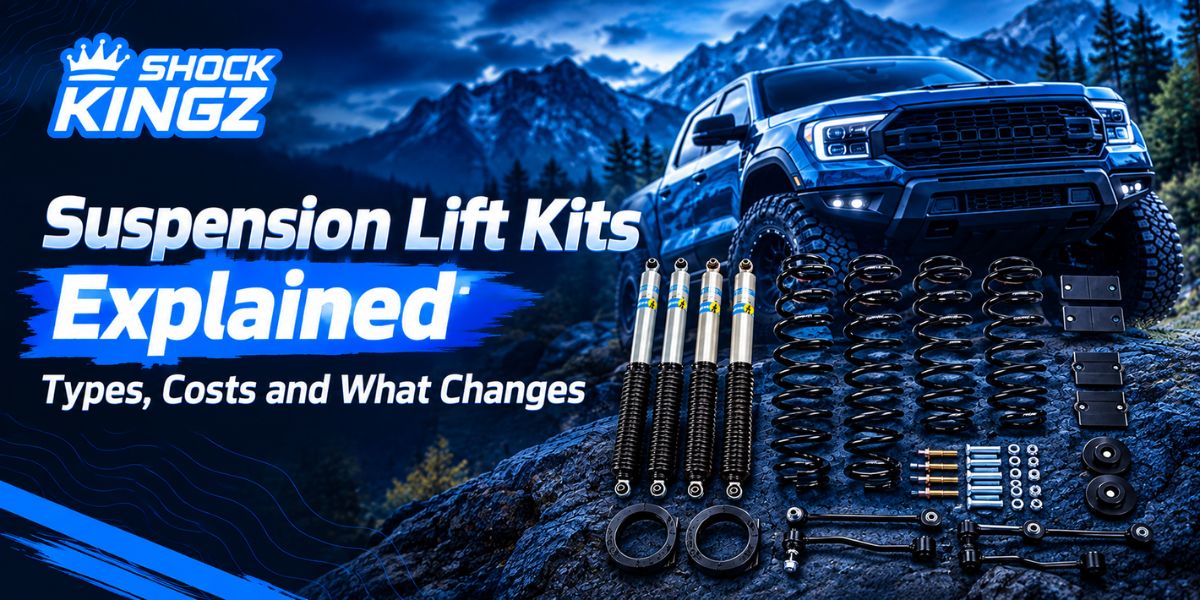
Daily driving a lowered car means thinking about clearance. Some owners of low-clearance performance cars use hydraulic front-lift systems that temporarily raise the nose. Shockkingz lists these in its lift kits collection, alongside suspension lift kits for trucks and SUVs. Check fitment and compatibility with your suspension before buying any lift system.
Which one should you choose?
Choose lowering springs if you:
- Want a modest drop and a cleaner stance
- Have healthy factory dampers, or plan to replace them separately
- Drive mostly on the street
- Prefer a lower upfront spend
Choose coilovers if you:
- Want to adjust ride height after installation
- Need damping control for track days or varied road surfaces
- Plan to change wheels, tires or setup over time
- Are replacing worn dampers anyway
Not sure how a stock setup compares with an upgrade? Our breakdown of aftermarket vs. stock suspension is a useful starting point.
Ready to compare options? Browse the coilovers collection and use the year, make and model selector to confirm fitment.
Common mistakes to avoid
Use this checklist before you buy:
- Pairing new springs with worn dampers. Replace tired shocks at the same time.
- Choosing by drop alone. Look at spring rate, travel and your vehicle's geometry.
- Skipping the alignment. Uneven tire wear and unstable handling often follow.
- Setting damping as stiff as possible. More firmness is not more speed on a rough road.
- Ignoring factory equipment. Vehicles with adaptive or electronic dampers need compatible parts.
- Buying without checking fitment. Confirm year, make, model, trim and drivetrain.
If you want matched dampers for a spring setup, the shocks and struts collection is the place to start.
Conclusion
Choosing between lowering springs and coilovers comes down to your driving style, budget, and suspension goals. Lowering springs are a practical choice if you want a fixed drop, a cleaner stance, and improved cornering response at a lower cost. Coilovers offer greater flexibility for adjusting ride height and suspension settings, making them suitable for drivers seeking a more customized setup.
Before making a decision, consider your vehicle's condition, road quality, desired ride height, and long-term maintenance costs. Shockkingz helps you explore suspension upgrade options for your build. Browse the Shockkingz coilovers collection to compare available options and confirm vehicle fitment before purchasing. Whichever setup you choose, ensure proper installation and wheel alignment to maintain handling, ride comfort, and safety.
Frequently Asked Questions
Practical answers about lowering springs, coilovers, ride quality, fitment, and maintenance.
Ready to Upgrade Your Ride?
Discover suspension upgrades built for better handling, the perfect stance, and greater control. Find the right setup for your build with Shockkingz.









Leave a comment
This site is protected by hCaptcha and the hCaptcha Privacy Policy and Terms of Service apply.