
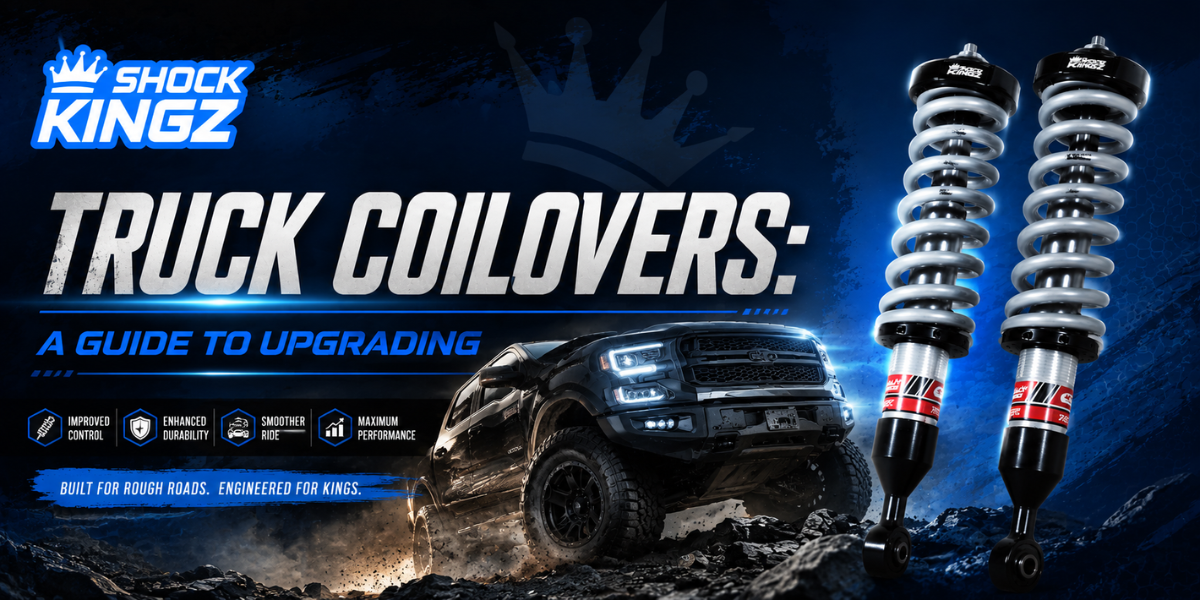
Trucks use truck coilovers at the front axle because most light and mid-duty trucks run independent front suspension, where each front wheel moves separately on its own control arms rather than sharing a solid axle, and coilovers integrate the spring and damper into one unit that fits that control-arm layout efficiently while still allowing ride height and damping to be tuned. The rear axle on most trucks is a different story, which is why coilover upgrades are typically a front-specific conversation rather than a whole-truck one.
Understanding why that split exists, and what truck coilovers actually change about how the front end handles load and terrain, is the foundation for deciding whether a front suspension upgrade makes sense for your truck and how you use it.
Why Coilovers Are Used at the Front Axle
Independent front suspension relies on each wheel having its own control arm assembly, which gives coilovers a natural mounting point: the spring and damper unit sits directly in that control arm geometry, controlling wheel movement independently on each side. This is different from a solid front axle, where both wheels move together and a coilover-style unit doesn't fit the same mechanical role.
Because coilovers combine the spring and damper into a single adjustable unit, they suit this application well: independent front suspension already isolates each wheel's motion, and coilovers add the ability to fine-tune how that motion is controlled without needing to swap separate springs and shocks to change ride height or damping characteristics.
Independent Front Suspension and Load-Bearing
Front suspension on a truck carries a different load profile than the rear. The front axle supports the engine and drivetrain weight consistently, while the rear axle sees more variable loading from cargo, towing, and passengers. This is part of why coilovers are common at the front even on trucks that use leaf springs or solid axles at the rear: the front's load is steadier and more predictable, which suits the more precisely tunable coilover design, while the rear often needs a suspension type built to handle a wider range of load conditions.
Light-duty trucks and SUVs commonly pair independent front suspension with coil springs for improved ride comfort and handling, while heavier-duty trucks are more likely to retain solid front axles for maximum load capacity. Where a truck falls on that spectrum affects whether front coilovers are a factory-standard setup or an aftermarket upgrade path.
Terrain Handling Benefits
Coilover-equipped independent front suspension generally offers better wheel articulation on uneven terrain compared to a solid front axle, since each wheel can react to bumps and dips independently rather than transmitting motion across to the opposite side. On washboard roads, rutted trails, or uneven pavement, that independence keeps more consistent tire contact with the road surface, which improves both comfort and control.

Damping quality plays a direct role here as well. Coilovers built for sustained rough-terrain use typically manage heat better than basic shocks, resisting the fade that can occur when a damper works hard for an extended period, a real consideration for trucks that regularly see washboard roads or extended off-pavement driving rather than occasional light-duty use.
Front vs. Rear: Why Truck Suspension Differs by Axle
It's worth being direct about why coilover upgrades usually focus on the front: most trucks don't use the same suspension design at both ends. The front commonly uses independent suspension with coilovers or torsion bars, while the rear more often uses a solid axle with leaf springs, particularly on trucks built for towing or heavy payloads, since leaf springs handle variable rear loading well.
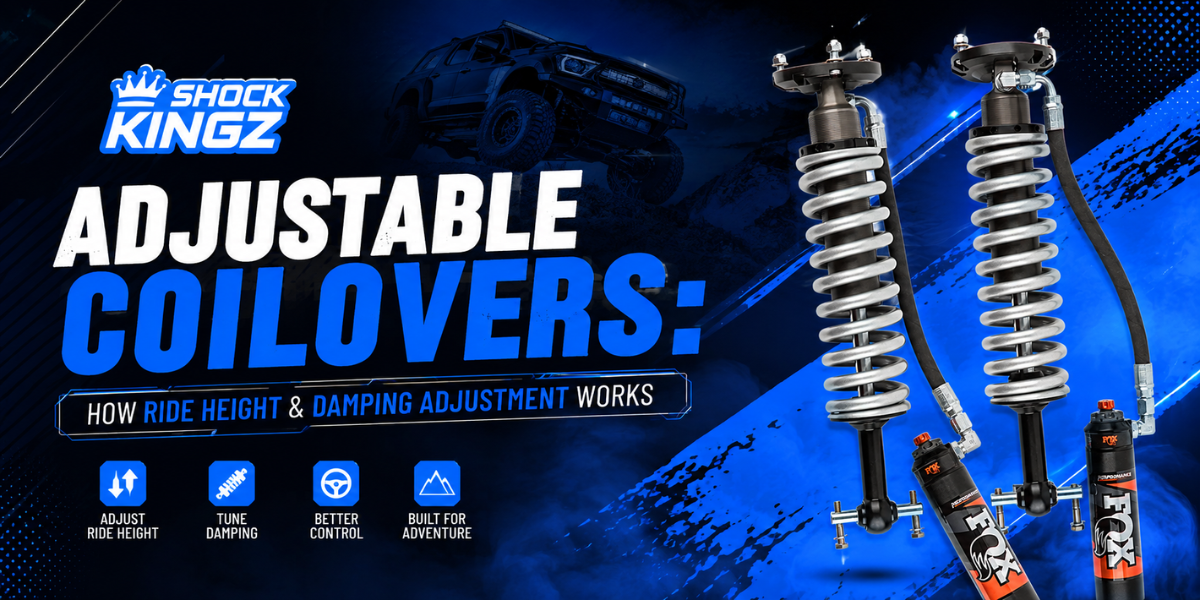
This means a "coilover upgrade" on a truck is typically a front suspension project specifically, not a full-vehicle swap. Rear suspension upgrades exist too, but they usually involve different components suited to the rear's load-bearing role rather than a matching coilover setup. Knowing this distinction avoids confusion when comparing truck shocks and struts, since a front coilover kit and a rear leaf spring upgrade solve different problems on the same vehicle. For a closer look at how ride height and damping adjustment work on coilovers, our companion guide covers the adjustment mechanics in detail.
Benefits of Upgrading to Aftermarket Coilovers
Aftermarket coilovers at the front typically offer three practical benefits over factory-standard components: adjustable ride height for stance or ground clearance changes, tunable damping to match daily driving or off-road use, and often improved heat management for sustained rough-terrain driving compared to basic factory dampers. Performance suspension systems built around coilovers also tend to offer more consistent handling feedback, since the spring and damper are matched as a unit rather than sourced separately.
For truck owners evaluating a front suspension upgrade, understanding that coilovers address the front axle's independent suspension design specifically, rather than being a universal suspension solution, makes it much easier to set realistic expectations about what the upgrade will and won't meaningfully change about how the truck actually handles day to day.
Call to Action
Ready to compare options for your truck? Shockkingz carries truck coilovers and performance suspension systems built for daily driving, towing, and off-road use.
Frequently Asked Questions
Q1. Why do trucks use coilovers at the front?
Most light and mid-duty trucks use independent front suspension, where each wheel moves on its own control arms. Coilovers fit that layout naturally, combining the spring and damper into one unit that also allows ride height and damping to be tuned.
Q2. Why don't trucks usually use coilovers at the rear too?
Rear axles on many trucks use leaf springs to handle variable loads from cargo, towing, and passengers. Leaf springs suit that variable load range well, which is why coilover upgrades are typically a front-specific project.
Q3. Do coilovers improve a truck's off-road capability?
They can. Coilover-equipped independent front suspension generally allows better wheel articulation on uneven terrain than a solid front axle, since each wheel can react to bumps independently, improving tire contact and control.
Q4. Can any truck be upgraded with front coilovers?
Only trucks with independent front suspension can use coilovers in that role. Trucks with a solid front axle use a different suspension design that isn't compatible with a coilover-style unit.
Q5. What's the main benefit of aftermarket coilovers over factory shocks?
Aftermarket coilovers typically add adjustable ride height, tunable damping, and often better heat management during sustained rough-terrain driving compared to factory-standard components.






Leave a comment
This site is protected by hCaptcha and the hCaptcha Privacy Policy and Terms of Service apply.