
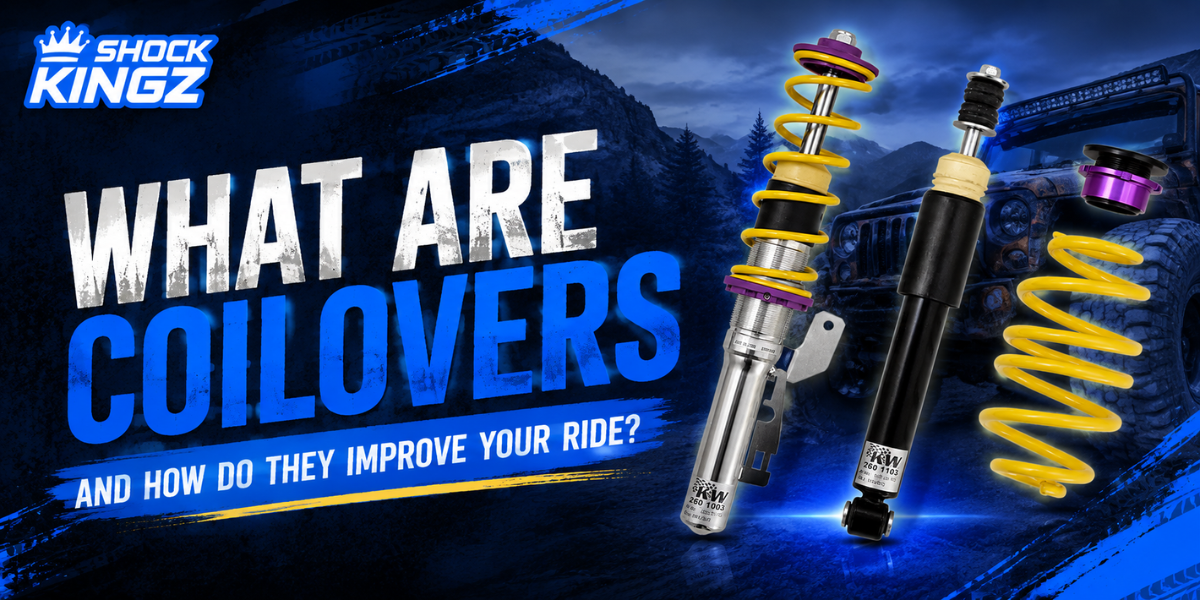
Coilovers are a suspension design that combines a coil spring and a damper into a single assembly, rather than mounting them as separate components. The name comes from the spring being "coiled over" the shock body. Because the two parts share one housing, most coilovers also allow ride height and, in adjustable models, damping to be tuned directly at the unit itself.
For suspension beginners, that single design choice explains most of what makes coilovers different from a standard shock-and-spring setup. Understanding the parts involved and what each one actually controls makes it much easier to evaluate whether coilovers are the right upgrade for a given vehicle and driving style.
The Components of a Coilover Unit
A typical coilover is built from a small number of parts, each with a specific job:
1. Threaded body: the outer shell of the shock absorber, machined with threads along its length, which the spring perch rides on.
2. Spring perch: the bracket that holds the bottom of the coil spring in place; rotating it up or down the threaded body changes ride height.
3. Locking collar: a threaded ring below the spring perch that locks it in position once ride height is set, preventing it from shifting under load.
4. Damper: the internal shock mechanism that controls how quickly the suspension compresses and rebounds, functioning the same way it would in a traditional separate shock.
5. Coil spring: mounted directly over the damper body, it supports the vehicle's weight and works with the damper to control motion.
Together, these parts form a single, self-contained unit that handles both spring support and damping control, rather than requiring the two functions to be housed in separate components mounted at different points on the vehicle.
How Coilovers Differ from Separate Shocks and Springs
In a traditional setup, a shock absorber and coil spring are still both present, but the spring typically sits against a separate mount on the vehicle's body or frame rather than directly on the shock itself. That arrangement works well and is what most factory suspension systems use, but it limits how easily the ride height and spring preload can be adjusted, since changing either usually means swapping physical parts.

Suspension coilovers solve that limitation by integrating everything into one adjustable unit. Because the spring perch threads directly onto the shock body, ride height can be changed by rotating a collar rather than replacing a spring or shock. This is the core reason coilovers are popular for anything from mild lowering to serious performance tuning: the adjustment mechanism is built into the part itself.
Ride Height Adjustment Explained
Ride height adjustment on coilovers generally works one of two ways, depending on the design. Some coilover shocks use an adjustable lower mount, where threading the mount up or down changes the damper's position relative to the wheel hub without touching the spring's preload or reducing available suspension travel. Others adjust height at the spring perch itself, which does change spring preload as a side effect of moving the perch.
Knowing which type you're working with matters because adjusting the wrong point can unintentionally affect handling. A lower-mount adjustment changes ride height cleanly, while a spring-perch adjustment changes both height and preload together, which affects how firm the initial part of the suspension's travel feels.
Damping Adjustment and Preload
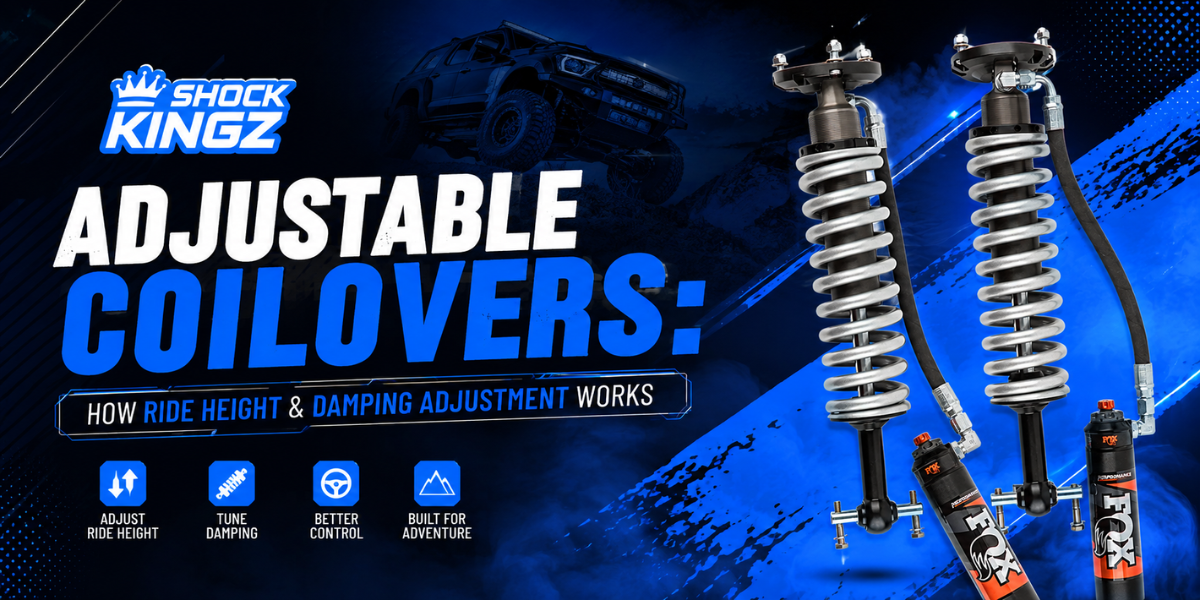
Not all coilovers offer adjustable damping, but many performance coilovers do, typically through a dial or knob that changes how much resistance the damper provides during compression and rebound. Adjustable coilovers may offer a single combined adjustment or separate controls for compression and rebound on more advanced setups, letting a driver fine-tune how the suspension responds to different driving conditions. For more on how gas-charged valving and damping control affect performance suspension, our companion guide covers the underlying mechanics in more detail.
Preload, the amount of initial tension on the spring before the suspension moves at all, is a related but distinct setting. Increasing preload doesn't make the spring stiffer, but it does change how the suspension initially responds to small inputs, which is why height and preload adjustments are often discussed together even though they affect the ride slightly differently.
Benefits of Coilover Suspension
The primary benefit of coilovers is adjustability: ride height, and often damping, can be tuned to match a specific vehicle, driving style, or even changing conditions like a track day versus daily commuting. This flexibility is difficult to replicate with a fixed shock-and-spring setup, where changing ride height typically means installing different springs entirely.
Coilovers also tend to offer more precise handling feedback than stock suspension, since the integrated design keeps the spring and damper working together as a matched unit rather than as separately sourced parts that may not be perfectly matched. For beginners exploring suspension upgrades, understanding these fundamentals, the components, the adjustment points, and what each one actually changes, is the foundation for making an informed decision rather than choosing based on price or appearance alone.
Call to Action
Ready to explore options? Shockkingz carries a range of coilovers and performance coilovers to help you find the right fit for your vehicle.
Frequently Asked Questions
Q1. What are coilovers and how do they work?
Coilovers combine a coil spring and a damper into a single assembly, rather than mounting them as separate components. The spring seats directly on the shock body, which allows ride height, and often damping, to be adjusted at the unit itself.
Q2. Are coilovers better than a regular shock and spring setup?
Not universally better, but more adjustable. Coilovers make ride height and damping tuning far easier than a standard setup, where changing ride height typically requires installing different springs entirely.
Q3. How do you adjust ride height on coilovers?
Depending on the design, ride height is adjusted either by threading an adjustable lower mount up or down, which doesn't affect spring preload, or by moving the spring perch itself, which changes preload as a side effect.
Q4. Do all coilovers have adjustable damping?
No. Some coilovers only offer ride height adjustment, while many performance coilovers add a dial or knob for damping, sometimes with separate compression and rebound controls on more advanced models.
Q5. What's the difference between ride height and preload adjustment?
Ride height adjustment changes how high the vehicle sits, while preload adjustment changes the initial tension on the spring before the suspension starts moving. Depending on the coilover design, adjusting height can also change preload as a side effect.








Leave a comment
This site is protected by hCaptcha and the hCaptcha Privacy Policy and Terms of Service apply.